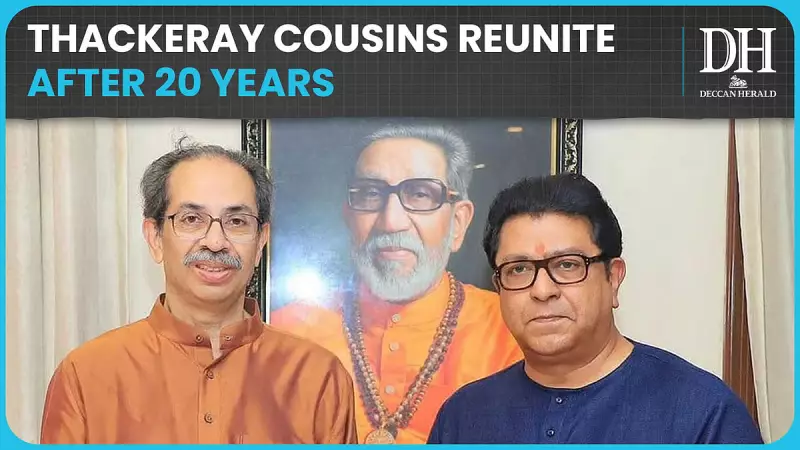
In a seismic shift for Maharashtra's political arena, two estranged cousins have decided to join forces. Uddhav Thackeray, leader of the Shiv Sena (UBT), and Raj Thackeray, chief of the Maharashtra Navnirman Sena (MNS), have officially announced an electoral alliance for the pivotal Brihanmumbai Municipal Corporation (BMC) elections scheduled for 2026.
A Historic Reconciliation After Years of Rivalry
The announcement marks the end of a prolonged and often bitter political rivalry between the two factions stemming from the same family and ideological roots. The formal declaration was made by Uddhav Thackeray himself during a press conference held at his private residence, 'Matoshree', in Bandra, Mumbai. He confirmed that the alliance had been finalized following detailed discussions between the two parties.
The core agreement states that the Shiv Sena (UBT) and the MNS will contest the upcoming BMC elections together, presenting a united front. This move is widely seen as a strategic consolidation of the Marathi vote bank and a direct challenge to the current ruling coalition in Maharashtra, which includes the Bharatiya Janata Party (BJP) and the rival Shiv Sena faction led by Chief Minister Eknath Shinde.

Strategic Imperative Behind the Alliance
The decision to unite is driven by clear political arithmetic. The BMC, India's richest municipal corporation with an annual budget exceeding that of several small states, is the ultimate political prize in Maharashtra. Control over it grants immense administrative power and resources. The 2022 BMC elections were delayed and are now expected to be held in 2026.
In the previous civic polls, the division of votes between the undivided Shiv Sena, the MNS, and other parties played a crucial role in determining outcomes. By forming this alliance, Uddhav and Raj Thackeray aim to prevent the fragmentation of their core voter base. This coalition seeks to consolidate the support of Marathi-speaking communities and other segments aligned with the Thackeray family's legacy, presenting a formidable alternative to the BJP-Shinde alliance.
Raj Thackeray's MNS, which once held significant sway in Mumbai's urban politics, has seen its influence wane in recent assembly and national elections. This partnership offers the MNS a vital platform for resurgence. For Uddhav Thackeray's Shiv Sena (UBT), which claims the party's original symbol and legacy, the alliance brings an experienced cadre and a dedicated voter segment that could tip the scales in closely contested wards.
Immediate Reactions and Future Roadmap
The announcement has sent shockwaves through the state's political corridors. Leaders from the ruling Mahayuti alliance have downplayed the impact, calling it an "alliance of desperation." However, political analysts suggest this union could dramatically alter the dynamics in Mumbai and other urban centers of Maharashtra.
While the press conference confirmed the seat-sharing formula for the BMC polls, details regarding the distribution of wards and the mayor's position are expected to be negotiated closer to the election date. The leaders also indicated that the success of this civic poll partnership could pave the way for a broader collaboration in future state assembly and parliamentary elections. This opens a new chapter in the state's politics, potentially redrawing battle lines.
Reshaping Mumbai's Political Landscape
The Uddhav-Raj pact is more than just an electoral understanding; it represents a symbolic reunification of a divided political family. It aims to reclaim the narrative of representing Mumbai's sons of the soil. The alliance's immediate focus will be on grassroots mobilization and highlighting issues of local governance, infrastructure, and civic amenities in the financial capital.
The 2026 BMC elections are now poised to be a high-stakes, direct contest between two major blocs: the BJP-Shinde Sena alliance versus the Thackeray family's reunited front. The outcome will not only decide the control of the civic body for the next five years but could also signal a significant realignment in Maharashtra's broader political equation, setting the tone for the next state assembly polls.