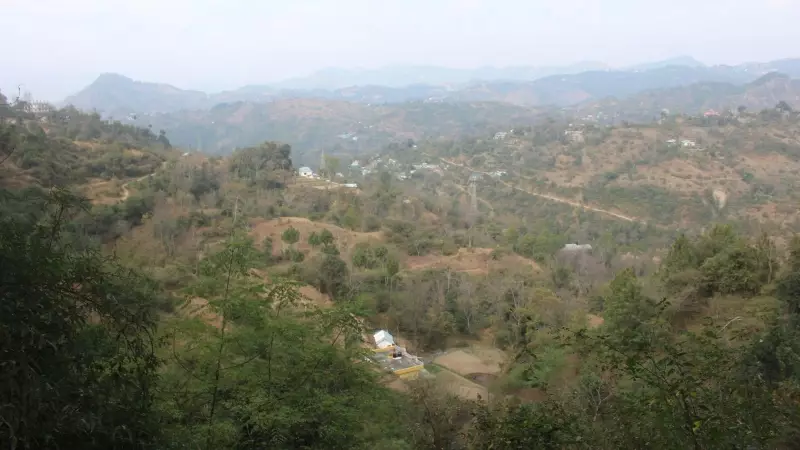
The proposed Jathiya Devi satellite township, a Rs 1,374 crore project intended to decongest Shimla, has ignited fierce resistance from residents of nine villages whose ancestral lands are earmarked for acquisition. For locals like 37-year-old Neeraj Thakur, the plan represents not just a loss of property, but the erasure of a way of life cultivated over generations.
A Way of Life Under Threat
The anxiety in the hills spiked on December 25, 2025, when land acquisition notices were pasted under the Right to Fair Compensation and Transparency in Land Acquisition, Rehabilitation and Resettlement Act, 2013. The notices pertained to 249 hectares (approximately 2,959 bighas) spread across eight villages in Shimla district—Chanan, Panti, Aanji, Shilli Baghi, Majhola, Shilru, Dhanokari, and Kyaragi—and one village, Manjiyari, in Solan district.
"We were told that all our villages, including agricultural lands and houses, would be acquired," says Neeraj Thakur, whose morning routine of farming and selling fresh produce at Jathiya Devi junction now faces an uncertain future. "Essentially, the government plans to build houses for newcomers while displacing those who have lived here for generations."
A Social Impact Assessment (SIA) study estimates the project could directly affect 386 households, with up to 158 families potentially losing their livelihoods. The report invited suggestions and objections, with a public hearing held on December 29, 2025, which was attended by around 300 villagers.
More Than Land: A Loss of Heritage and Livelihood
For the residents, the fight is about preserving heritage and economic survival. Chaman Lal, 44, from Shilli Baghi, questions the need to acquire entire, fertile villages. "We are not large-scale agriculturists, but at least we earn a living from farming," he states, contrasting the current proposal with past acquisitions of infertile land.
The emotional and cultural stakes are equally high. Bal Kishan, a 55-year-old priest and farmer from Kyaragi, emphasizes the deep-rooted connection to the land. "It is not easy to leave behind farmland and temples where our deities reside. We are united in opposing this plan."
Even those in nearby areas are apprehensive. In Bagna, 84-year-old Hira Singh voices a common concern about compensation in joint families. "My three brothers and I own 12 bighas. When that is divided among our sons and grandsons, what will each of us receive? Agriculture is our livelihood. The government must clarify compensation before proceeding."
Official Assurances and Project Promises
Officials from the Himachal Pradesh Housing and Urban Development Authority (HIMUDA), which has been discussing the project since 2014, have offered assurances. Surender Kumar Vashisht, CEO and Secretary of HIMUDA, insists that acquisition will not be forced. "We are not going to acquire any piece of land against the wishes of locals," he said, clarifying that the December 29 hearing was a preliminary step.
Vashisht added that residential houses and fertile farmlands would be excluded from the plan, with provisions for kitchen gardening. "Truly, these locals will benefit from the township," he claimed.
Manjeet Sharma, Sub-Divisional Magistrate of Shimla (Rural), echoed that the SIA is only a draft report. "Acquisition can proceed only after due process and consent," he stated.
The township itself is planned over 135 hectares, located just 14 km from Shimla city and 2 km from Jubbarhatti's Jubilee Airport. According to the Detailed Project Report (DPR), it aims to provide a structured urban expansion with:
- 55.16 hectares for residential blocks catering to various income groups.
- 13.36 hectares for commercial zones and 15.7 hectares for non-polluting industries.
- Approximately 33 hectares combined for green belts and riverfront areas.
- Smart roads, utility zones, and helipad connectivity.
The first phase envisions 895 residential units. The project's stated goal is to relieve the intense pressure on Shimla's infrastructure by creating a planned satellite hub. However, for the villagers of Majhola and the eight other settlements, this vision of progress comes at a cost they are not willing to pay—the loss of everything they have ever known.