In a significant move to consolidate the Bharatiya Janata Party's (BJP) position in West Bengal, Union Home Minister Amit Shah concluded a series of high-stakes meetings in Kolkata, laying down a clear blueprint for the 2026 Assembly elections. The core message was unity, as Shah directed the state leadership to put aside internal differences and work as a cohesive team to challenge the ruling Trinamool Congress (TMC).
Shah's Unity Call and Ghosh's Strategic Return
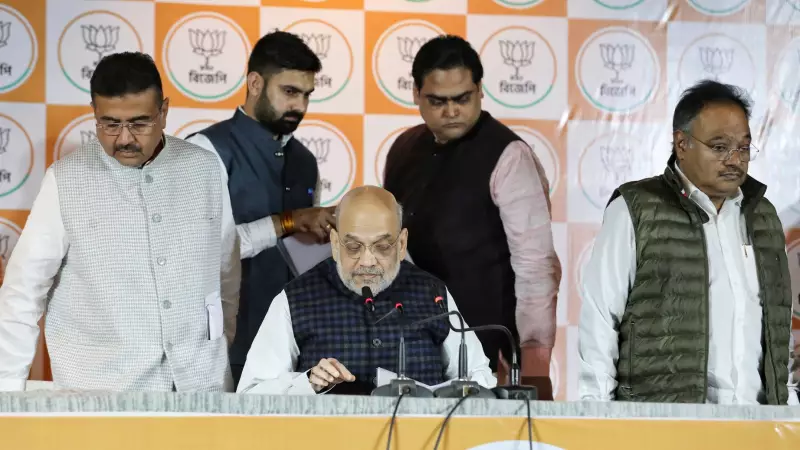
On Wednesday, January 1, 2026, Amit Shah held a pivotal meeting with the West Bengal BJP's top brass. The attendees included state party president Shamik Bhattacharya, Leader of the Opposition Suvendu Adhikari, Union Minister Sukanta Majumdar, and notably, former state chief Dilip Ghosh. The presence of central leaders like Sunil Bansal, Bhupendra Yadav, Biplab Deb, and B.L. Santosh underscored the meeting's importance.
Sources revealed that Shah explicitly asked the leadership to "keep aside all differences" and forge a united front to secure victory in the polls scheduled for April-May 2026. This meeting was seen as an effort to bridge gaps between the party's old and new guard in the state.

The most symbolic outcome was the reintegration of firebrand leader Dilip Ghosh into the core strategy. Ghosh, who had been relatively distant from party activities, confirmed his active return, stating, "You will see an active Dilip Ghosh in the 2026 elections." His return is considered crucial due to his ground support and popularity, especially in the Medinipur region, and his track record of expanding the BJP's footprint in Bengal.
The 2026 Election Blueprint: Groundwork and Narrative
Amit Shah presented a detailed action plan for the BJP's campaign. He instructed all MLAs, MPs, and former representatives to intensify their ground presence, mandating they spend at least four days a week in their constituencies. Their tasks include holding five to six rallies or corner meetings daily and extensive door-to-door canvassing.
Shah emphasized that ticket distribution would be performance-based, with aspirants needing to "prove themselves" over the next two months. He also stressed the importance of addressing grievances raised by booth-level workers, recognizing them as the party's backbone.
With the Election Commission's Special Intensive Revision (SIR) of electoral rolls underway, Shah called for setting up more SIR camps, particularly targeting the Matua community along the Bangladesh border. The BJP aims to assist this community, a significant vote bank, amid reports of many Matua names being deleted from draft rolls.
To set the campaign narrative, Shah directed leaders to focus on two primary issues: the alleged "infiltration" from Bangladesh and the TMC's "corruption." The party plans to argue that demographic changes in Bengal, including in Kolkata, are a direct result of unchecked infiltration supported by the ruling party.
Analyzing Past Performance and Setting Targets
In a separate meeting, Shah engaged with the BJP's 2024 Lok Sabha candidates—both winners and losers—to analyze the factors behind their performance. The party had won only 12 of Bengal's 42 Lok Sabha seats in 2024. Shah advised them to share their insights with booth-level workers in their respective Assembly segments.
Later, addressing booth-level workers in Kolkata, Shah set an ambitious target of winning 20 out of the city's 28 Assembly seats. He urged them to convince voters about the issues of infiltration and demographic change even in the state capital.
The series of meetings, marking the third day of Shah's visit, signals the BJP's intent to run a highly disciplined and aggressive campaign. By mending fences with Dilip Ghosh and pushing for internal cohesion, the central leadership aims to present a formidable challenge to Mamata Banerjee's TMC in the crucial 2026 battle for Bengal.