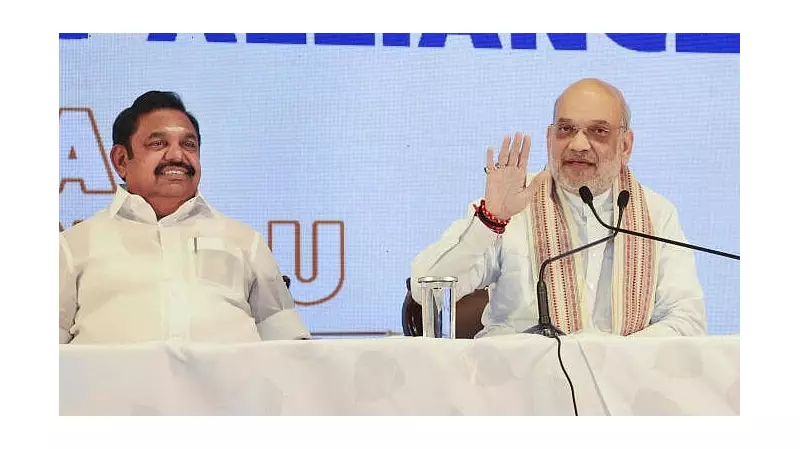
A significant contradiction has emerged between senior Bharatiya Janata Party (BJP) leader Amit Shah and All India Anna Dravida Munnetra Kazhagam (AIADMK) chief Edappadi K. Palaniswami regarding the future of the National Democratic Alliance (NDA) government in Tamil Nadu. The public divergence in statements, reported on 05 January 2026, centers on the alliance's strategy and seat-sharing formula for the upcoming state assembly elections.
Contradictory Claims on Government Formation
Union Home Minister Amit Shah, during a political rally, expressed strong confidence that the NDA would form the next government in Tamil Nadu after the elections. He projected a unified front under the leadership of the alliance. However, in a contrasting statement, AIADMK general secretary Edappadi Palaniswami clarified that no decision had been finalized regarding who would lead the potential NDA government in the state. Palaniswami emphasized that such a decision would be made collectively by the alliance partners only after securing a majority, highlighting a clear gap in the public narrative from the two leaders.
The Sticking Point: Seat-Sharing Negotiations
At the heart of the tension are the ongoing seat-sharing negotiations within the NDA for the Tamil Nadu polls. According to reports, the AIADMK has been insisting on contesting approximately 170 seats, leaving the remaining 64 seats for its alliance partners, which include the BJP and smaller regional parties. This formula has been a point of discussion and potential disagreement, as the BJP seeks to expand its footprint in the state beyond a minor partner role. The public contradiction between the top leaders is seen as a reflection of the behind-the-scenes bargaining over electoral territories and political influence.
Implications for the NDA Alliance
This public disagreement poses a challenge to the NDA's image of a cohesive coalition in Tamil Nadu. Political analysts suggest that such contradictions, if not managed swiftly, could signal internal discord to the electorate and benefit the rival Dravida Munnetra Kazhagam (DMK)-led front. The statements from Amit Shah and Edappadi Palaniswami underscore the complex dynamics of alliance politics where major regional parties and national parties must balance their individual ambitions with collective goals. The coming weeks will be crucial for the NDA to present a united face and a clear leadership plan to the voters of Tamil Nadu.
The development, reported by ETB Sivapriyan, adds a new layer of intrigue to the already intense political landscape of Tamil Nadu as parties gear up for the electoral battle. The resolution of the seat-sharing puzzle and the leadership question will be critical factors determining the alliance's fate in the 2026 elections.