The political landscape in Punjab is witnessing a curious shift. The Shiromani Akali Dal (Revived), born from the Akal Takht's directive of December 2 last year and months of grassroots mobilization, now appears to be grappling with internal inertia. Meanwhile, Sukhbir Singh Badal, the president of the original Shiromani Akali Dal (SAD), who seemed beleaguered after the same directive, is aggressively reclaiming his political space.
Internal Struggles of the Revived Akali Dal
The formation of the new party reached a peak on August 11 with the election of former Takht Damdama Sahib jathedar Giani Harpreet Singh as its president and Satwant Kaur as the chairperson of its Panthic Council. However, momentum has since stalled. Beyond campaigning in the Taran Taran by-election and fielding candidates in the recent rural bodies polls—described as a scattered battle—the party has been conspicuously quiet.
Internal decision-making has been slow. Giani Harpreet Singh announced a 41-member working committee only in the first week of October, with office-bearers named a few days later. This gap of over 50 days hinted at underlying difficulties in building consensus within the new outfit. Enquiries reveal that several Akali leaders were unhappy with the composition of both the working committee and the list of office-bearers, leading to only recent, piecemeal fresh appointments.

Cohesive, coordinated action is missing. While individual leaders may be active locally, there is no unified front. A telling indicator is that Giani Harpreet Singh's frequent social media statements, which attack the Punjab and central governments, are rarely amplified by other senior leaders of his own party. The president himself has largely confined his activism to these online posts.
Gurpartap Singh Wadala, general secretary of SAD (Revived), acknowledged the issue, stating, "There are issues of cohesiveness within the party, and we are introspecting about the lapses. It is a collective responsibility of all the leaders to maintain the momentum."
Sukhbir Badal's Combative Comeback
In contrast, Sukhbir Singh Badal is leveraging state actions against his party to his advantage. The Taran Taran bypoll result, where his candidate finished as the runner-up, served as a turning point. Subsequent actions by the state government against the Sukhbir-led SAD during the rural bodies elections have helped him gain political space and even public sympathy, as seen in the case of Kanchanpreet Kaur. Analysts note that the government's moves backfired, allowing Sukhbir to mount a resourceful counter-offensive.
Signs of Friction and Competing Narratives
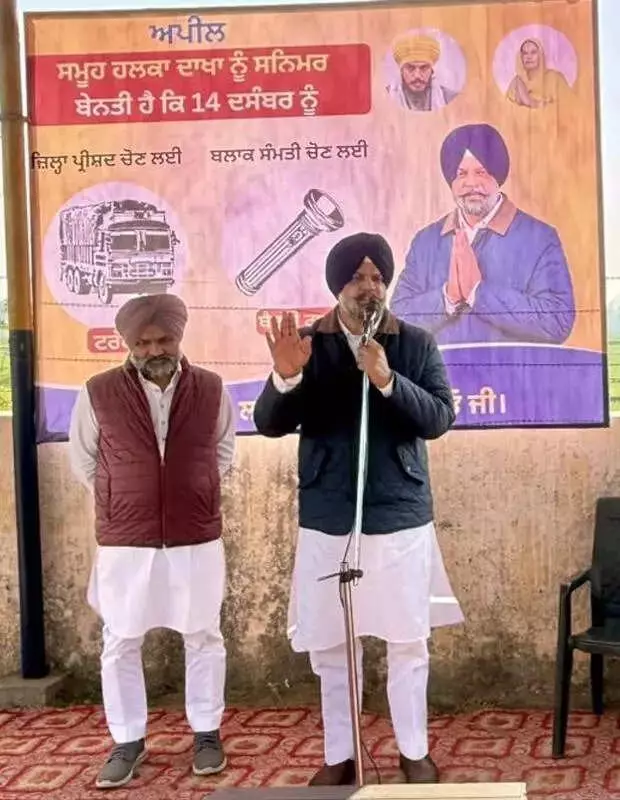
Subtle signs of discord within SAD (Revived) are visible. During the rural body elections, Dakha MLA Manpreet Singh Ayali, the party's senior vice-president, used campaign banners featuring pictures of Satwant Kaur and Khadoor Sahib MP Amritpal Singh, but notably omitted Giani Harpreet Singh. This was despite Satwant Kaur's defined role being limited to religious affairs. Similarly, during the Taran Taran bypoll, a poster shared by general secretary Barjinder Singh Brar supported candidate Mandep Singh with pictures of Ayali, Amritpal, Satwant, and others, but again excluded the party president.
Meanwhile, the Amritpal Singh-led SAD (Waris Punjab De) continues to hold reasonable support but remains confined to emotional appeal and reactionary politics. Its performance in the Taran Taran bypoll was a setback, and the group appears distant from developing a structured political strategy or workable plan.
The political revival that many anticipated after the December directive has hit a roadblock. The SAD (Revived) is currently bogged down by organizational teething troubles and a lack of unified action, while the established SAD under Sukhbir Badal is demonstrating a resilient, combative fightback. The coming months will be crucial in determining whether the new faction can overcome its inertia and pose a sustained challenge, or if the traditional Akali leadership will successfully consolidate its regained ground.