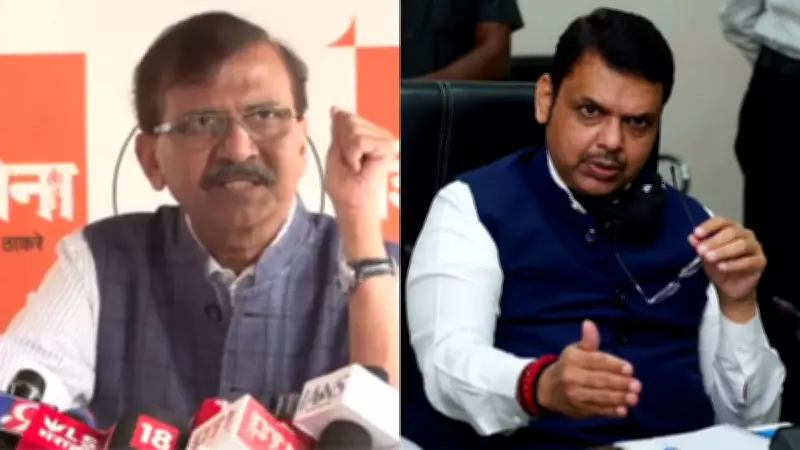
Raut Labels Fadnavis a 'Hypocrite' in Scathing Attack on Maharashtra CM
In a fiery political confrontation, Shiv Sena (UBT) leader Sanjay Raut has launched a sharp critique against Maharashtra Chief Minister Devendra Fadnavis, branding him a 'hypocrite' for his alleged manipulation of corruption cases. Raut's accusations center on claims that Fadnavis strategically uses legal actions to exert control over his ministers, a tactic that has sparked controversy in the state's political landscape.
Allegations of Political Manipulation Through Corruption Probes
Raut detailed his allegations, asserting that Fadnavis initiates corruption investigations and orders raids against certain ministers within his administration. According to Raut, this is not a genuine effort to combat corruption but rather a calculated move to instill fear and submission. He claims that after putting ministers under pressure, Fadnavis later provides them with a clean chit, effectively using the threat of legal action as a tool to keep them loyal and under his influence.
This pattern, as described by Raut, suggests a cycle of intimidation and relief designed to consolidate power. The accusations imply that Fadnavis leverages anti-corruption mechanisms not for public accountability but for personal political gain, raising questions about the integrity of governance in Maharashtra.

Context and Implications for Maharashtra Politics
The allegations come amid ongoing tensions in Maharashtra's political sphere, where Fadnavis leads a coalition government. Raut's statements highlight internal strife and potential power dynamics within the ruling alliance. By publicly accusing the Chief Minister of such tactics, Raut aims to undermine Fadnavis's credibility and portray him as an authoritarian figure who prioritizes control over ethical governance.
This development could have significant repercussions, including:
- Increased scrutiny on Fadnavis's administration and its handling of corruption cases.
- Potential erosion of public trust in the government's anti-corruption efforts.
- Strained relations within the political coalition, possibly leading to instability.
As the story unfolds, observers are closely watching for responses from Fadnavis and other key political players. The allegations underscore the volatile nature of Indian state politics, where accusations of corruption and manipulation are often used as weapons in power struggles.
Published on 23 February 2026, this news adds to the ongoing discourse on political ethics and accountability in India, with Maharashtra at the forefront of national attention.