The city of Rajkot in Gujarat has been transformed through an extensive beautification and infrastructure drive as it prepares to host Prime Minister Narendra Modi for the inauguration of the Vibrant Gujarat Regional Conference (VGRC). The city, from where PM Modi fought and won his first Assembly election in 2002, is witnessing repairs to roads and pavements, vibrant wall paintings, and a general sprucing up on a war footing.
War-Footing Preparations for a High-Profile Visit
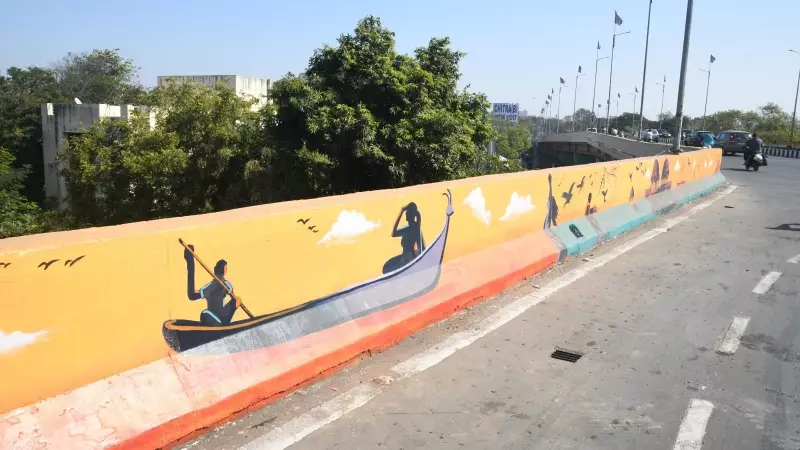
According to a statement from the Gujarat Government, preparations have been accelerated across Rajkot. The focus has been on repairing and strengthening the city's main roads and enhancing its beauty with artistic motifs painted on walls. The municipal corporation, under the guidance of Mayor Nayana Pedhadiya, has been executing these works for about a month. The works include paver block repair, asphalt patching and re-carpeting, divider repair and colouring, cement concrete paving, mural art, and sculpture colouring on each road as required.
Prime Minister Modi's visit to Gujarat will begin on January 10 at Prabhas Patan for the Somnath Swabhiman Parv, an event celebrating the 1,000-year resilience of the Somnath temple against its first attack in 1026 AD. On January 11, he will head to Marwadi University in Rajkot to inaugurate the second Vibrant Gujarat regional conference, which focuses on the Saurashtra-Kutch region. The government expects this conference to open new doors for global investment in the industry and trade sectors of Saurashtra.
Zone-Wise Infrastructure and Beautification Drive
The scale of the makeover is massive and has been carried out systematically across different zones of Rajkot. The walls of main roads and public places have been decorated with pictures and slogans of various Gujarat Government campaigns like ‘Ghar nu ghar samriddhi no aadhar’, ‘Beti bachao, beti padhao’, ‘Swachh Bharat, Swachh Gujarat’, ‘Jal ej jeevan’, and ‘Pariyavaran jaadavvo, jeevan bachao’. The completed work includes:
- Over 16 km of paver block repairs.
- More than 6 km of asphalt patches.
- Over 12 km of asphalt re-carpeting.
- More than 10 km of divider repairs.
- 1 km of cement concrete paving.
- Over 7 km of divider painting.
- More than 45 km of mural artwork.
Specific Improvements Across the City
In the East Zone, key sites like Greenland Chowk, Velnathpara Bridge Divider, and Kaiser-e-Hind Bridge have been painted, and paver blocks have been laid on Kuvadwa Road.
In the West Zone, covering Raiya Road, Nana Mauva Road, Kalavad Road, and Mawadi Road, numerous significant repairs and improvements have been completed.
In the Central Zone, repairs and colouring have been completed on several key arteries. This includes Race Course Ring Road from Sheetal Park Chowk to Ayodhya Chowk, from Radhe Circle to Gondal Chowkdi, and from Sorathiyawadi Circle to Anandnagar. Dividers have also been painted on Raiya Road, Shroff Road, Akashwani Road, and Phulchhab Road.
Further enhancements include painting the Amrapali Underbridge and the Hospital Chowk Bridge. Asphalt re-carpeting has been done in Vivekanand Society, Pradyuman Nagar Road, Gosaliya Marg, Geetgurjari Main Road, and Niranjani Society Main Road. Paver block repairs were carried out from Jubilee Chowk to Trikon Bagh, from Trikon Bagh to Nagarik Bank, from Bhaktinagar Station to Mahila College Road, and from Zilla Panchayat to the Mahila College Underbridge Circle.
Anticipating an Industrial Boost for Saurashtra-Kutch
The extensive makeover of Rajkot is not merely cosmetic. It underscores the significance of the upcoming Vibrant Gujarat Regional Conference. The state government has positioned this event as a crucial catalyst for the economic development of the Saurashtra-Kutch region. By showcasing a revitalised and investment-ready city, the administration aims to attract global capital into local industries and trade, promising a new chapter of industrial growth for this part of Gujarat.
The transformation of Rajkot, therefore, stands at the intersection of political symbolism, civic improvement, and economic ambition, all converging ahead of the Prime Minister's visit on January 11, 2026.