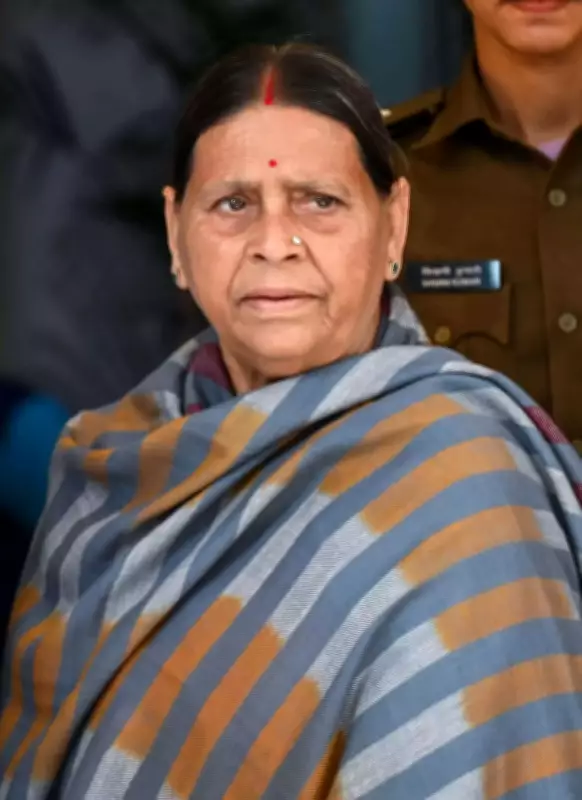
Rabri Devi Levels 'Vote Theft' Allegations Against NDA in Bihar
In a fiery political confrontation, former Chief Minister and opposition leader in the Bihar Legislative Council, Rabri Devi, launched a scathing attack on Friday, accusing the ruling National Democratic Alliance (NDA) of securing electoral victories in the state through systematic "vote theft." Her explosive remarks came just one day after her son, Tejashwi Prasad Yadav, who serves as the Leader of Opposition in the state assembly, raised similar allegations in the lower house of the legislature.
Allegations of Electoral Manipulation
Rabri Devi, while leading opposition members in a protest at the Council portico over various pressing issues, made these allegations during a media interaction focused on farmers' concerns and the ruling coalition's response. She initially criticized Prime Minister Narendra Modi for allegedly neglecting farmers' issues after securing their support during elections. However, she swiftly pivoted to the core accusation of "vote theft," which she claimed had decisively "sealed the fate of the opposition Grand Alliance."
"Jeet to hua hamlog ke? Ye chori se sarkar banaya hai... chori se jeeta hai... vote chori kiya hai (It's us who initially won elections, but they formed this government by stealing votes... they won by stealing... they stole the votes)," Rabri Devi asserted emphatically while addressing journalists within the Council premises on Friday.

Claims of EVM Manipulation and Vote Disparity
The former minister specifically accused the NDA of leveraging "Electronic Voting Machines" to manipulate election outcomes, suggesting this as the primary reason the ruling coalition resists abolishing them. She contended that the opposition had actually secured a majority mandate from the electorate, but the government was formed through what she described as unfair and illegitimate means.
"We obtained approximately 1.9 crore votes, but what did they achieve? Not even half of that total," she questioned, highlighting a significant vote disparity to bolster her claims of electoral malpractice.
Rabri Devi further emphasized that the public is fully aware of these developments, stating, "The people are watching everything. The citizens of Bihar understand precisely how this government was established." She drew parallels with political developments in other Indian states, alleging that legislators in Maharashtra and Haryana were purchased for sums ranging between Rs 50 to 60 crore, and insinuated that similar corrupt practices had been adopted in Bihar.
BJP's Forceful Rebuttal and Counter-Allegations
Reacting sharply to these allegations, senior Bharatiya Janata Party leader and former Union Minister Syed Shahnawaz Hussain launched a robust counterattack. He attributed the opposition's electoral defeat to the public's rejection of what he termed "Jungle Raj" and their desire to avoid a resurgence of lawlessness and instability.
"The people of Bihar unequivocally rejected Jungle Raj-Part II. They became apprehensive when RJD supporters began mobilizing extensively on the streets and instigating caste-based tensions," Hussain claimed. He argued that voters consciously halted the Rashtriya Janata Dal's advance to ensure the continuity of growth and development initiatives across the state.
Hussain criticized the opposition for refusing to accept their electoral defeat gracefully, accusing them of persistently blaming Chief Minister Nitish Kumar, the Janata Dal (United), and the BJP instead of engaging in constructive political discourse.
Escalating Political Tensions in Bihar
This exchange marks a significant escalation in political tensions within Bihar, with both sides presenting starkly contrasting narratives about the legitimacy of the state's electoral process and governance. The allegations of vote theft and EVM manipulation have reignited debates about electoral integrity, while the BJP's emphasis on development and stability versus "Jungle Raj" reflects ongoing ideological battles in the region.
The political landscape in Bihar remains highly charged, with these accusations likely to influence future electoral strategies and public perceptions as both alliances prepare for upcoming political contests.