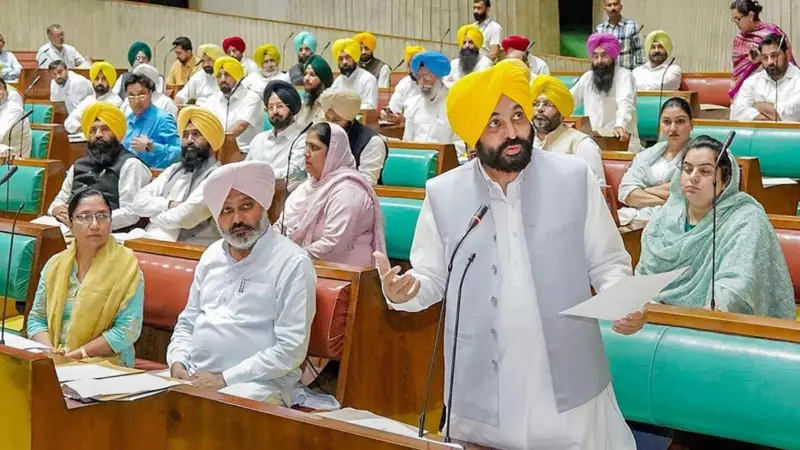
The Aam Aadmi Party (AAP) government in Punjab is set to convene its sixth special session of the Vidhan Sabha in January 2026, solidifying a trend where such sittings are increasingly taking the place of regular legislative assemblies. Chief Minister Bhagwant Mann announced the plan on Friday, stating the session in the second week of January will focus on a resolution against the central government's Viksit Bharat Guarantee for Employment and Livelihood Mission (Rural), or VB G RAM G scheme.
From Governor Standoff to Routine Practice
This reliance on special sessions traces its origins to a September 2022 confrontation with the then Governor, Banwarilal Purohit. The Mann cabinet had sought a special session to table a confidence motion, alleging a BJP "Operation Lotus," but Governor Purohit did not summon it. Following this impasse, the AAP government discovered a procedural lever: by not getting an adjourned session prorogued (formally terminated), it could reconvene the House without fresh approval from the Governor.
The tactic was first used in June 2023. After the regular Budget session was adjourned sine die but not prorogued, the government treated it as a continuation and called a special sitting on June 19 and 20. During that session, four bills were passed, including amendments related to Sikh Gurdwaras and Punjab Police. Governor Purohit termed it "patently illegal," refused assent to the bills, and the matter reached the Supreme Court.

In a November 2023 ruling, the Supreme Court upheld the session's validity, directing the Governor to treat it as constitutionally valid and decide on the pending bills accordingly. Since Governor Gulab Chand Kataria replaced Purohit, the government has faced no such obstacles from Raj Bhawan (now Lok Bhawan).
A Growing List of Special Sessions
Since that initial standoff, the Punjab government has convened multiple special sessions on specific issues, effectively bypassing the traditional calendar. Key special sittings include:
- September 27, 2022: A four-day session eventually held after the initial delay.
- June 20, 2023: A resolution on the Rural Development Fund, accusing the Centre of withholding Rs 3,622.40 crore.
- May 5, 2025: A session on the Bhakra Beas Management Board, accusing Haryana of overdrawing water.
- September 26, 2025: A session to address flood rehabilitation and criticize the Centre's response.
- November 24, 2025: A historic session at Sri Anandpur Sahib to commemorate Guru Tegh Bahadur's 350th martyrdom anniversary.
Opposition Flags Erosion of Legislative Norms
The Opposition has consistently criticized this shift, arguing it undermines democratic accountability. They point out that the Assembly is mandated to hold at least three regular sessions annually: Budget, monsoon, and winter. In 2025, the government skipped both the monsoon and winter sessions, opting for special sittings instead.
Critics also highlight that crucial elements of a regular session, such as Question Hour and Zero Hour, are not conducted during these special sessions. This, they argue, denies legislators the opportunity to scrutinize the government on pressing public issues like law and order, drug abuse, and the state's finances. The government, however, maintains that special sessions allow for focused discussion on urgent matters of public interest.
As Punjab prepares for its sixth special sitting, what began as a tactical workaround has evidently evolved into the AAP government's preferred mode of legislative business, marking a significant departure from conventional parliamentary practice in the state.