
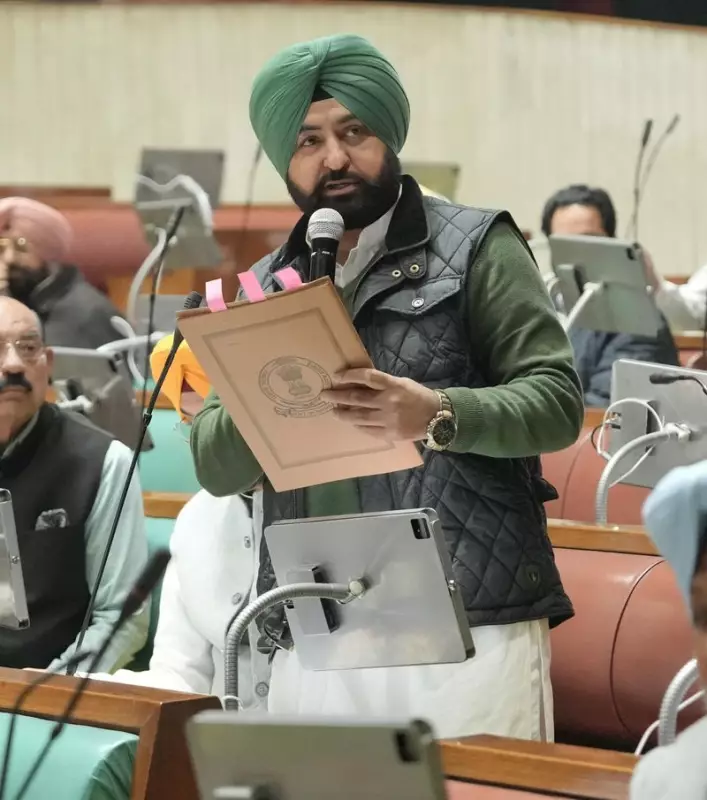
The Punjab Legislative Assembly took a significant step towards bolstering the state's financial resources on Wednesday by passing three crucial revenue amendment bills. The session, which saw a walkout by the opposition Aam Aadmi Party (AAP), culminated in the approval of legislative changes designed to enhance tax collection and streamline revenue administration.
Key Legislative Amendments Approved
The House gave its nod to The Punjab Stamp (Amendment) Bill, 2024, The Punjab Value Added Tax (Amendment) Bill, 2024, and The Punjab Fiscal Responsibility and Budget Management (Amendment) Bill, 2024. These bills were presented by Finance, Planning, and Excise & Taxation Minister Harpal Singh Cheema. The amendments are strategically crafted to address existing loopholes and modernize the state's revenue framework.
Minister Cheema emphasized that the primary objective behind these amendments is to curb tax evasion and prevent revenue leakages. He argued that the previous legal frameworks had certain deficiencies that were being exploited, leading to substantial losses for the state exchequer. The new provisions aim to create a more robust and transparent system.
Opposition Walkout and Government's Defense
The passage of the bills was not without political drama. The AAP legislators, led by Leader of Opposition Partap Singh Bajwa, staged a walkout during the discussion. They expressed strong objections, alleging that the amendments, particularly those to the Stamp Act, would impose an additional financial burden on the common people of Punjab.
In a firm rebuttal, Finance Minister Cheema dismissed these claims. He clarified that the amendments were not intended to increase the tax burden on the general public. Instead, he stated, the focus is squarely on tightening the laws to ensure that those who have been evading taxes are brought into the net. The government's stance is that these measures are essential for improving fiscal discipline and generating the resources needed for public welfare and development projects.
Implications for Punjab's Fiscal Health
The passage of these bills, especially The Punjab Fiscal Responsibility and Budget Management (Amendment) Bill, signals the state government's commitment to formalizing and strengthening its fiscal management targets. This legislative move is expected to have several long-term implications:
- Enhanced Revenue Collection: By plugging loopholes in the Stamp Act and VAT Act, the government anticipates a significant boost in non-tax and tax revenue streams.
- Improved Compliance: Stricter provisions are likely to deter evasion and encourage better compliance among businesses and individuals involved in high-value transactions.
- Sustainable Development: The additional revenue generated is projected to be channeled towards funding crucial infrastructure, healthcare, and education initiatives across the state.
The Congress-led state government, under Chief Minister Charanjit Singh Channi, has positioned these amendments as a necessary corrective measure to fix systemic flaws inherited from previous administrations. The government asserts that this is a proactive step to ensure financial stability and self-reliance for Punjab in the coming years.
While the immediate political reaction was one of dissent from the opposition, the actual impact of these legislative changes will be closely watched by economists, businesses, and the citizens of Punjab. The success of these amendments will ultimately be measured by their ability to increase state revenue without adversely affecting the common citizen, as the government has promised.