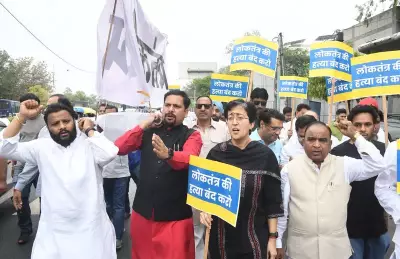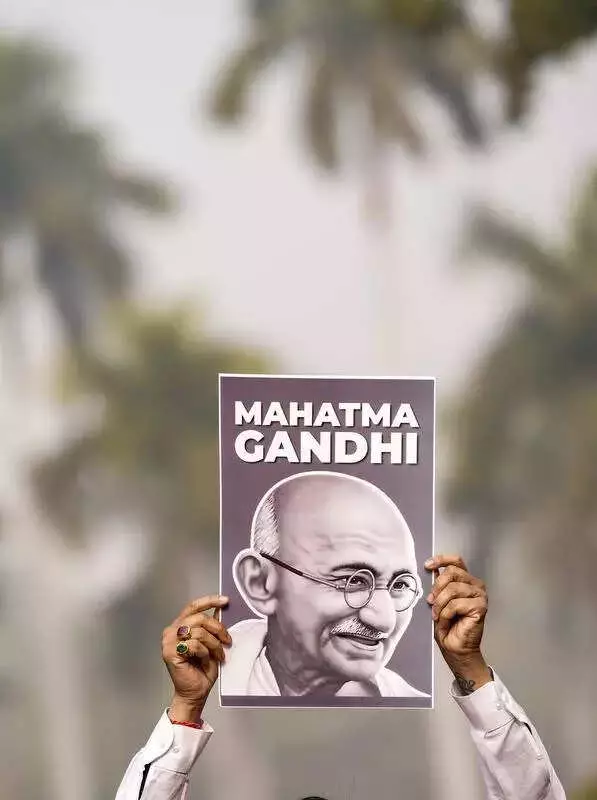
Widespread demonstrations swept through rural Punjab on Friday as labour organisations united in protest against the central government's decision to dismantle the Mahatma Gandhi National Rural Employment Guarantee Act (MGNREGA). The protests also targeted the push for public approval of the new Viksit Bharat – Guarantee for Rozgar and Aajeevika Mission (Gramin), or VB-G RAM G, through village councils.
Statewide Demonstrations and Symbolic Acts of Defiance
The protests, organised by a joint front of rural and agricultural labour unions, saw significant participation across multiple districts. In a powerful display of dissent, protestors in various villages burnt effigies representing the Union government. Copies of the proposed new law were also set ablaze, symbolising their outright rejection of the policy shift.
Prominent farm labour leader Lachhman Sewewala confirmed these actions, highlighting the deep-seated anger among the working class. A key strategy of the protestors involved submitting memorandums to local sarpanches (village heads). These documents carried a clear demand: that the upcoming gram sabhas (village assemblies) must refuse to pass any resolution in support of what the labour groups label an "anti-worker law."

Leaders Decry "Betrayal" and "Weakening" of Worker Protections
Public meetings held in numerous locations featured addresses by leaders of the Joint Labour Front, including Darshan Nahar, Devi Kumari, Gurmesh Singh, Kulwant Singh, Bikkar Singh, Jora Singh Nasrali, and Tarseem Peter. The speakers launched a scathing critique of the central government's actions.
They accused the Union government of "betraying rural and agricultural labourers" by dismantling MGNREGA. The leaders argued that under the "misleading slogan of removing symbols of slavery and the promise of development," the government is systematically amending and weakening laws that offer even minimal security to workers. They asserted that the VB-G RAM G scheme effectively abolishes the legal right to work guaranteed under MGNREGA, making employment provision dependent on the discretion of the central government.
Further allegations included the introduction of anti-worker measures such as reducing the validity of job cards from five years to three years and slashing the central budget, all while allegedly running a propaganda campaign about wage increases.
Criticism Extends to Punjab Government and Call for Wider Action
The protest leaders did not spare the state administration. They criticised the Bhagwant Mann-led Punjab government and the Punjab Congress, alleging that their opposition to the VB-G RAM G is superficial and limited largely to the issue of the scheme's name change, rather than its core "anti-worker provisions."
They claimed that the Mann government, much like the Narendra Modi-led central government, is promoting foreign capital as the primary driver of development. This approach, they said, is accompanied by policies favouring privatisation, the sale of public-sector assets, and the replacement of permanent jobs with contract-based recruitment.
Looking ahead, the labour leaders have issued a call to action. They have urged working people and their families to participate in a statewide sit-in protest scheduled for January 6 and 7. These demonstrations will be held in front of deputy commissioners' offices across Punjab to protest the policies of both the Union and state governments, which they describe as anti-worker and anti-people.