

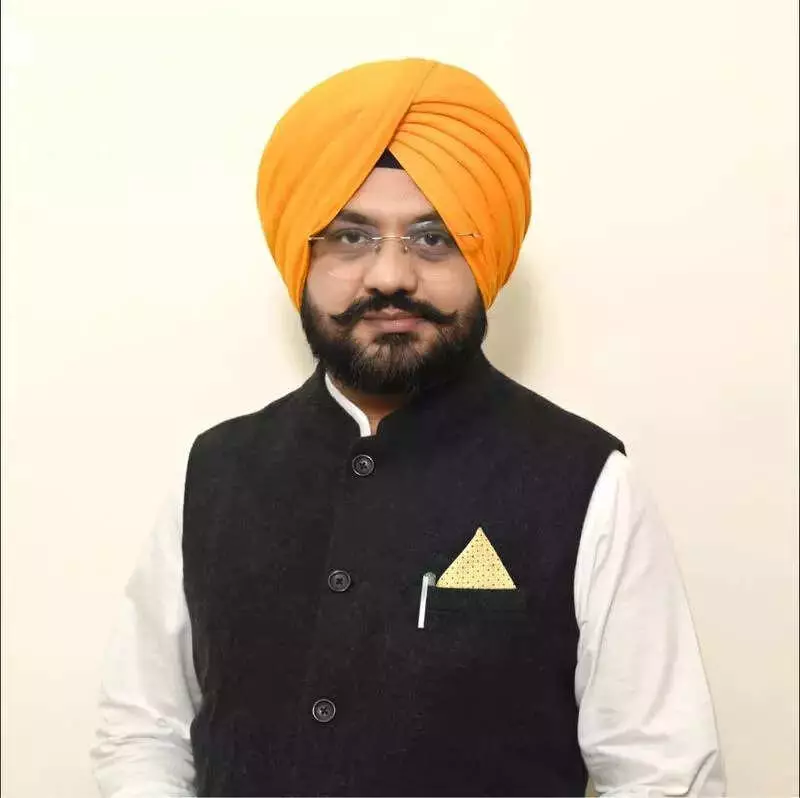
In a significant development concerning Sikh religious protocol, two prominent figures presented themselves before the highest temporal seat of Sikhism on Monday. Punjab's Culture Minister Tarunpreet Singh Sondh and Chief Khalsa Diwan president Inderbir Singh Nijjar, who is also the Amritsar South MLA, separately appeared at the Akal Takht secretariat to offer clarifications on sensitive issues linked to Sikh institutions and conduct.
Minister Sondh Responds to Summons Over Memorial Images
Punjab Minister Tarunpreet Singh Sondh appeared before officiating jathedar Giani Kuldeep Singh Gargaj after being formally summoned. The summons was related to alleged objectionable images that were displayed at the Bhai Jivan Singh (Bhai Jaita Ji) Memorial located in Sri Anandpur Sahib.
Prior to his hearing, Sondh paid his obeisance at the Golden Temple, demonstrating reverence for the sanctity of the process. Following the session with the jathedar, the minister addressed the media. He stated that he appeared as a "humble Sikh" and accepted the authority of the Akal Takht with his "head bowed."

Sondh revealed that the jathedar issued specific instructions to prevent future lapses. The culture department has been directed to appoint an officer who is thoroughly well-versed in Sikh principles and Punjab's rich heritage. This officer would oversee matters to ensure sensitivity and adherence to religious protocols in all state-linked projects concerning Sikh history. Sondh assured that he would convey the Takht's concerns directly to Chief Minister Bhagwant Mann and work to implement greater care in such institutional matters.
Chief Khalsa Diwan President Clarifies Membership Protocol
Earlier on the same day, Chief Khalsa Diwan president Inderbir Singh Nijjar met with the Sikh clergy to clarify issues surrounding the composition of the historic organization. The primary point of discussion was the presence of non-amritdhari (those who have not undergone the Sikh initiation ceremony) members within the Chief Khalsa Diwan.
Speaking to the press afterward, Nijjar expressed his complete commitment to abide by whatever decision the jathedars would take. He clarified the organization's constitutional stance, noting that it clearly mandates that all members should be amritdhari.
"If any member is not amritdhari, they should be encouraged with love and affection to partake amrit. The effort will be to bring everyone closer to the Guru's path," Nijjar stated, outlining a persuasive and inclusive approach to resolving the matter internally.
Upholding Religious Authority and Institutional Sensitivity
The dual appearances underscore the enduring moral and religious authority of the Akal Takht in matters of Sikh doctrine and institutional practice. The events of Monday highlight a process of dialogue and accountability where elected representatives and leaders of historic Sikh bodies directly engage with the clergy to address concerns.
The outcomes point towards corrective institutional measures. For the state government, it means instituting checks via knowledgeable officers. For the Chief Khalsa Diwan, it involves reinforcing its foundational principles while adopting a compassionate approach towards its members. These steps are seen as crucial for maintaining harmony and upholding the sanctity of Sikh maryada (religious code).






