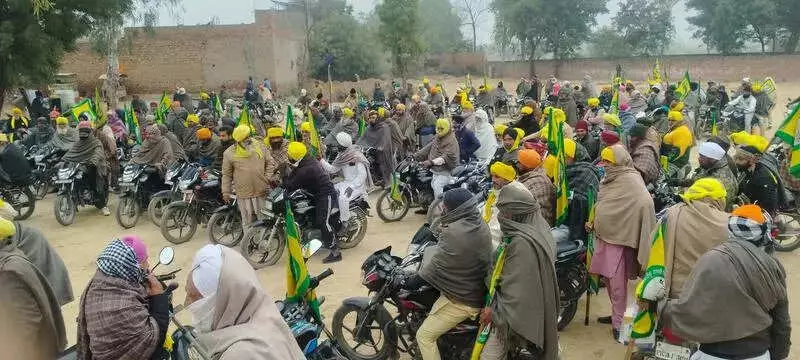
Farmers and worker organisations across Punjab are ramping up their campaign against a series of central government policies, setting the stage for widespread protests in the new year. The mobilisation targets the Viksit Bharat–Guarantee for Rozgar and Ajeevika Mission (Gramin) (VB-GRAMG), the Electricity (Amendment) Bill, the Seeds Bill, and the Labour Codes.
Widespread Mobilisation Drive Underway
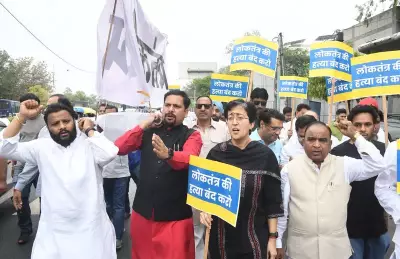
The call for opposition was issued by the Sanyukt Kisan Morcha (SKM) along with various labour and trade bodies. In response, activists have launched a multi-pronged outreach effort. This includes bike marches, flag marches, and the burning of effigies in villages to galvanise public sentiment against the four proposed and enacted laws.
Activists affiliated with SKM are moving from village to village, mobilising communities. Their primary demand is the withdrawal of the VB-GRAMG, which has replaced the Mahatma Gandhi National Rural Employment Guarantee Act (MGNREGA), and the restoration of the original rights-based scheme. In a significant move, SKM has called for district-level protests on January 16.

Separately, the labour organisation Punjab Khet Mazdoor Union (PKMU) has announced a protest at the Muktsar deputy commissioner's office on January 6.
Ground-Level Agitation and Leadership Accusations
Preparations for the January 16 agitation are in full swing. For instance, activists of the BKU Ekta Ugrahan held a bike march on Sunday across six villages in the Budhlada sub-division of Mansa district. Ram Singh Bhainibagha, the BKU Ugrahan district president for Mansa, accused both the central and state governments of pushing "anti-farmer and anti-worker" policies, which he said is forcing workers to oppose them.
In several villages, the All India Trade Union Congress (AITUC) and the Punjab Khet Mazdoor Union burnt effigies of the central government as part of their protest preparations. Addressing workers at Fatta Maolke village in Mansa, AITUC leader Kulwinder Singh Uddat asserted that by abolishing MGNREGA and introducing VB-GRAMG along with the Labour Codes, the central government is attempting to "crush poor workers." He vowed to oppose these moves "tooth and nail."
Similar mobilisation activities were reported in villages across Muktsar district to prepare workers for the January 6 protest.
Village Panchayats Voice Formal Opposition
The resistance is also taking a formal, institutional route. In Bathinda district, the panchayat of Ballo village convened a gram sabha on January 1 and passed a resolution opposing VB-GRAMG while demanding the restoration of MGNREGA.
Village sarpanch Amarjit Kaur stated that VB-GRAMG would prove "anti-worker." She highlighted a critical flaw: the scheme requires state governments to contribute 40% of the funds. Kaur argued that states "do not have the resources" to meet this obligation, which would ultimately impede work and hurt rural workers dependent on such employment guarantees.
The Ballo village panchayat has urged the state government to raise these concerns with the Centre, warning that the financial burden on states would hinder implementation.
Core Grounds of Opposition
The farmer and worker groups have outlined clear reasons for their protest:

- They oppose VB-GRAMG because it replaces the rights-based MGNREGA scheme.
- Protesters claim the new Act weakens the safeguards and guarantees previously available under MGNREGA.
- Panchayats argue the 40% state contribution clause will hamper implementation due to a lack of state resources.
- Labour organisations believe the change will adversely affect rural workers dependent on guaranteed employment.
- Local leaders fear the new provisions may lead to work stoppages due to funding gaps.
- Unions argue that the Labour Codes further erode worker rights and protections.