Punjab Government Unveils New Excise Policy for 2026-27 with Major Revenue Push
The Punjab government has rolled out its comprehensive Excise Policy for the financial year 2026-27, signaling a significant increase in liquor prices across the state. The policy, announced on Monday, places a stronger emphasis on revenue mobilization, with a target of Rs 12,800 crore for 2026-27. This represents a substantial jump of Rs 1,780 crore from the projected revenue of Rs 11,020 crore for 2025-26.
Increased Licence Fees and Reserve Prices
At the first stage of sale, an additional licence fee will be imposed on all liquor categories, including Indian-made foreign liquor, imported foreign liquor, wine, cider, rum, gin, vodka, and beer. The fee structure has been revised upward across all price brackets:
- For products with an ex-distillery price up to Rs 1,000, the fee rises to Rs 43 per bulk litre from Rs 37.
- For products priced between Rs 1,000 and Rs 2,000, the rate increases to Rs 52 per bulk litre from Rs 45.
- For those between Rs 2,000 and Rs 4,000, the fee climbs to Rs 90 per bulk litre from Rs 80.
- For premium products above Rs 4,000, the rate escalates to Rs 130 per bulk litre from Rs 100.
The special licence fee has also been hiked from Rs 1.5 to Rs 1.75 per proof litre, with proceeds allocated to the concerned department from the state's consolidated fund.

Retail and Wholesale Licence Renewals
Under the new framework, retail licences will be renewed for 2026-27, while wholesale L-1 licences will not be renewed and will instead be granted afresh for the new financial year. Retail licensees seeking renewal must deposit 0.6% of the prescribed licence fee for their group as a renewal fee along with their application.
The reserve price for retail groups has been fixed at a 6.5% increase over the previous year's fee. The formation of retail groups remains unchanged from last year, with a total of 207 groups available for licensing, excluding airport groups. Groups that are not renewed will be disposed of through an e-tender process, similar to the procedure followed in 2025-26.
Quota Adjustments and Trader Concerns
The annual quota for Punjab Medium Liquor will see a 3% increase, rising from 8.534 crore proof litres in 2025-26 to 8.790 crore proof litres for 2026-27. In contrast, the quota for Indian Made Foreign Liquor will remain open, allowing licensees to lift stock based on market demand.
Officials argue that continuing the open quota system for IMFL, imported foreign liquor, and beer enables the trade to reach its full potential. However, liquor traders have criticized the policy, labeling it unfavorable for small businesses due to the increased financial burden.
Strict Compliance and Regulatory Measures
The policy enforces rigorous compliance and regulatory standards. Licensees must adhere to all rules, ensure timely payment of dues, and prevent the sale of spurious liquor. Violations may attract stringent penalties, including immediate closure of vends.
Health and safety provisions have been strengthened, with bars required to use alcometers and display prominent signage warning about the health risks of alcohol consumption. For marriage palaces and events, specific licences will be mandatory for serving liquor, with fees determined according to the scale of the function. The policy also includes mechanisms for proper disposal of used liquor bottles to prevent misuse.
Revenue Growth and Historical Context
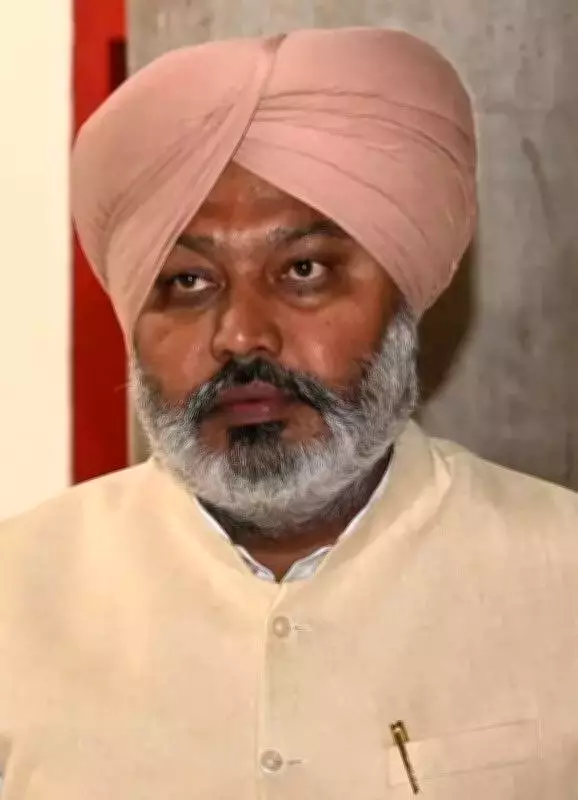
Finance Minister Harpal Singh Cheema highlighted the state's excise revenue trajectory, noting that during the SAD-BJP regime in 2011-12, revenue stood at a modest Rs 2,755 crore. Growth remained slow over the subsequent decade, reaching only Rs 6,255 crore during the Congress regime in 2021-22.
Following the implementation of a robust policy in 2022-23, revenue surged to Rs 8,428 crore. This momentum continued, climbing to Rs 10,744 crore in 2024-25 and meeting the current target of Rs 11,200 crore for 2025-26.

Promoting Domestic Malt Production
In a strategic move to boost industrial self-reliance and diversify the economy, Punjab will now permit its own malt manufacturing units. Finance Minister Cheema stated that this decision aims to domesticate the entire production cycle, from processing barley to distilling premium malt, thereby reducing dependence on external suppliers for raw spirits.
Cheema emphasized that enabling in-state malt production will help ensure high-quality spirits are manufactured within Punjab's borders, creating a farm-to-factory ecosystem that adds value to agricultural produce. The transition is designed to retain capital within the state, generate specialized technical employment, and reinforce Punjab's position in high-end industrial distillation.
Crackdown on Liquor Smuggling
Cheema underscored the state government's zero-tolerance policy against liquor smuggling from neighboring states and Chandigarh. Enforcement agencies have registered 4,406 FIRs and arrested 4,324 individuals as part of the crackdown. A total of 26,218 raids were conducted and 24,832 checkpoints were established across the state.
The drive led to the seizure of 455 vehicles and 1,76,552 bottles of liquor. Additionally, the excise department destroyed 38,23,576 litres of lahan, seized 82,990 litres of ethanol and extra neutral alcohol, and confiscated 66,794 litres of illicit liquor. Authorities also dismantled 374 working stills. These figures reflect the state's ongoing focus on curbing illegal trade and safeguarding public safety while strengthening legal compliance in the liquor sector.
Introduction of 40-Degree Punjab Medium Liquor
To discourage the consumption of illicit liquor, the government has introduced 40-degree Punjab Medium Liquor. This new variant will be white in color and sold in 180 ml packing units at a lower price point. The quota for 40-degree PML will be up to 5% of the Minimum Guaranteed Quota of 50-degree and 65-degree PML for groups opting to open sub-vends for this variant.
These sub-vends will be established exclusively in areas identified as prone to illicit liquor, based on requirements assessed from retail licensees. This initiative aims to provide a legal and safer alternative in high-risk regions, further supporting the state's efforts to combat illegal alcohol trade.