The Punjab government finds itself at a crossroads, deliberating whether to comply with or defy a direct order from the Central government. The directive mandates all states to conduct Gram Sabha meetings in every village panchayat on December 26. The purpose of these meetings is to educate citizens about the newly revamped version of the Mahatma Gandhi National Rural Employment Guarantee Act (MGNREGA) scheme, now referred to as VB-G Ram G.
The Core of the Conflict: Financial Burden and State Autonomy
At the heart of Punjab's hesitation is a profound concern over the financial implications of the redesigned scheme. A senior government official highlighted the critical shift in funding. Under the new structure, the Centre will cover 60% of the costs, while state governments are required to contribute the remaining 40%. Previously, employment guarantee was a legal right funded predominantly by the Centre.
The official raised a pressing question about Punjab's capacity to bear this new load. With an estimated Rs 2,000 crore needed for the scheme in the state—where works worth Rs 1,000 crore are already completed—Punjab's share would amount to a staggering Rs 800 crore. "The states would not be able to fund it. How will Punjab pay Rs 800 crore if an amount of Rs 2000 crore is to be spent?" the functionary asked, underscoring the fiscal dilemma.

Political Standoff and the December 30 Session
Complicating the decision is the state's pre-scheduled political move. The Punjab government has called a special session of the Vidhan Sabha on December 30 specifically to pass a resolution opposing the Central government's new MGNREGA avatar. This puts the administration in a bind regarding the Gram Sabhas ordered for December 26.
"When we have called a session, we should not organise the gram sabhas. When we will be bringing a resolution against it on December 30, how can gram sabhas be organised?" reasoned the government functionary. This sentiment reflects the conflict between following a central directive and preparing for an official legislative protest against the very subject of that directive.
Ministerial Meetings and CM's Critique
Punjab's Rural Development and Panchayats Minister, Tarunpreet Singh Sond, stated that he has called a meeting of concerned officials on Tuesday to fully grasp the situation. "We will take a call tomorrow. I have called all the officers to understand the situation. Otherwise, we are organising a special session of Vidhan Sabha on December 30 to oppose it," Sond said.
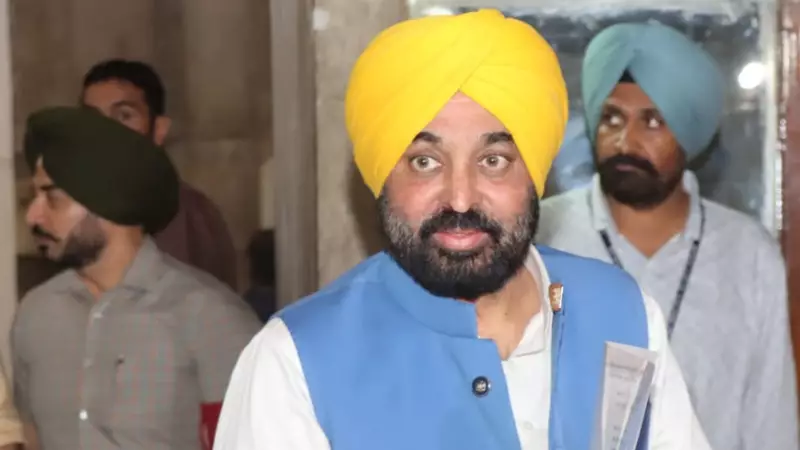
Chief Minister Bhagwant Mann, speaking from Sangrur on Monday, launched a sharp critique, not at the Centre alone but also at the opposition Congress. He questioned the focus on the scheme's name change. "Will the change in name of a scheme make it better? Congress is just caught up in the name. They are not able to understand what has happened in the scheme," Mann stated.
The CM emphasized that the substantive changes in the scheme's provisions are the real issue. "The provisions of the scheme have been changed. They should protest against the change in the provisions. The Centre has burdened the states instead of funding the scheme themselves. We will bring a resolution in Vidhan Sabha," he affirmed, clearly outlining the state's stance.
Stringent Central Guidelines for the Gram Sabha
The Union Ministry of Rural Development and Panchayati Raj's letter to all Chief Secretaries lays out strict protocols for the December 26 Gram Sabhas. It mandates the real-time uploading of the entire proceedings. Furthermore, the ministry requires geo-tagged photos and videos of the events as compulsory proof of compliance.
The directive also stresses the need for active participation from villagers, particularly women, labourers, and families from Scheduled Castes. These requirements add a layer of administrative complexity and scrutiny that the Punjab government must consider in its decision.

As of now, Punjab remains the only state to have publicly declared its intention to oppose the revamped scheme formally. The outcome of Tuesday's meeting and the subsequent decision on holding the Gram Sabhas will be a significant indicator of the state's strategy in this ongoing tussle over rural employment policy and fiscal federalism.