
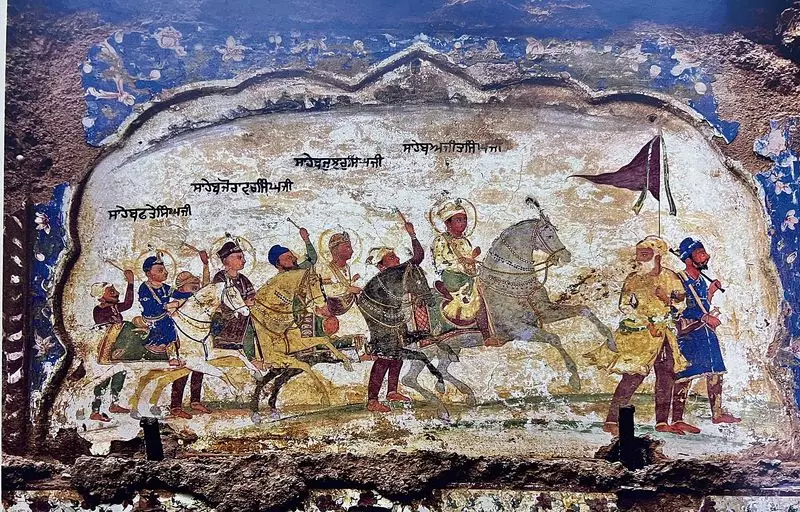
The Punjab Legislative Assembly witnessed a solemn and politically charged session on Wednesday as it paid rich tributes to the supreme sacrifice of the four sons of Guru Gobind Singh, the revered Sahibzadas. The special sitting, however, unfolded against the backdrop of a simmering controversy concerning the naming of a state government scheme, adding a layer of political tension to the proceedings.
A Solemn Tribute in the House
Led by Speaker Kultar Singh Sandhwan, the assembly convened to honor the memory of Sahibzada Ajit Singh, Jujhar Singh, Zorawar Singh, and Fateh Singh on the occasion of Veer Bal Diwas. Members across party lines stood in silence as a mark of respect for the young martyrs. In his address, Speaker Sandhwan emphasized that the sacrifice of the Sahibzadas is a cornerstone of Sikh history and Punjabi identity, serving as an eternal source of inspiration for courage and faith.
Chief Minister Bhagwant Mann, addressing the house, declared that the legacy of the Sahibzadas is not merely a historical event but a living ideal for the state. He reiterated his government's commitment to instilling the values of bravery and righteousness in the younger generation. Mann announced that the state would commemorate their sacrifice with great reverence every year.
The Naming Controversy Erupts
The atmosphere of unity during the tribute was punctuated by political discord over the naming of a government initiative. The controversy centers on the 'Mera Ghar Mere Naam' scheme. The opposition Shiromani Akali Dal (SAD) launched a sharp critique, accusing the ruling Aam Aadmi Party (AAP) government of misleading the public.
SAD legislator Manpreet Singh Ayali raised the issue forcefully, arguing that the scheme's name suggests a new policy of granting property ownership rights. He contended that the program is essentially a rebranding of an existing process for registering already allotted properties in the name of allottees. Ayali demanded that the government either rename the scheme to reflect its true nature or expand its scope to genuinely provide new homes to the needy.
This accusation sparked a heated exchange between the treasury and opposition benches. AAP ministers defended the scheme, stating it aimed to simplify bureaucratic processes and provide legal security to residents. The debate highlighted the ongoing political friction in the state assembly, even on a day dedicated to historical remembrance.
Political Repercussions and United Resolve
Despite the clash over the scheme, a unanimous resolution was passed to honor the Sahibzadas. The assembly resolved to request the central government to include the story of their sacrifice in the national school curriculum. This move aims to ensure that children across India learn about this pivotal chapter in history.
The session underscored a complex reality of Punjab politics: the ability to find common ground on issues of deep cultural and historical significance, even while being entrenched in contentious contemporary debates. The tribute successfully placed the spotlight on the everlasting legacy of the Sahibzadas, whose martyrdom continues to resonate powerfully centuries later.
Ultimately, the day in the Punjab Assembly was defined by this duality. It served as a powerful platform for collective homage, reinforcing shared values and heritage. Simultaneously, it acted as a stage for robust democratic debate, showcasing the assembly's role in holding the government accountable, ensuring that the spirit of the Sahibzadas' sacrifice also reflects in transparent and truthful governance.