Punjab Assembly Unanimously Passes Condemnation Resolution Against Proposed India-US Trade Agreement
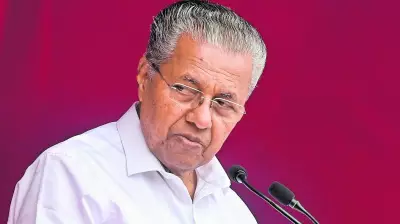
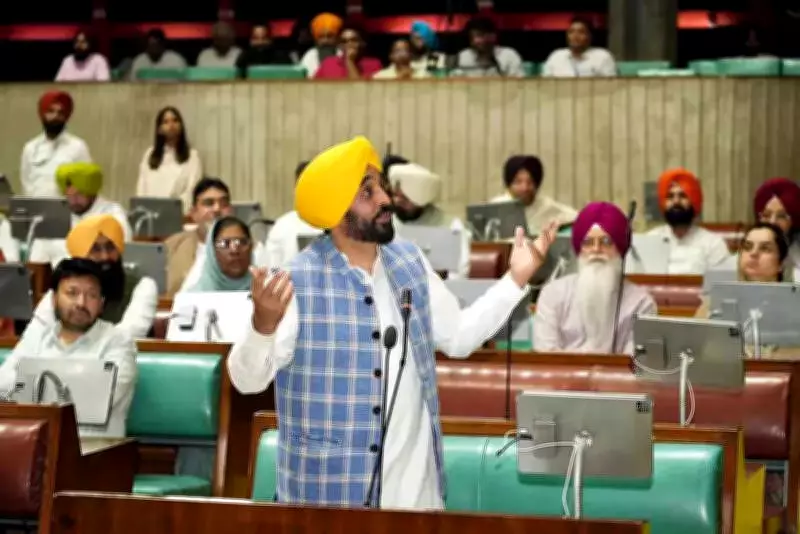
In a significant political move, the Punjab Assembly on Tuesday unanimously passed a condemnation resolution against the proposed India-US trade agreement. Chief Minister Bhagwant Mann led the charge, cautioning that this agreement could be "even more dangerous" than the three repealed farm laws that sparked massive farmer protests in 2020-21.
Cross-Party Support and Notable Absences
Opposition MLAs from various parties joined the ruling Aam Aadmi Party (AAP) in strongly opposing the proposed trade deal. Key figures included Congress leader Partap Singh Bajwa, Pargat Singh, Rana Gurjeet Singh, and rebel Shiromani Akali Dal (SAD) MLA Manpreet Singh Ayali. However, the two BJP MLAs—state BJP working president Ashwani Sharma and Jangi Lal Mahajan—were conspicuously absent from the session.
The resolution was formally moved by Punjab Agriculture Minister Gurmeet Singh Khudian during the ongoing budget session of the assembly.

Chief Minister Mann's Strong Critique
Labeling the agreement as "a secret agreement with the US", CM Mann highlighted the lack of transparency in its formulation. He stated, "This proposed agreement was not discussed in the Parliament of India, nor presented in any state assembly. No standing committee was consulted, and no all-party meeting was called to seek opinions or advice."
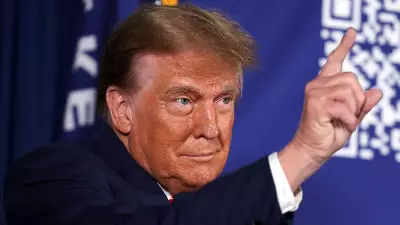
Mann expressed deep concern over recent media reports suggesting that US President Donald Trump had given India permission to buy oil from Russia. He questioned, "Is our country now being run from the White House? Do we need permission from Washington for our decisions? What kind of weakness does Prime Minister Modi have that allows others to dictate such things?"
He further criticized the Prime Minister's communication style, noting, "It is around 12 years since he came to power, and he has hardly addressed the press in open conferences, unlike previous Prime Ministers who regularly faced the media."
Mann emphasized that if the government is being pressured or blackmailed, the country deserves to know, asserting, "India is capable of standing on its own without depending on the US." In a pointed remark, he said that instead of making India a "Vishwaguru" (world teacher), the Modi government risks becoming a "Vishwa Chela" (world disciple).
Economic and Agricultural Concerns
The Chief Minister outlined specific threats to Punjab's agricultural sector from the proposed trade deal:
- Soy Meal Imports: The agreement would allow imports of soy meal from the US, a cattle feed residue produced in massive quantities. Mann warned that Punjab's farmers, who cultivate maize on 125,000 hectares, would struggle to compete with cheap imported feed, leading to significant losses.
- Cotton Trade Disparities: Under the deal, the US could send cotton to India for garment manufacturing, with exports back to the US being tariff-free. However, garments made from Indian cotton would face tariffs, disadvantaging local farmers. Punjab has around 100,000 hectares under cotton cultivation.
- Subsidy and Scale Issues: Mann highlighted the vast disparity between US and Indian farming scales and subsidies. The average US farmer owns about 500 acres and receives 35 times more subsidies than Indian farmers, who typically own around 2.5 acres. He argued that if cheap US products flood the Indian market, local farmers would not survive.
This resolution underscores the growing political and economic tensions surrounding international trade agreements and their potential impact on India's agricultural communities.