Punjab Assembly Budget Session Descends Into Chaos Over Medical College Plans
Chandigarh: The Punjab Assembly's budget session on Tuesday witnessed a sharp and heated confrontation between treasury and opposition benches, primarily centered on the government's plan to establish seven new medical colleges. The exchange escalated into a verbal duel, with accusations of abusive language and demands for apologies, highlighting deep political divisions.
Clash Over Medical College Details Sparks Heated Debate
The controversy ignited when Congress MLAs, including Leader of Opposition Partap Singh Bajwa, sought specific details about the number of government medical colleges opened since March 2022. Congress MLA Tript Rajinder Singh Bajwa objected to the government's response, arguing that it inappropriately included private institutions alongside government projects. He emphasized that the government's promise to open hospitals in every district should not be conflated with private sector achievements.
In response, Health Minister Dr. Balbir Singh challenged the opposition to list medical colleges established during the decades of Congress and SAD-BJP rule. He defended the AAP government's record, noting the opening of the ESIC Medical College in Ludhiana in 2025 and a private college in Mandi Gobindgarh in 2024. Dr. Singh detailed plans for seven additional colleges, including government institutions in Hoshiarpur and Kapurthala with central assistance, PPP models in Sangrur and Nawanshahr, and private ventures in Ludhiana, Lehragaga, and Malerkotla.

"The government has actively facilitated private colleges by providing land and regulating fees for 50% of seats, resulting in an addition of 900 medical seats," Dr. Singh asserted.
Opposition Accuses Government of Misleading the Public
Leader of Opposition Partap Singh Bajwa countered, insisting the question was solely about government medical colleges. He accused the government of attempting to mislead the public by including private institutions and questioned its role in their establishment. Bajwa pointed out that despite announcements for 16 government medical colleges, work had not begun on any in four years, with locations for 11 still undisclosed.
The debate intensified when Minister Aman Arora intervened, prompting Bajwa to object on procedural grounds, arguing that Arora, as state AAP president, should not speak on the issue. Speaker Kultar Singh Sandhwan intervened, citing collective responsibility to allow any minister to speak, which Bajwa contested, leading to accusations of misleading the House.
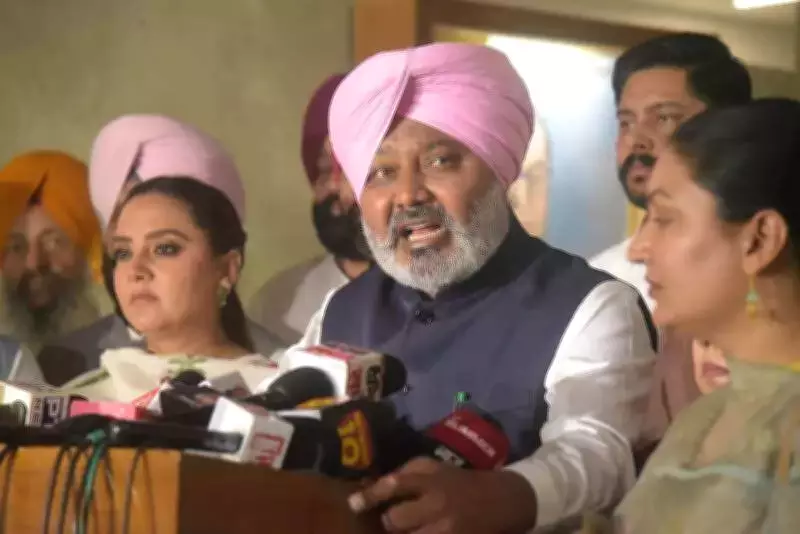
"Congress promised five medical colleges in its manifesto but failed to establish even one," Arora retorted, escalating the confrontation. Finance Minister Harpal Singh Cheema accused Bajwa of using abusive language, sparking demands for an apology from treasury benches. The situation grew so volatile that Arora moved toward opposition benches before the speaker intervened to restore order, with Congress MLA Avtar Singh Henry later helping to calm tensions.
Broader Issues: Mobile Addiction and Garbage Crisis Addressed
Amid the turmoil, the session also tackled pressing social and environmental issues. During a discussion on Type 1 diabetes facilities, Speaker Kultar Singh Sandhwan urged the government to address excessive mobile and social media use among children. He highlighted how screen addiction, often facilitated by parents using phones to engage children, contributes to health problems.
"Mobile addiction is a significant component of the growing burden of non-communicable diseases linked to lifestyle factors," Health Minister Dr. Balbir Singh agreed, terming the suggestion timely and promising government consideration of measures.
Garbage Piles Mount Across Punjab's Urban Centers
Congress MLA Rana Gurjeet Singh raised alarms over worsening garbage accumulation in Punjab's cities, noting that waste remains uncollected for days, leading to large piles of legacy waste. He inquired about proposals to generate power from waste, pointing to Minister Sanjeev Arora's dual charge of power and local government departments.

Minister Arora cited Amritsar's example, where 40% of 11.4 lakh metric tonnes of legacy waste has been remediated. He provided data on daily waste generation: Ludhiana leads with 1,031 tonnes, followed by Amritsar (660 tonnes), Jalandhar (500 tonnes), and Bathinda (110 tonnes), underscoring the scale of the crisis.
The session underscored the volatile political climate in Punjab, with debates on healthcare, environmental management, and public health revealing both policy challenges and partisan friction. As the budget session continues, these issues are likely to remain at the forefront of legislative discussions.