

Pune Commuters Grapple with Transport Chaos as App-Based Drivers Stage Daylong Strike
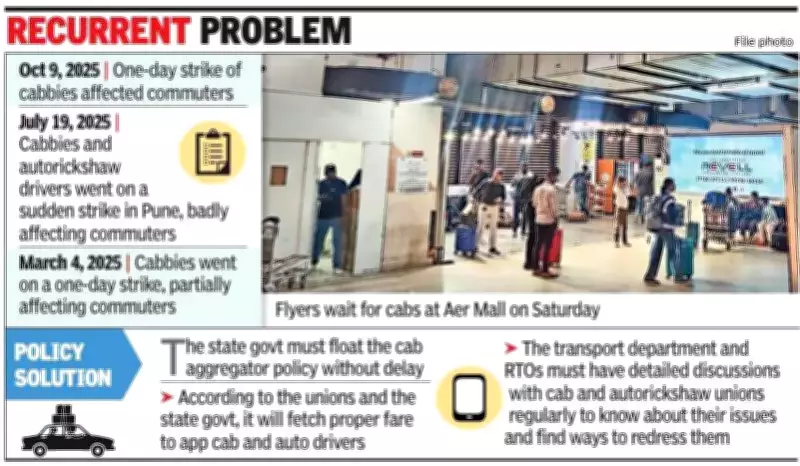
Commuters in Pune were left scrambling for transportation on Saturday morning as a significant number of cab and auto rickshaw drivers affiliated with app-based aggregators went on a coordinated daylong strike. The industrial action led to a severe shortage of available vehicles and exorbitant fare surges, causing major disruptions for residents and travelers alike.
Fare Hikes Reach Alarming Levels on Key Routes
The impact of the strike was immediately felt through dramatic increases in ride-hailing application fares. For instance, an Uber cab ride from Kondhwa to Pune Airport, which typically costs between Rs 300 and Rs 350, skyrocketed to nearly Rs 700 during the morning hours. Similarly, a trip from Kondhwa to FC Road on Uber Go showed an estimated fare of Rs 580, a sharp rise from the regular Rs 280–340 range.
Auto rickshaw fares were not spared either. A journey from Fatimanagar to the airport, normally priced at Rs 240–270, was quoted at Rs 450. These inflated rates left many commuters in a state of shock and frustration as they attempted to navigate the city.

Widespread Commuter Inconvenience and Long Waits
Prasun Shindke, a resident of Koregaon Park, shared his ordeal: "I had to go to the airport to pick up my relative, but I couldn't find a cab for a long time. No one confirmed the ride though cabs could be seen on different applications. The fare from Koregaon Park to the airport, which is usually Rs 180–200 unless the driver says 'pay by meter', showed Rs 350–370."
Travelers arriving at Pune Airport also faced significant hurdles. Udit Bhosle, who arrived from Delhi, recounted: "I waited for a cab for around 30 minutes, which usually doesn't happen nowadays. No one accepted rides. I finally took a prepaid autorickshaw to my home in Baner. I didn't know there was a strike."
Union Leader Confirms Widespread Participation and National Scope
Keshav Kshirsagar, President of the Baghtoy Rickshawaala Autorickshaw Union and the Indian Gig Workers' Front, confirmed that over 60% of cabs and autorickshaws did not operate until 2 PM. He stated, "Apart from Pune, cities like Mumbai and Nagpur were also affected. The strike was a part of a nationwide agitation of cab and auto operators of aggregators to press for various demands. Autorickshaws with meters operated as usual. People shouldn't have been hassled much."
However, reports from the ground contradicted this assurance. Sujay Kamat, a resident of the Camp area, alleged blatant overcharging: "An autorickshaw driver demanded Rs 400 for a ride from MG Road to FC Road, and refused to operate by the meter. I waited for around 45 minutes at a mall and then got an Uber auto. He too charged Rs 200 against the usual Rs 130, reflected on the application."
Government Intervention and Warning to Aggregators
In response to the escalating situation, Maharashtra Transport Minister Pratap Sarnaik issued a stern warning to the owners of app-based aggregator companies. He emphasized that the state government would not tolerate any inconvenience caused to the common man due to driver protests.
Minister Sarnaik said, "The state was ready to assist unions to formulate a solution, but it was incorrect to hold the common man to ransom. The transport department officials are in touch with the unions, drivers, and the companies. We told them to spell out what assistance was required from the state and we would extend support. But if the owners fail to resolve the issue, the state will not hesitate in taking action against them."
The strike highlights the growing tensions between gig economy workers and platform companies, with drivers using collective action to push for better working conditions, fare structures, and other undisclosed demands. While meter-operated autos continued to ply, the reliance on app-based services left a significant portion of Pune's commuting public stranded and facing financial strain.






