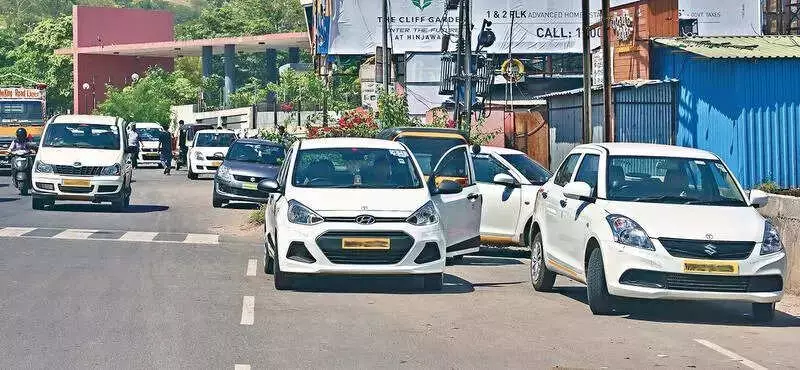
In Pune, a significant gap exists between official claims and on-ground reality regarding cab fares. While local transport authorities assert that ride-hailing apps have aligned their pricing with approved rates, passengers continue to face overcharging, leading to widespread disputes.
Official Claims vs Passenger Reality
Earlier this week, the Pune Regional Transport Office (RTO) stated that major cab aggregators like Uber, Ola, and Rapido had restructured their in-app fares. This move was meant to comply with the Regional Transport Authority (RTA)-approved charges of Rs 37 for the first 3 kilometers and Rs 25 for every subsequent kilometer.
Deputy RTO Swapnil Bhosle told Times of India that this update would gradually reduce conflicts between drivers and riders. He alluded to numerous consumer complaints about the use of an unauthorized website for fare calculation.

However, the experience of daily commuters paints a completely different picture. Nitesh Bijale, a frequent app cab user, reported paying Rs 360 or more three times in the last week for an Uber Go ride from FC Road to Pune airport. The RTA-approved fare for this distance should be approximately Rs 290.
The Persistent Use of Unauthorized Fare Calculators
Many passengers, like Nuzhat Farheen, a working professional, have similar stories. She recounted a recent trip from Fatimanagar to Pune railway station, a distance of about 8 km. "The Uber app showed a fare of Rs 220 during non-peak hours, though it should have been around Rs 160. The driver still calculated the fare via a website and charged me Rs 270," she said.
The website in question is onlymeter.in, floated by the Indian Gig Workers Front. Despite the RTO's directives, drivers continue to use this platform to determine fares, often resulting in charges higher than both the app quote and the official RTA rates.
Silence from Companies and Unaware Drivers
When contacted by TOI last week regarding the claimed fare restructuring, both Uber and Rapido did not respond. After a follow-up a week later, the companies still provided no reply. Sources within Rapido indicated the company was unwilling to comment.
Most cab drivers also claimed to be unaware of any fare restructuring in the aggregator apps. "We haven't heard anything about it. The companies would have intimated us. I don't think any restructuring has happened," said cab driver Javed Shaikh.
Another driver, who spoke on condition of anonymity, stated he uses onlymeter.in exclusively. "I am not aware of any such update. Onlymeter.in is the only way we will charge, and there can be no doubts cast on this," he asserted.
Background of the Fare Dispute and Policy Delay
The fare conflict has deep roots. On May 1 this year, cabbies under the Indian Gig Workers Front began charging fares of Rs 37 for the first 1.5 km and Rs 25 per km thereafter via onlymeter.in. This was revised in September, with the Front introducing different rates for various car models like sedans, hatchbacks, and SUVs.
The situation causes significant inconvenience for riders. Aarav Singh, who travelled from Delhi to Pune, said, "Cabbies accept rides and then later ask for payment by meter. I cancelled three rides due to this disagreement. Such a thing doesn't happen in Delhi or any other city."
While the state transport department assured in November that a cab aggregator policy would be implemented soon, the chances of it being rolled out before the end of January are now dim. This is due to the Election Commission's model code of conduct being in force.
Keshav Kshirsagar, president of the Indian Gig Workers Front, criticized the delay, saying, "The government kept saying the policy was ready but never released it." He confirmed the Front has no information on whether app fares have been restructured, despite hearing about a recent meeting. In response, the Front has planned an agitation in front of the Pune collector's office on December 22.
As of now, Pune's commuters remain caught between unresponsive companies, drivers using unofficial meters, and a regulatory policy stuck in political limbo.