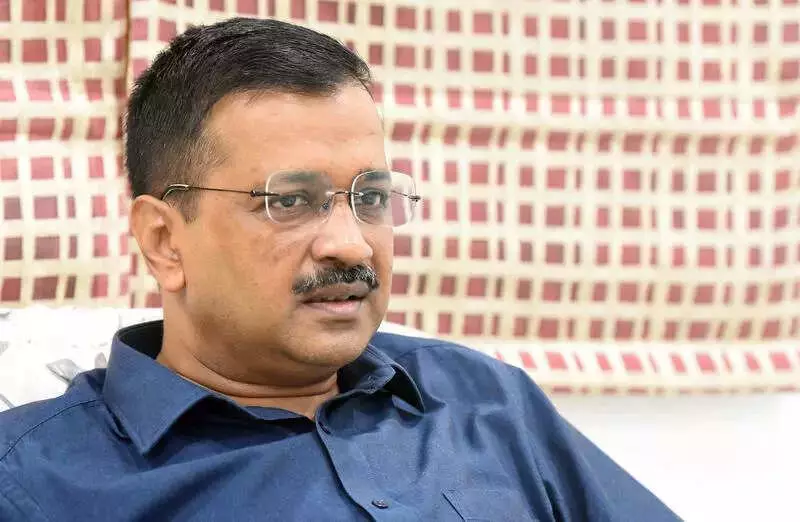
The political tussle in Delhi took a fresh turn as the Legislative Assembly's privileges committee recommended disciplinary action against top Aam Aadmi Party (AAP) leaders, including former Chief Minister Arvind Kejriwal and former Deputy CM Manish Sisodia. The recommendation stems from their repeated failure to appear before the panel to answer questions regarding the historical authenticity of the 'Phansi Ghar' (Hanging House) exhibit unveiled in 2022.
What is the 'Phansi Ghar' Controversy?
The core of the dispute revolves around a restored room within the British-era Delhi Assembly building. In 2022, Arvind Kejriwal and other AAP functionaries inaugurated this space as the 'Phansi Ghar'. The exhibit featured a symbolic hanging rope, murals of freedom fighters Bhagat Singh, Rajguru, and Sukhdev, and a board stating that "innumerable unknown freedom fighters were hanged here."
However, after the Bharatiya Janata Party (BJP) assumed power in the corporation, Assembly Speaker Vijender Gupta claimed a lack of historical evidence supporting the site's use as a gallows. Records from the National Archives of India reportedly indicated the space was originally a tiffin room. Subsequently, the structure was renamed the "tiffin room," and the matter was referred to the Committee of Privileges for a detailed examination.

The Committee's Summons and AAP's Defiance
The privileges committee sought written comments from Kejriwal, Sisodia, former Speaker Ram Niwas Goel, and former Deputy Speaker Rakhi Bidlan regarding the exhibit's authenticity. While they submitted replies in September 2025, they disputed the committee's jurisdiction and denied any breach of privilege.
The committee then issued summons for personal appearances on November 13, 2025, and November 20, 2025. None of the four leaders attended these scheduled sittings. Kejriwal and Sisodia even challenged the summons in the Delhi High Court, but the court did not grant them any interim relief from appearing.
The committee's report, tabled in the Assembly on Tuesday, states that their "wilful absence... without just cause or permission" constitutes contempt of the House and its committee. It emphasizes that as former members and dignitaries aware of the events leading to the opening, it was their "bounden duty" to assist in ascertaining the truth.
Political Reactions and What Happens Next
The AAP has vehemently criticized the move, labeling it a political "distraction exercise." The party alleges the BJP is avoiding a serious debate on Delhi's pollution crisis. "BJP knows that a serious debate on pollution will expose its failures... That is why it is eager to talk about a so-called 'Phansi Ghar' issue," the party stated, accusing the government of reducing the Assembly to a "political theatre."
The committee's report is likely to be taken up for consideration by the full Delhi Assembly. The House will then decide on the nature of the action to be taken against the leaders. Meanwhile, the legal challenge by Kejriwal and Sisodia in the Delhi High Court continues, with the next hearing on maintainability scheduled for January 8, 2026.
This development marks another flashpoint in the ongoing political rivalry between the AAP and the BJP in the national capital, turning a historical interpretation debate into a major privilege and accountability battle.