Assam's Political Battle Over Zubeen Garg's Legacy Intensifies Ahead of Elections
The haunting lyrics of Zubeen Garg's 2019 song 'Politics Nokoriba Bandhu (Don't do politics, my friend)' have taken on a deeply ironic resonance in contemporary Assam. Seven years after its release, the tragic 2025 death of the beloved music icon in Singapore has become a central talking point for politicians on the campaign trail, directly contradicting the singer's own plea.
Memorial Site Transformed into Political Arena
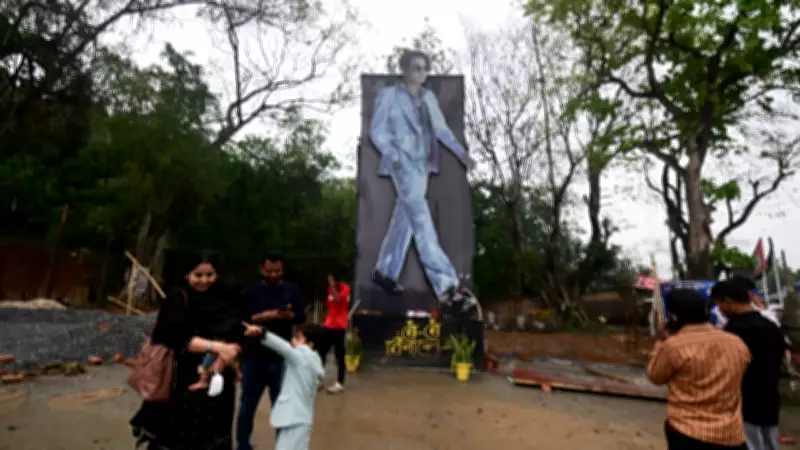
As election season approaches, visits by politicians to Zubeen Kshetra—the memorial established at the site of the singer's cremation on September 23 last year—have increased dramatically. What was intended as a sacred space for mourning has become a battleground for political point-scoring.
Lok Sabha MP and Assam Pradesh Congress Committee chief Gaurav Gogoi has launched serious allegations against the state government. He claims that a Special Investigation Team (SIT) was formed specifically to "hide" Chief Minister Himanta Biswa Sarma's connections with the accused, referring to North East India Festival organizer Shyamkanu Mahanta. Gogoi has further asserted that the BJP remains fundamentally opposed to Zubeen's ideals and continues to disrespect him even after his untimely death.

Counter-Allegations and Political Sparring
Chief Minister Himanta Biswa Sarma has not retreated from the controversy. Speaking in the state assembly, he declared it is "on the record" that Zubeen was murdered. Sarma has accused the Congress party of transforming the singer's memorial into a political arena and has vowed not to visit the site until elections conclude.
Akhil Gogoi, the peasant leader-turned-Raijor Dal president, has characterized the investigation as a political spectacle. He alleges the government is "dramatising" Zubeen's death to garner sympathy ahead of the polls. In response to these developments, Congress included a specific promise in its election manifesto: to ensure justice for Zubeen within 100 days if elected to office. Sarma labeled this commitment a "sin", while MP Priyanka Gandhi Vadra defended it, arguing that committing to pursue justice within a timeframe should not be viewed as political opportunism.
Conflicting Conclusions in Death Investigation
The official Singaporean investigation presents a starkly different narrative from the political accusations circulating in Assam. The state coroner in Singapore concluded that Zubeen's death was "simply due to an unfortunate and tragic accidental drowning" and that no one had forced, coerced, or pushed him into the water. Directly addressing concerns raised by Zubeen's wife, Garima Saikia Garg, about the Singapore Police Coast Guard's finding of no foul play, state coroner Adam Nakhoda emphasized that authorities conducted a comprehensive and thorough investigation.
Despite this official conclusion, opposition parties in Assam maintain that the "mystery" of Zubeen's death remains unsolved, particularly given the differing conclusions reached by investigating agencies in India and Singapore. Chief Minister Sarma, however, insists there is "no difference" between the Singapore verdict and the state police's chargesheet, arguing that the case will be strengthened as it supports the view that the singer was forced to drink alcohol and coaxed to go for a swim.
Fan Reactions and Memorial Development
For the legions of fans who adored 'Zubeen da', the political maneuvering rings hollow. Pradip Sharma, secretary of the Zubeen Kshetra Pariskar Parisalana and Tadarak Committee, observes that while politicians have begun making trips to the memorial, "this will not have any effect on the people of Assam or on the polls."
Local resident Nitu Moni Das echoes a common sentiment: "He always stood with the people of Assam, not with the politicians. We just want to know how the tragedy happened." Jayanta Sarma points to the painful irony of the situation, noting that Zubeen himself pleaded against politics in his music. "How can we tolerate people politicising his death?" he asks, describing how his weekend visits to the memorial have become a personal ritual.

For countless Assamese people, Zubeen's death represents not a political blame game but a profound wave of grief that has united communities. Hundreds flock to the shrine daily, with numbers swelling to thousands on holidays. Visitors offer earthen lamps, traditional gamosas, and flowers, while some perform pujas with assistance from the dedicated Tadarak committee.
Building a Permanent Memorial
Construction has commenced on a permanent memorial structure, with a boundary wall also being erected to address practical concerns. Committee president Deben Das explains that "the shrine is difficult to maintain during monsoon" and that a concrete structure will provide necessary protection. The boundary wall serves the dual purpose of preventing trespassing and, as one committee member suggests, "maybe it will keep netas out of this sacred place."
Malati Medhi, a committee member who visits daily after completing morning household chores, represents the grassroots dedication to preserving Zubeen's memory. "None of the people working here have specific roles. We take care of the site together," says Paban Kalita, another volunteer, highlighting the communal spirit that defines the memorial's maintenance.
Krishna Kamal Saikia, who travels monthly from Dibrugarh, captures the essence of Zubeen's enduring legacy: "Zubeen da was not just a musician but a pure soul. He did so much for the state and its people. Paying our respects is the least we can do." As political battles rage around his memory, this fundamental connection between artist and community remains unshaken.