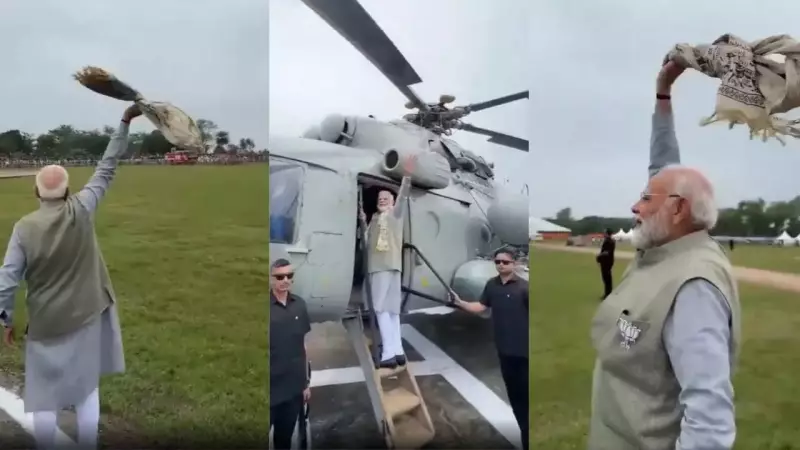
Prime Minister Narendra Modi set the political temperature soaring in Bihar during his electrifying visit to Muzaffarpur, where he created a memorable moment by enthusiastically waving a traditional gamcha before a massive crowd. This strategically significant gesture comes as political parties begin positioning themselves for the crucial Bihar Assembly elections scheduled for 2025.
The Gamcha Moment That Captured Bihar's Attention
During his address to thousands of supporters, PM Modi seamlessly blended political messaging with cultural symbolism. The traditional cotton towel, commonly known as gamcha in Bihar and Eastern India, represents more than just a piece of cloth—it embodies the cultural identity of the common people and serves as an everyday essential for millions across the state.
Political Significance Ahead of 2025 Polls
Political analysts are viewing this gesture as a carefully calculated move to connect with Bihar's rural and working-class voters. The 2025 Bihar elections are expected to be fiercely contested, with the ruling NDA alliance seeking to maintain its dominance against a resurgent opposition.

Modi's gamcha wave follows a pattern of similar symbolic gestures he has employed during previous election campaigns across different states. This approach has consistently proven effective in creating relatable imagery that resonates with the masses.
Muzaffarpur Rally Sets Tone for BJP Campaign
The Prime Minister's public meeting in Muzaffarpur, one of Bihar's most politically significant districts, drew enormous crowds despite challenging weather conditions. His speech focused on development initiatives while subtly addressing local concerns that are likely to dominate the election discourse.
What This Means for Bihar's Political Landscape
As parties begin their groundwork for the 2025 battle, Modi's visit signals the BJP's intent to campaign aggressively in Bihar. The gamcha moment has already started generating significant social media traction, with supporters and critics alike discussing its political implications.
Observers note that such cultural connect strategies could play a decisive role in a state where identity politics and symbolic gestures have historically influenced voter behavior. With the election still months away, this visit marks the beginning of what promises to be an intense political contest in one of India's most politically aware states.