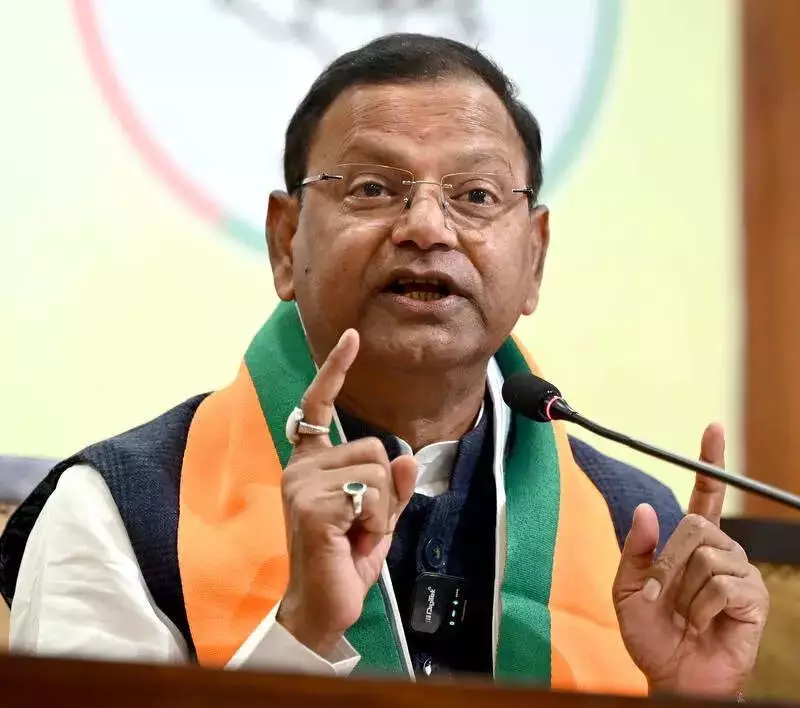
The appointment of Union Minister of State for Finance, Pankaj Chaudhary, as the new president of the Uttar Pradesh unit of the Bharatiya Janata Party (BJP) is a direct political response shaped by past electoral outcomes and future ambitions. This significant organizational change stems from the party's performance in the 2024 Lok Sabha elections and is strategically aimed at influencing the crucial 2027 Assembly polls in the state.
Decoding the 2024 Verdict and the OBC Challenge
The immediate catalyst for this leadership shift was the BJP-led NDA's performance in the 2024 general elections. The alliance's seat tally in Uttar Pradesh plummeted to 36 from the earlier 64 secured in 2019, effectively losing around half of its Lok Sabha seats. A critical analysis of this verdict revealed a substantial shift among Other Backward Classes (OBC) voters away from the NDA.
Within the broad OBC spectrum, the Kurmi community, considered the second-largest OBC group after Yadavs, is believed to have delivered a particularly significant jolt to the BJP's prospects. Chaudhary's own political identity as an OBC leader, specifically from a Kurmi background, makes his elevation a calculated move. The party's central leadership envisions his role as pivotal in arresting the drift of OBC voters, especially Kurmis, and rebuilding their trust before the state assembly elections.

Navigating Immediate Organizational Hurdles
Despite his impressive record of winning the Maharajganj Lok Sabha constituency seven times, Chaudhary steps into organizational politics, facing challenges distinct from electoral battles. His primary task is to ensure smooth coordination between the party organization and the state government led by Chief Minister Yogi Adityanath. The perceived lack of this synergy is cited as a factor in the Lok Sabha poll setback.
A photograph from his first meeting as state chief, showing him touching the feet of CM Yogi Adityanath and the Gorakshpeeth head priest, was widely circulated. This gesture is interpreted within BJP circles as Chaudhary's early signal to foster better organizational-government relations. However, party insiders suggest that sustained efforts and more such confidence-building measures will be necessary to solidify this coordination.
Chaudhary, who entered the Lok Sabha in 1991, is senior to Yogi Adityanath in parliamentary tenure. Another delicate task involves managing caste equations within the party. He must reassure Brahmin functionaries who have expressed feelings of marginalization, sometimes attributed to the dominance of Thakurs and at other times to the party's intensified OBC outreach.
His recent strong warning to party legislators following a controversial assembly of Brahmin MLAs at Kushinagar MLA PN Pathak's residence has sent a clear message. Some view this as Chaudhary acting on a mandate from the central leadership to curb factionalism, while others see it as his attempt to establish authority as a leader who will not succumb to pressure politics.
The Road to 2027: Reviving Fortunes and Building a Team
Beyond internal management, Chaudhary's most significant test will be to revive the BJP's electoral fortunes for the 2027 Uttar Pradesh Assembly elections. The party has initiated a counter-narrative to Samajwadi Party chief Akhilesh Yadav's PDA (Pichhda, Dalit, Alpsankhyak) plank by installing an OBC face as state president. Chaudhary's acumen will be tested in keeping all caste groups satisfactorily engaged until the polls.
An immediate organizational step is forming his own team. Sources indicate that discussions on names have already begun, and a new team is expected to be announced sooner than anticipated. A close associate from Maharajganj expressed confidence in Chaudhary's electoral expertise, honed over seven consecutive Lok Sabha victories, suggesting that his experience combined with the central leadership's strategy can change the party's fate.

Political observers note that while Chaudhary is new to organizational politics, his extensive experience in managing his constituency—where key local bodies like zila panchayats have long been led by his family or close associates—could prove valuable in handling state-level party dynamics. The success in meeting these immediate internal challenges will be the foundation for the larger mission of securing a favorable verdict in 2027.