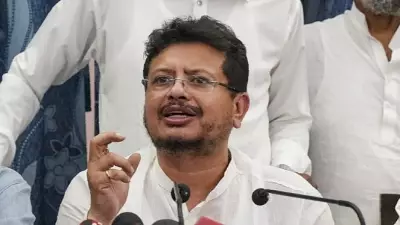
The Panchkula Residents' Welfare Federation (PRWF) has made a direct appeal to Haryana Chief Minister Nayab Singh Saini, urging him to reconsider the recently revised electricity tariffs for the fiscal year 2025-26. The federation contends that the new structure, far from offering relief, has imposed an unjust financial strain on household consumers through clever accounting.
Federation Flags 'Unjustified Structural Changes'
In a memorandum submitted on Thursday, the PRWF, represented by its former general secretary Subhash Papneja, presented a detailed critique. While acknowledging a per-unit rate increase, the core of their grievance lies in what they term "unjustified structural changes" to the billing mechanism. The federation argues that these changes have completely nullified any marginal relief that was promised to the common household.
The PRWF specifically targeted the government's advertised move to abolish Monthly Minimum Charges (MMC). They labeled this abolition as largely symbolic and misleading. According to the federation, the MMC has not been removed but has simply been rebranded into a new category of fixed charges, which are often set at a higher rate than the old minimum charges.

New Fixed Charges: A Detailed Look
The revised policy introduces a mandatory fixed charge that consumers must pay every month, regardless of how much electricity they actually use. For households with a connected load of up to 5 kW, this fixed charge is set at Rs 50 per kW per month. For those with a load above 5 kW, the charge jumps to Rs 75 per kW per month.
"This is not the removal of minimum charges but a mere change of nomenclature, which is resulting in higher mandatory payments for consumers," the federation stated emphatically in its memo. They have demanded an immediate correction to this policy, calling it a deceptive practice that burdens the public.
Linking Slabs to Load Defeats Subsidy Purpose
Another major point of objection raised by the PRWF is the decision to link electricity tariff slabs directly to a consumer's connected load. The federation argues that this methodology fundamentally undermines the goal of providing subsidized power to genuinely needy and low-consuming households.
Under this system, a household with a higher connected load (due to essential appliances) will be pushed into a higher fixed charge bracket from the outset, irrespective of its actual consumption or financial status. The PRWF believes this move penalizes average families and defeats the welfare objective of offering progressive, consumption-based subsidies.
The ball is now in the court of the state administration. The Panchkula Residents' Welfare Federation's appeal puts a spotlight on the practical impact of policy changes on domestic budgets, challenging the government to align its tariff structure with its promises of consumer relief.