

West Bengal Assembly Approves Panchayat Amendment Bill Amidst Political Controversy
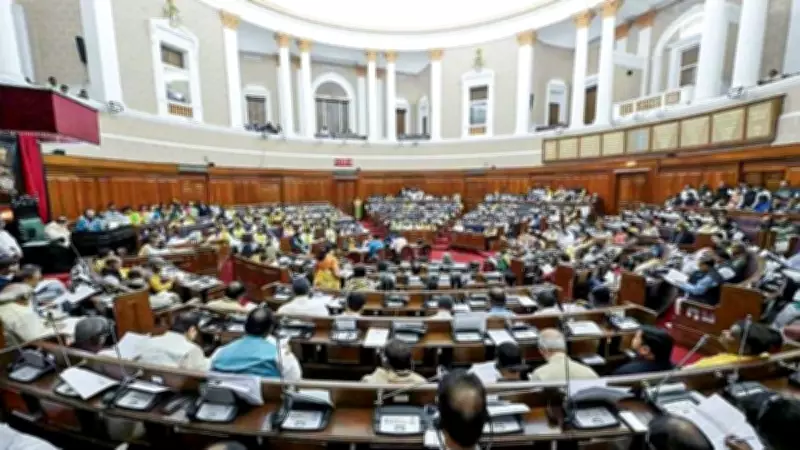
In a significant legislative move, the West Bengal Assembly has passed the Panchayat (Amendment) Bill, 2026, during the final hours of the Budget Session. This new legislation provides a three-year immunity period for panchayat office-bearers against no-confidence motions, effectively securing the positions of approximately 75,000 officials, including village pradhans and district sabhadhipatis.
Government's Justification for Administrative Stability
State Panchayat and Rural Development Minister Pradip Majumdar, who introduced the Bill in the Assembly, defended the amendment as a necessary measure to prevent the misuse of no-confidence motions. "This amendment will ensure proper organisational dynamics within Panchayat bodies, allowing for their effective functioning," Majumdar stated. He emphasized that the change aims to curb frequent disruptions and foster administrative continuity in local governance.
Previously, disgruntled members could initiate motions to remove office-bearers after a period of 30 months. With the current local bodies established in mid-2023, this amendment effectively locks in the existing power structure through the upcoming election cycle, providing a buffer against political instability at the grassroots level.

Opposition's Criticism of Political Motives
However, the Opposition Bharatiya Janata Party (BJP) has sharply criticized the Bill, labeling it a "political insurance policy" for the ruling Trinamool Congress (TMC). Leader of Opposition in the Assembly, Suvendu Adhikari, accused the TMC of rushing the legislation to address internal factionalism. "Due to internal conflicts within the TMC in areas like Birbhum and Bhangar, many panchayats have faced crises. This amendment was introduced after only 30 minutes of discussion to save the party's credibility," Adhikari claimed.
BJP legislator Arup Kumar Das echoed these sentiments, arguing that the real intention behind the amendment is to secure political stability within the TMC. "The Bill was passed in a hurried manner, indicating it's more about keeping the ruling party's house in order than genuine administrative reform," Das remarked. Another BJP leader described the Bill as a "surprise guest" on the legislative floor, added to the schedule following a closed-door meeting in Speaker Biman Banerjee's chamber.
Implications and Future Outlook
The passage of this Bill has ignited a heated debate between the TMC and BJP, with both parties presenting contrasting narratives. While the TMC highlights the need for stability and prevention of misuse in local governance, the BJP frames it as a strategic move to consolidate power ahead of elections. Adhikari further vowed that if the BJP forms the government in May, this amendment will be scrapped, setting the stage for potential future legislative battles.
This development underscores the ongoing political tensions in West Bengal, where panchayat reforms have become a focal point in the broader struggle for control over local administrative bodies. The amendment's impact on grassroots democracy and electoral dynamics will likely be closely monitored in the coming months.






