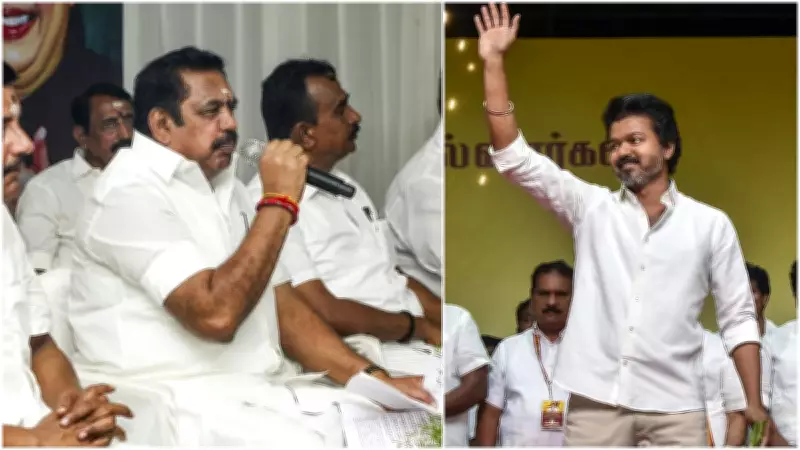
AIADMK Chief Palaniswami Launches Scathing Attack on TVK Leader Vijay
In a dramatic political escalation, AIADMK chief Edappadi K. Palaniswami has made a sharp U-turn by accusing Tamil actor-politician and TVK leader Thalapathy Vijay of fleeing the scene of a stampede in Karur and failing to visit grieving families. This accusation marks a significant shift in the political discourse in Tamil Nadu, coming just days after Vijay himself labeled the AIADMK as a "corrupt-slave force," which had brought the party into the line of fire.
Details of the Karur Stampede Incident and Political Fallout
The controversy centers around a recent stampede that occurred in Karur, a city in Tamil Nadu, during a public event. According to Palaniswami, Vijay, who is the chief of the Tamilaga Vettri Kazhagam (TVK) party, left Karur immediately after the stampede without offering condolences or support to the affected families. This allegation has sparked widespread debate and criticism, with many questioning the timing and motives behind Palaniswami's statements.
The political feud between AIADMK and TVK has been intensifying, particularly after Vijay's recent remarks targeting the AIADMK. In his speech, Vijay accused the party of corruption and subservience, which prompted a swift and harsh response from Palaniswami. The AIADMK chief's latest comments are seen as a retaliatory move, aiming to undermine Vijay's credibility and public image ahead of potential electoral confrontations.

Analysis of the Accusations and Their Implications
Palaniswami's accusations raise several critical questions about leadership and accountability in Tamil Nadu politics. By claiming that Vijay fled the scene, Palaniswami is attempting to portray the TVK chief as irresponsible and disconnected from the people, especially in times of crisis. This strategy could impact public perception, as voters often look for compassionate and responsive leaders during emergencies.
- The stampede in Karur has highlighted safety concerns at large public gatherings, with calls for better crowd management and emergency protocols.
- Vijay's absence from the grieving families, as alleged by Palaniswami, could damage his reputation as a people-centric politician, which he has cultivated through his film career and political outreach.
- The timing of these accusations, following Vijay's criticism of AIADMK, suggests a calculated political maneuver to shift the narrative and regain momentum in the ongoing rivalry.
Moreover, this incident underscores the volatile nature of Tamil Nadu's political landscape, where personal attacks and public disputes are common tactics. Both parties are likely to use this controversy to rally their supporters and sway undecided voters, making it a pivotal moment in the lead-up to future elections.
Broader Context of Tamil Nadu Politics and Future Prospects
Tamil Nadu has a history of vibrant and often contentious politics, with film personalities like Vijay playing significant roles. The feud between AIADMK and TVK is part of a larger struggle for dominance in the state, where issues of governance, corruption, and public welfare are frequently debated. Palaniswami's U-turn on Vijay reflects the dynamic and unpredictable nature of these political battles.
- The AIADMK, under Palaniswami's leadership, is seeking to consolidate its base and counter the growing influence of newer parties like TVK.
- Vijay's entry into politics has disrupted traditional alignments, bringing a fresh wave of support from youth and film fans, which poses a challenge to established parties.
- This controversy may influence voter sentiment, with potential repercussions for both parties in upcoming local and state elections.
In conclusion, Palaniswami's accusations against Vijay over the Karur stampede represent a critical juncture in Tamil Nadu's political narrative. As the situation unfolds, it will be essential to monitor how both leaders respond and whether this feud escalates further or leads to broader discussions on accountability and leadership in the state.