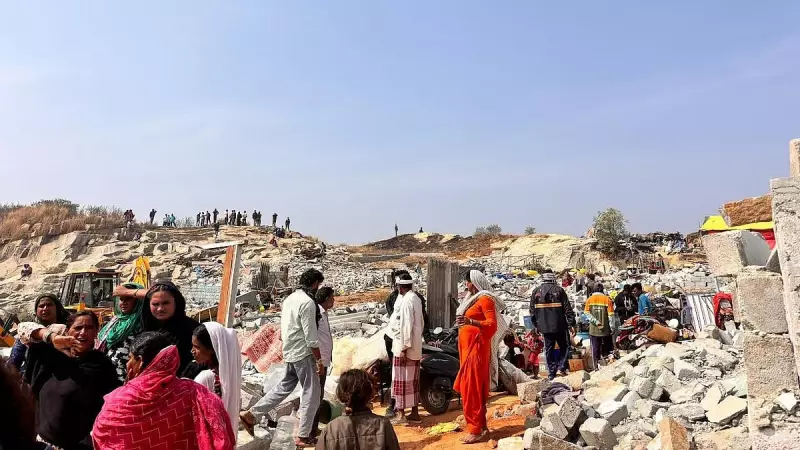
One week after a significant demolition drive in Bengaluru, affected residents are still waiting for any form of official relief or a concrete rehabilitation plan, according to local activists. The situation on the ground remains dire, with displaced families left to fend for themselves.
"Nothing From Day One": Activist's Stark Account
Nandini, an activist with the Dhudiyuva Janara Vedike group, which has been coordinating relief efforts at the site, provided a bleak assessment. She stated unequivocally that there has been a complete absence of support from the authorities since the operation began. "There has been nothing from day one till now - no immediate relief, no rehabilitation package, nothing," she told reporters. Her statement underscores the growing frustration and humanitarian concern surrounding the aftermath of the demolitions.
Timeline of Inaction and Community Response
The demolition event, which took place on or around December 21, 2025, led to the immediate displacement of numerous families. As of December 28, 2025, the date of the latest reports, the promised aid has failed to materialize. In the vacuum left by the absence of a government-led response, community organizations and activist collectives like Dhudiyuva Janara Vedike have stepped in to provide basic necessities. However, their resources are limited and cannot substitute for a structured, official rehabilitation package.

Broader Implications and Calls for Action
The ongoing crisis highlights a critical gap in urban policy execution, where demolition drives are not seamlessly paired with resettlement plans. The lack of a rehabilitation package raises serious questions about the long-term welfare of the displaced citizens. Key consequences of this inaction include:
- Increased vulnerability of women, children, and the elderly.
- Strain on community-based support networks.
- Potential for escalating public health risks in makeshift shelters.
Activists are now urging the Karnataka state administration to immediately address the situation by providing temporary shelter, essential supplies, and a transparent roadmap for permanent rehabilitation. The continued delay is seen as a violation of the affected residents' fundamental rights to shelter and dignity.