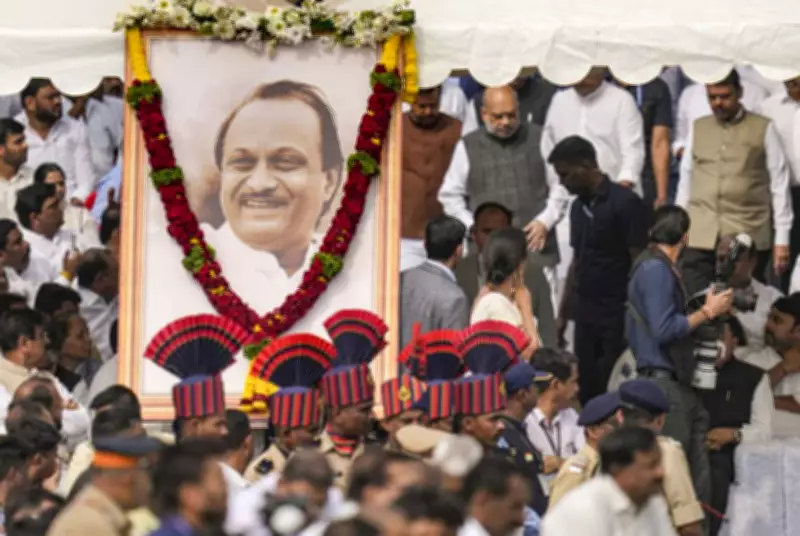
NCP Confronts Leadership Void Following Ajit Pawar's Demise
The Nationalist Congress Party (NCP) in Maharashtra is navigating a profound leadership crisis after the recent and untimely death of its stalwart leader, Ajit Pawar. This unexpected event has plunged the party into a state of uncertainty, with senior members and grassroots workers alike seeking direction and stability in the wake of this significant loss. The political landscape of the state has been notably altered, prompting intense discussions about the future trajectory of the NCP and its role within Maharashtra's coalition dynamics.
Internal Push for Sunetra Pawar's Cabinet Inclusion
In response to the leadership vacuum, a faction of loyal NCP leaders has begun advocating strongly for the inclusion of Sunetra Pawar, the widow of Ajit Pawar, into the state cabinet. These proponents argue that her entry would not only provide a sense of continuity and emotional solace to the party cadre but also strengthen the NCP's position in the government. They emphasize her potential to uphold the political legacy of the Pawar family, which has been instrumental in shaping the party's identity and influence over the years.
Supporters highlight Sunetra Pawar's deep understanding of the party's ethos and her ability to connect with the grassroots, suggesting that her appointment could help consolidate the NCP's base during this transitional phase. However, this proposal has sparked debates within the party, with some members questioning whether familial succession is the most strategic path forward, given the complex political equations at play.

Rival Factions and Merger Talks by 2026
Amidst the internal deliberations, rival factions within the NCP and external political observers have started speculating about a potential merger of the party by the year 2026. These discussions are fueled by concerns over the NCP's long-term viability without a strong, unifying figure like Ajit Pawar at the helm. Critics point to the increasing fragmentation within the party and the challenges of maintaining cohesion in the face of mounting political pressures.
The merger talks, though still in preliminary stages, revolve around the possibility of aligning with larger political entities to ensure the NCP's survival and relevance in Maharashtra's competitive political arena. Proponents of this idea argue that a merger could provide the party with much-needed organizational strength and financial resources, while detractors warn that it might dilute the NCP's distinct identity and alienate its core supporters.
Strategic Implications for Maharashtra Politics
The unfolding scenario within the NCP carries significant implications for the broader political landscape of Maharashtra. As one of the key players in the state's coalition government, the party's internal stability is crucial for the continuity of governance and policy implementation. The push for Sunetra Pawar's cabinet entry and the whispers of a merger reflect deeper anxieties about the NCP's ability to navigate the post-Ajit Pawar era effectively.
Political analysts suggest that the coming months will be critical, as the party must balance emotional considerations with pragmatic strategies to secure its future. The decisions made now could reshape alliances, influence electoral outcomes, and determine the NCP's role in shaping Maharashtra's development agenda. Stakeholders across the political spectrum are closely monitoring these developments, aware that the resolution of this leadership crisis will have ripple effects throughout the state's governance framework.
In summary, the death of Ajit Pawar has thrust the NCP into a period of introspection and strategic recalibration. With party leaders championing Sunetra Pawar's cabinet inclusion and rivals contemplating a merger by 2026, the NCP stands at a crossroads. The choices made in the near future will not only define its internal cohesion but also its impact on Maharashtra's political dynamics, making this a pivotal moment in the state's contemporary history.