Nagpur's RTO Flyover Dark Zone Raises Alarm for Commuter Safety
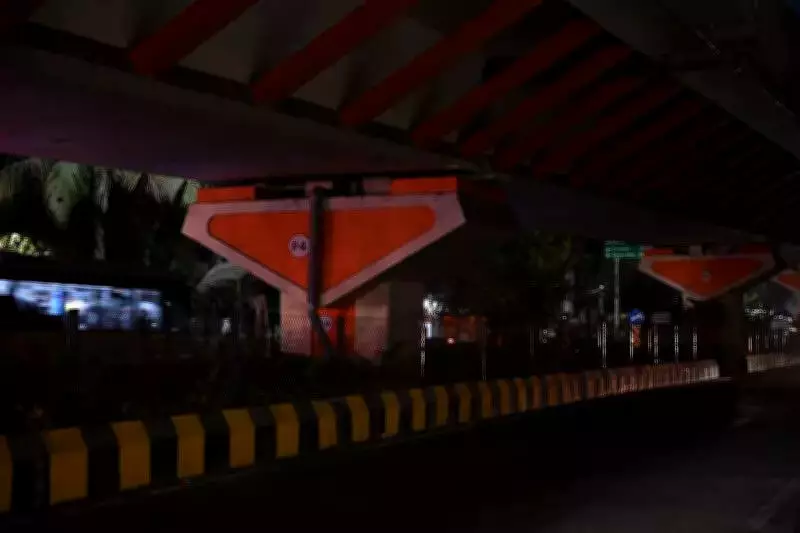
The stretch beneath Nagpur's Regional Transport Office (RTO) flyover, particularly along the busy corridor connecting NU Square and Ravinagar, has become a significant safety hazard due to inadequate lighting infrastructure. This poorly illuminated section poses serious risks for both vehicular traffic and pedestrians navigating the area during evening and night hours.
Student Community Particularly Vulnerable
The safety concern becomes especially critical considering the dense concentration of educational institutions in the vicinity. Multiple colleges, student hostels, and coaching centers operate in the surrounding neighborhoods, resulting in substantial student movement continuing well into late evening hours. The dim lighting conditions create hazardous situations for this vulnerable demographic.
"After 7 pm, the entire stretch transforms into a dark zone. When riding a two-wheeler, it becomes extremely challenging to spot pedestrians attempting to cross or judge distances accurately," explained Rohan Patil, a college student who commutes daily between Ravinagar and Amravati Road.

Personal Security Concerns Mount
Beyond traffic safety issues, the poorly lit areas beneath the flyover have raised serious concerns about personal security, particularly affecting women students who need to traverse this section during evening hours.
"Many of us return late after extended library sessions or evening classes. Under the flyover, there are patches where visibility drops to near-zero levels. The concern extends beyond potential accidents to include personal security apprehensions," shared Aditi Deshmukh, a student attending evening classes in the nearby area.
Persistent Problem on Major Junction
Commuters and residents report that the lighting deficiency has persisted for several weeks, despite the location's importance as a major transportation junction connecting crucial areas of Nagpur.
"This isn't some minor interior road we're discussing; it's a significant junction linking important city sectors. Proper illumination should have been implemented as a fundamental priority from the initial stages," emphasized Shubham Wankhede, a law student familiar with the area.
Official Response and Remedial Measures
In response to mounting concerns, a senior official from the Public Works Department's National Highway division provided clarification about ongoing efforts to address the lighting deficiency.
The official confirmed that new streetlight installations have already been completed beneath the flyover structure, with only electrical cabling work remaining pending. "Ideally, activating the entire lighting system may require up to two weeks, as certain locations necessitate obtaining fresh electrical connections and completing comprehensive cabling work," the official stated.
Recognizing the severity of the safety situation, the department has committed to implementing temporary lighting arrangements to illuminate the problematic stretch until permanent cabling infrastructure becomes fully operational. This interim measure aims to mitigate immediate safety risks while permanent solutions are being finalized.
The situation highlights the critical importance of adequate public infrastructure lighting in urban areas, particularly in zones with high pedestrian and student traffic during evening hours. Proper illumination serves multiple purposes including accident prevention, enhanced personal security, and improved overall urban mobility during nighttime conditions.