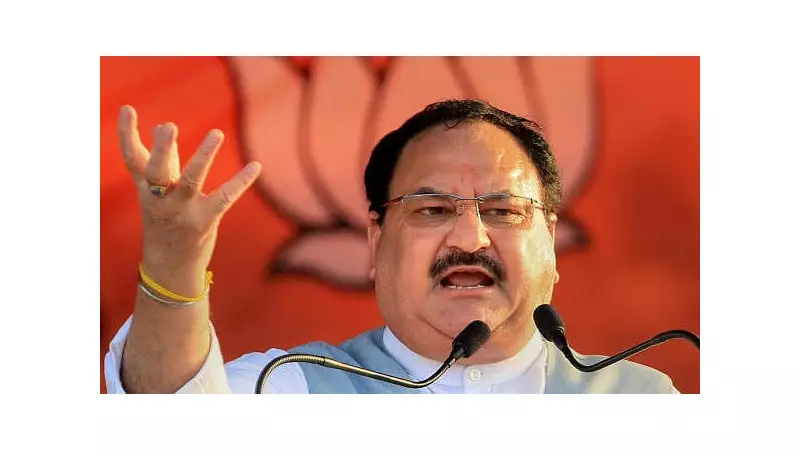
Bharatiya Janata Party (BJP) National President Jagat Prakash Nadda launched a sharp political offensive against the Congress party on Saturday, holding it responsible for the devastating 2013 Jhiram Ghati Naxal attack in Chhattisgarh. The assault, which occurred over a decade ago, resulted in the tragic loss of 29 lives, including top state Congress leaders.
The Core Allegation: A Charge of Political Negligence
Addressing a public gathering in Chhattisgarh's Kanker district, Nadda directly implicated the then Congress-led state government for the security lapse that led to the ambush. He asserted that the attack, which wiped out a significant portion of the party's state leadership, was a consequence of the Congress administration's failure. The incident took place on May 25, 2013, in the Jhiram Valley of Bastar district, when Naxals ambushed a convoy of Congress leaders returning from a Parivartan Rally in Sukma.
Among the prominent leaders killed were State Congress Chief Nand Kumar Patel, senior leader Mahendra Karma, and former legislator Uday Mudliyar. Former Union Minister V.C. Shukla was critically injured and later succumbed to his wounds. Nadda's attack focused on the alleged intelligence failure and lack of adequate security arrangements under the Congress rule, framing it as a grave dereliction of duty towards both the leaders and the democratic process.

Congress Retort: Accusations of Diversion and Hypocrisy
The Congress party swiftly countered Nadda's allegations, dismissing them as a desperate attempt to divert public attention from current issues. State Congress leaders labeled the BJP president's remarks as "politically motivated" and "insensitive" to the memories of the slain leaders, many of whom were their own colleagues.
Congress spokespersons argued that instead of politicizing a national tragedy, the BJP should answer for its own governance record on security in Chhattisgarh and other Naxal-affected regions. They pointed out that the BJP has been in power in the state for a considerable period since the attack and questioned why the issue was being raked up now, ahead of potential electoral contests. The party's reaction underscored a deep-seated resentment over the BJP's use of the tragedy for political point-scoring.
The Enduring Political Shadow of Jhiram Ghati
The 2013 Jhiram Ghati massacre remains one of the deadliest attacks on Indian political leadership in recent history. It irrevocably altered the political landscape of Chhattisgarh. The incident has periodically resurfaced in political discourse, often around elections, with both parties trading blame.
The attack exposed critical vulnerabilities in the security protocol for political movements in high-risk zones. While subsequent governments, both Congress and BJP, have reviewed and revised security measures, the political blame game over the original lapse continues unabated. Nadda's recent comments have reignited this bitter debate, ensuring that the ghosts of Jhiram Ghati continue to haunt Chhattisgarh's politics.
The exchange highlights how historical tragedies are instrumentalized in contemporary political battles. For the BJP, it is a tool to question the Congress's credibility on national security and governance. For the Congress, it is a painful chapter that it believes is being exploited by its rivals to mask present failures. As the war of words intensifies, the focus shifts from the solemn remembrance of the victims to the noisy arena of political rivalry.