Mumbai Civic Elections 2026 Deliver Dramatic Political Shift
The 2026 Brihanmumbai Municipal Corporation elections unfolded within a completely transformed political environment. This dramatic change stemmed primarily from the 2022 division within the Shiv Sena party. Eknath Shinde's faction successfully retained control of the original party name and its official symbol. This development fundamentally altered the electoral balance of power across India's financial capital.
Weakened Position for Uddhav Thackeray's Faction
The Shiv Sena (UBT), led by Uddhav Thackeray, entered the electoral contest at a distinct disadvantage. The party faced severe shortages in both financial resources and organizational manpower. It competed against a powerful alliance comprising the Bharatiya Janata Party and the Shinde-led Shiv Sena. This coalition controlled governmental power at both the national and Maharashtra state levels.
The contrast with the previous 2017 election results proved particularly stark. Back then, a unified Shiv Sena emerged as the single largest party within the BMC. It secured 84 seats, narrowly surpassing the BJP's tally of 82 seats in the 227-member municipal corporation. With additional post-election support from six Maharashtra Navnirman Sena corporators and several independent members, the Sena's total climbed to 102 seats. This majority allowed the party to maintain control of the mayor's office until the civic body's eventual dissolution.

Key Factors Behind the Sena (UBT) Setback
By the 2026 election cycle, the Sena (UBT) saw its seat count decline to approximately 65. The party's losses extended beyond mere numbers. Several traditional strongholds in central Mumbai, the island city, and parts of the eastern suburbs no longer delivered automatic support for the Thackeray family banner. High-profile defections, including the departure of Tejasvee Ghosalkar just before the polls, underscored the party's deepening organizational crisis.
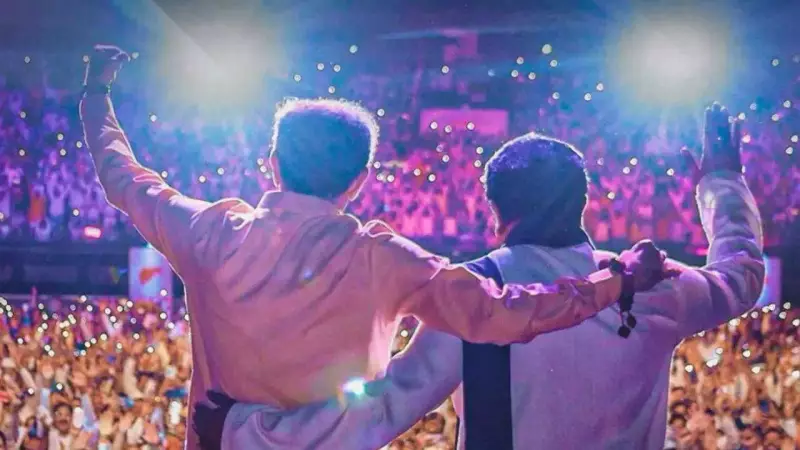
Political analysts identified several critical weaknesses for the Thackeray-led faction. An overemphasis on nativist politics appeared to limit its appeal strictly to core Marathi-speaking voters. This strategy alienated other significant communities, including Muslim and North Indian populations. Its electoral partnership with the MNS helped consolidate Marathi votes in certain constituencies but also created polarization. Critics widely viewed Raj Thackeray's party as a fringe entity rather than a serious political contender, citing its frequently shifting ideological positions.
The 2022 split continued to haunt the Sena (UBT) throughout the campaign. The division stripped the party of a substantial portion of its traditional grassroots workers. The faction also confronted severe constraints in campaign funding and volunteer manpower. It struggled to compete against an alliance that commanded the administrative machinery of both the state and central governments.
Rise of the Mahayuti Alliance
The BJP-led Mahayuti coalition gained significant ground through a combination of strategic messaging, infrastructure promotion, and organizational muscle. One of the alliance's central campaign themes was the promise of a "triple engine government." This concept advocated for unified governance by the same political formation at the central, state, and municipal levels. Party leaders argued that such alignment would eliminate bureaucratic friction and dramatically accelerate development projects.
Large-scale infrastructure initiatives featured prominently in the alliance's election narrative. Campaign materials heavily promoted the expanding Metro network, the Coastal Road project, the upcoming Navi Mumbai International Airport, the Atal Setu bridge, and other major undertakings. These projects were presented as tangible evidence of improved urban connectivity and enhanced civic amenities.
The BJP-Shinde Sena combine also worked deliberately to expand its voter base beyond traditional support groups. It actively courted north Indian, south Indian, Gujarati, Marwari, and Marathi middle-class constituencies. The alliance's superior access to financial resources and its extensive network of dedicated party workers provided a formidable advantage during the intense campaign period.

Notable Results and Electoral Highlights
The election produced several remarkable outcomes and statistical highlights across Mumbai's diverse wards.
- BJP candidate Jignasha Shah recorded the highest victory margin of 21,534 votes in the Borivli constituency.
- Congress candidate Luvbir Miranda secured the narrowest win by just 7 votes in Kalina, following a mandatory recount requested by the BJP opponent.
- Three family members achieved success in south Mumbai wards. This group included Makrand Narwekar, brother of Assembly Speaker Rahul Narwekar, who contested from Ward 212A as the wealthiest candidate in the fray, along with cousin Gauraav Sakhare.
- In Jalna, Shrikant Pangarkar, an accused in the Gauri Lankesh murder case currently out on bail, won his seat as an Independent candidate.
- The Gaikwad political family suffered three consecutive losses in central Mumbai wards, involving Arun Gaikwad's daughter Geeta, another daughter Yogita, and sister-in-law Vandana.
- Six of the seven wards in Dharavi were secured by the Sena (UBT) and Congress, with four going to Uddhav's faction and two to the Congress.
- The All India Majlis-e-Ittehadul Muslimeen won six seats previously held by the Samajwadi Party in minority-dominated areas.
- The number of independent corporators elected to the BMC increased to six, up from five in the previous election cycle.
The 2026 Mumbai civic polls ultimately delivered a clear verdict on the city's new political reality. The fragmentation of the once-dominant Shiv Sena created opportunities for realignment. The BJP-Shinde Sena alliance capitalized effectively on this disruption, leveraging administrative power and a broad-based development agenda to secure a dominant position in India's most important municipal corporation.