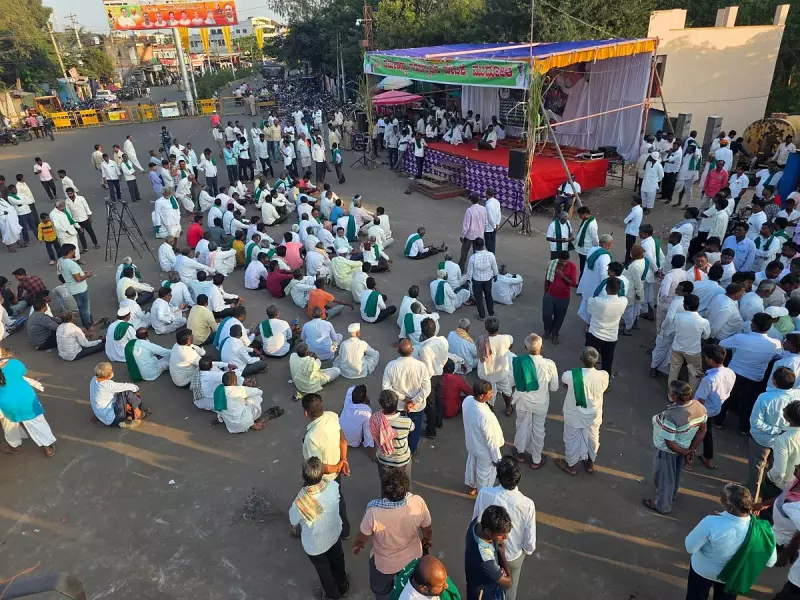
For the third consecutive day, hundreds of determined farmers from Mudhol and surrounding villages in Karnataka's Bagalkot district have maintained their road blockade on the crucial Bengaluru-Hubbali National Highway, bringing traffic to a standstill as they demand immediate compensation for crop losses.
The Heart of the Protest
The farmers, who began their demonstration on Tuesday, have positioned themselves strategically on the highway near Mudhol town, approximately 550 kilometers from Bengaluru. Their primary grievance centers around uncompensated crop damage that has left them in financial distress.
According to local sources, the agricultural community suffered significant losses due to recent weather conditions and other factors affecting their yield. Despite repeated appeals to local authorities, the farmers claim their concerns have gone unaddressed, forcing them to take drastic measures.
Police Response and Traffic Disruption
Local law enforcement has deployed substantial forces to the protest site to maintain order and prevent any potential escalation. Heavy police presence including officers from multiple stations has been established along the blocked stretch of the highway.
The ongoing blockade has created massive traffic disruptions along one of Karnataka's most important transportation corridors. Commuters and commercial vehicles traveling between important cities like Bengaluru and Hubbali have been forced to seek alternative routes, causing significant delays and inconvenience.
Police officials have been engaged in continuous negotiations with protest leaders, attempting to find a peaceful resolution to the standoff. However, as of Thursday morning, no breakthrough had been achieved, and the farmers remained firm in their position.
Growing Tensions and Future Implications
The prolonged nature of the protest indicates the depth of frustration among the farming community in the region. Many participants have expressed that they feel ignored by administrative mechanisms designed to address their grievances.
Local agricultural leaders have warned that if their demands remain unmet, the protest could intensify and potentially spread to other areas. The situation highlights the ongoing challenges faced by farmers in the region and the critical need for effective grievance redressal systems.
The third day of continuous protest marks a significant escalation in what began as a demonstration earlier this week. The persistence of the farmers underscores their determination to secure what they describe as long-overdue compensation for their agricultural losses.
As negotiations continue between farmer representatives and government officials, the situation remains tense with both sides holding their ground. The coming hours will be crucial in determining whether a resolution can be reached or if the blockade will extend further, causing additional disruption to regional transportation and commerce.