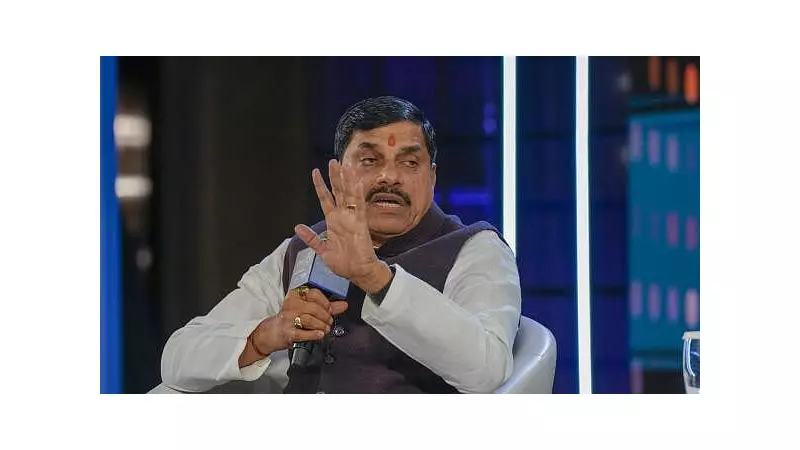
Madhya Pradesh Chief Minister Mohan Yadav has launched a sharp political critique against the Congress party, questioning its apparent discomfort with the name of Lord Ram. The comments came amidst the ongoing political discourse surrounding the VB-G RAM G Bill and the grand Ram Temple in Ayodhya.
A Direct Question to the Opposition
Chief Minister Yadav pointedly asked why the very mention of Ram's name seems to irritate the Congress party. He linked this query directly to the party's opposition to the specific legislative proposal, the VB-G RAM G Bill. The timing of his remarks, made on 20 December 2025, adds to the ongoing national conversation about religious symbolism and political positioning.
The Ayodhya Temple Visit as a Political Barometer
In his statement, Yadav highlighted a notable absence. He pointed out that senior Congress leaders, including Rahul Gandhi, Sonia Gandhi, and Priyanka Gandhi Vadra, have yet to visit the newly constructed Ram Temple in Ayodhya. This observation is seen as an attempt to frame the Congress's stance as being out of sync with public sentiment, especially among Hindu devotees. The Ayodhya temple has transformed from a religious site into a significant political symbol since its inauguration.
Broader Political Implications
The Chief Minister's comments are not isolated but reflect a wider strategy often employed in Indian politics, where cultural and religious identity is brought to the forefront of policy debates. By focusing on the Congress leadership's absence from Ayodhya, the BJP leader aims to:
- Consolidate the Hindu voter base by portraying the BJP as the sole protector of faith.
- Create a clear demarcation between his party and the opposition on issues of national and cultural importance.
- Shift the narrative around the VB-G RAM G Bill from its legislative specifics to a broader question of allegiance to cultural values.
The political fallout from this exchange is likely to influence the rhetoric in the coming days, especially in states where identity politics plays a crucial role. The Congress party now faces the challenge of countering this narrative while maintaining its secular plank. As the debate continues, the connection between legislative action, religious sentiment, and electoral strategy remains a dominant theme in India's political landscape.