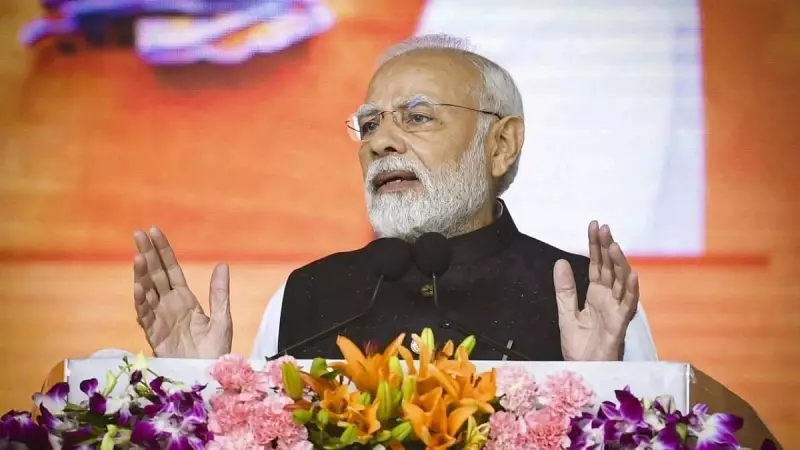
Prime Minister Narendra Modi launched a sharp political offensive in West Bengal during a recent rally, directly addressing the concerns of the influential Matua community while levelling serious allegations of lawlessness against the ruling Trinamool Congress (TMC) government. The event, held on 20 December 2025, was strategically located in a region encompassing several assembly constituencies with a significant Matua population, a key demographic both the Bharatiya Janata Party (BJP) and the TMC are keen to woo.
Modi's Dual Strategy: CAA Assurance and 'Maha Jungle Raj' Charge
In his address, the Prime Minister employed a two-pronged strategy. Firstly, he sought to reassure the Matua community, many of whom are refugees from Bangladesh, by reiterating his government's commitment to implementing the Citizenship Amendment Act (CAA). He aimed to allay their fears regarding the proposed Statement of Identity (SIR) process, which has caused anxiety within the community about potential exclusion from the CAA's benefits.
Secondly, Modi launched a blistering attack on the Mamata Banerjee-led TMC administration, accusing it of presiding over a state of complete law and order breakdown. He termed the situation "Maha Jungle Raj" (Great Jungle Rule), suggesting that governance had collapsed and anarchy prevailed in the state. This rhetoric is seen as an attempt to highlight the BJP's core campaign plank of providing a stable and secure alternative to the TMC regime.

The Matua Factor and TMC's Counterattack
The choice of venue was no accident. The Matua community is a substantial Scheduled Caste group in Bengal, with its vote bank often proving decisive in numerous seats. Both major parties have been actively campaigning to secure their support. Modi's direct promise on the CAA was a targeted move to address one of their primary concerns regarding citizenship rights.
However, the TMC was quick to counter the Prime Minister's allegations. Party leaders dismissed the "Maha Jungle Raj" claim as baseless and politically motivated. They also challenged the BJP's stance on the CAA, questioning the delay in its implementation and accusing the central government of using the issue merely as an electoral tool without genuine intent to grant citizenship. The TMC further countered Modi's infiltration claims, asserting that the BJP was trying to polarise the electorate and divert attention from core issues.
Political Implications and the Road Ahead
This rally underscores the intense political battle brewing in West Bengal. The BJP's concerted effort to consolidate the Matua vote through the CAA promise, coupled with its aggressive narrative on governance failure, sets the stage for a high-stakes confrontation. The TMC's robust defence indicates it is prepared for a tough fight, aiming to retain its support base by challenging the BJP's promises and credibility.
The exchange highlights how national issues like the CAA are deeply enmeshed with state-level politics and community-specific anxieties. As the political temperature rises, the focus on key constituencies and communities like the Matuas will only intensify, making them central to the electoral strategies of both the BJP and the TMC in the run-up to future polls.