PWD Minister Addresses National Criticism of Bhopal's Aishbagh Rail Over Bridge
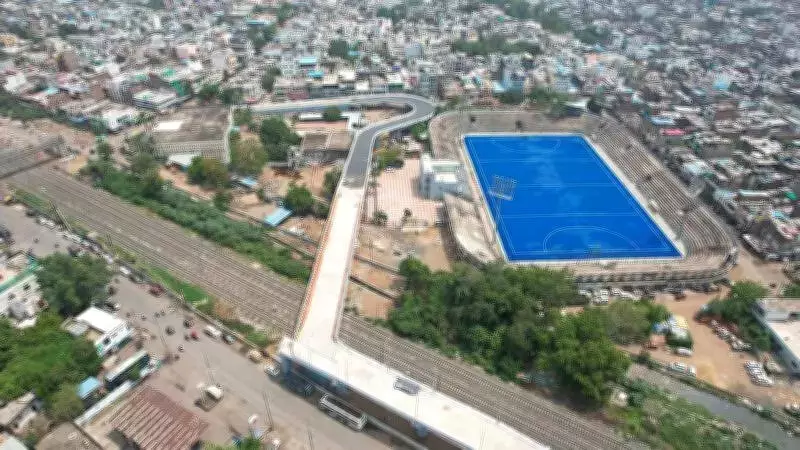
In a significant statement before the state assembly, the Public Works Department (PWD) minister of Madhya Pradesh has responded to the widespread criticism surrounding the Aishbagh rail over bridge (RoB) in Bhopal. The bridge, which garnered national attention in June last year due to its sharp turn, was defended by the minister who argued that such designs are not uncommon in highly developed regions.
Clarification on Bridge Angle and Design Issues
The minister emphasized that the actions taken regarding the Aishbagh rail over bridge were not prompted by the angle of the structure itself. Instead, he pointed to specific deficiencies in the construction. "The issue of the 90-degree bridge has also come up; a perception has been formed, and everyone has started going by that perception," the minister stated during the debate on demand for grants for his department.
He further clarified, "First of all, let us understand that the bridge is not a 90-degree bridge; it is a 119-degree bridge." This correction comes after a High Court probe confirmed the actual angle, countering initial reports that had raised safety concerns about a potential 90-degree turn that could lead to accidents.
Global and National Examples of Similar Designs
The minister provided a broader perspective by citing examples from around the world and within India. "I have been told that in the country and the world, in highly developed countries and in developed states of our country, there are 90-degree bridges and even 90-degree roads," he explained. He attributed such designs to the constraints of urban planning in established cities.
He elaborated, "When development is planned in an already established city, the intersections and bridges that are built have to be constructed within the available space; because of that, sometimes 90-degree designs happen." This argument aims to contextualize the Aishbagh RoB within standard engineering practices faced in densely populated urban areas.
Emphasis on State's Dignity and Corrective Measures
Addressing the assembly, the minister stressed the importance of maintaining Madhya Pradesh's reputation. "MP's dignity and respect should not be diminished anywhere. I believe that whether people from that side or this side (opposition or majority), no one would feel good about it," he asserted, calling for a balanced view on the matter.
The minister reiterated that the primary issues with the bridge were related to implementation flaws rather than the design angle. "The actions that were taken in the Aishbagh rail over bridge incident were not due to the angle of the bridge but because the slope that should have been given and the curves that should have been provided were not in place," he clarified, highlighting specific areas where corrections were necessary.
Background and Cost of the Controversial Project
Constructed at a cost of Rs 18 crore, the Aishbagh rail over bridge became a focal point of public debate after reports surfaced about its sharp turn. The initial perception of a 90-degree design sparked safety concerns, leading to investigations and widespread media coverage. The High Court probe later revealed the actual angle to be 119 degrees, though the controversy had already impacted public perception.
The minister's comments come as part of ongoing efforts to address the fallout from the incident, ensuring that future projects in Madhya Pradesh are executed with greater precision and transparency.