The nightmare of being a stranger in a new land, unable to communicate or be understood, turned fatally real for a young migrant worker in Kerala earlier this month. Ram Narayan Baghel, a 31-year-old from Chhattisgarh who had arrived just five days prior in search of work, was brutally lynched by a group of locals in Attapallam village, Palakkad district, on December 17.
A Fatal Case of Mistaken Identity
Carrying only a piece of paper with his cousin's address, Baghel is believed to have wandered lost for hours before knocking on doors around 2 pm, seeking directions. Instead of help, he was accused of being a thief and, shockingly, a Bangladeshi national. A distressing video of the incident shows him crying out in Hindi, pleading his innocence, as the mob attacks him. Seven people have since been arrested in connection with the lynching.
"Neither seemed to understand the other's language. The least they could have done was hand him over to the police," said his cousin, contractor Sashikant Baghel. "What was the need to kill him? Now, an ailing mother is left without a son, his wife is widowed, and his two young sons orphaned." Sashikant revealed that his cousin was killed by locals who "took the law into their own hands without knowing the truth."

Xenophobia in a Progressive State: A Growing Contradiction
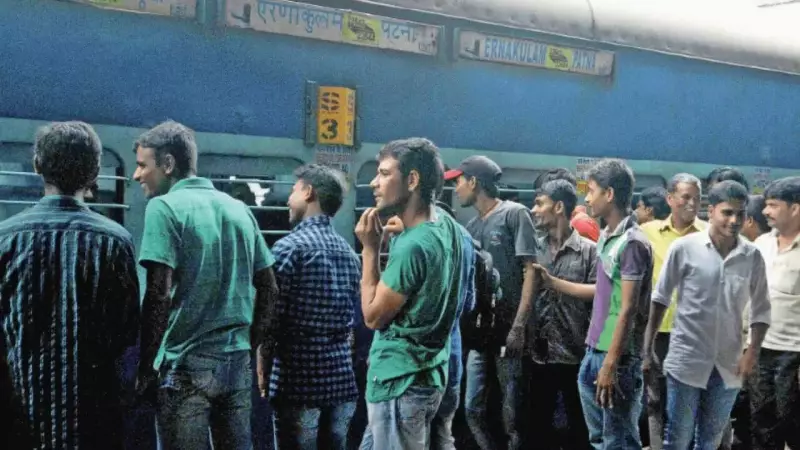
This incident marks the third lynching of a migrant worker in Kerala in just three years, sending shockwaves through a state renowned for its progressive values, high literacy, and a history of compassionate treatment towards migrants. During the Covid-19 pandemic, Kerala's government was nationally applauded for terming migrants "guest workers" and ensuring their welfare.
Experts point out that Kerala is currently experiencing 'replacement migration,' with nearly 30 lakh Keralites working abroad or in other states, and their absence being filled by internal migrants from northern and north-eastern India. The state's economy is now heavily dependent on this migrant labour force.
Navas M Khader, a research scholar at MG University, explains that while migration to Kerala is not new—with migrants from Tamil Nadu arriving since the 1940s—xenophobia began to surface in the early 2000s with increased inflow from North and North-East India. "Migrants from southern states were largely accepted due to shared cultural markers. But those from the north bore unfamiliar cultural signs—different body language, food habits, and language. This cultural distance translated into xenophobia over time," Khader said.
He added that a common misconception in Kerala is that all northern migrants speak Hindi, leading to linguistic discrimination. In reality, only two in five such migrants in Kerala speak Hindi, with the rest knowing only their regional languages.
Systemic Gaps and the Search for Solutions
Despite announcing welfare schemes like insurance and literacy programs for migrants, experts stress that Kerala lacks a robust institutional framework for internal migrants, unlike the dedicated NORKA agency for its own diaspora. Benoy Peter of the Centre for Migration and Inclusive Development argues for a similar nodal agency. "Keralites must realise that xenophobic violence against migrants ultimately endangers our own existence," he warned.
Migration expert S Irudaya Rajan noted that while such violence is condemnable, it will not deter migration, which is driven by economic compulsions. He emphasized that addressing xenophobia is a collective responsibility.
In response, the state government is developing a comprehensive portal to register internal migrants using Aadhaar details, accessible to departments like labour, health, and police. A meeting to discuss this initiative is scheduled for January next year.
For Sashikant Baghel, there is a glimmer of hope in the swift arrest of the accused and the help he received from other locals. "A few rotten apples can't spoil Kerala's reputation," he said, hoping this tragedy is a blip the state will overcome. Yet, the incident remains a stark reminder of the deadly cost of prejudice and the urgent need for integration in a society built on migration.