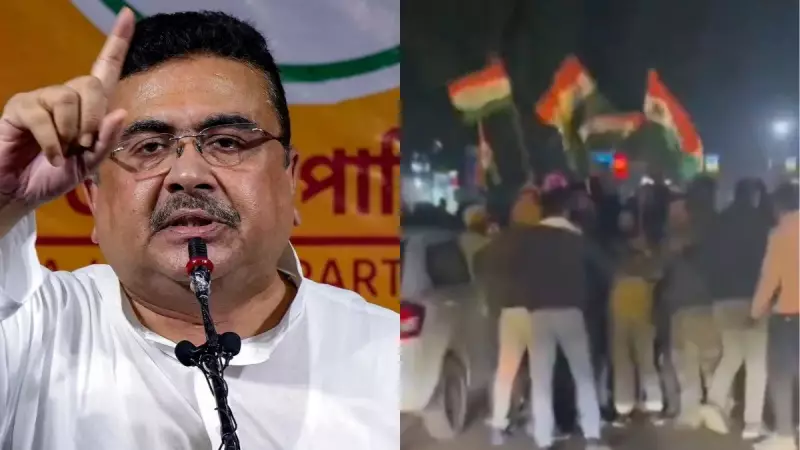
The political landscape of West Bengal has been jolted by a violent incident targeting a senior opposition leader. The convoy of Bharatiya Janata Party (BJP) leader and Leader of Opposition in the West Bengal Assembly, Suvendu Adhikari, was allegedly attacked on Saturday, January 11, 2026. The event has triggered a swift response from the central government, with the Union Ministry of Home Affairs (MHA) stepping in to seek a detailed report on the matter.
Details of the Nandigram Convoy Attack
The attack occurred in the Nandigram area of Purba Medinipur district, a region with deep political significance for Adhikari. According to reports, the convoy was on its way when it was reportedly surrounded and attacked by a mob. Stones were pelted at the vehicles, causing damage and endangering the safety of the occupants. Suvendu Adhikari was present in the convoy at the time of the assault. The incident quickly escalated into a major political flashpoint, with the BJP alleging a premeditated attack orchestrated by workers of the ruling Trinamool Congress (TMC).
Local police have registered a case in connection with the violence. However, the BJP has expressed deep dissatisfaction with the state police's response, accusing them of inaction and complicity. The party claims that the attack is part of a continued pattern of political intimidation and violence against opposition figures in West Bengal. The date of the incident, January 11, 2026, marks a significant escalation in the ongoing political tensions between the two major parties in the state.

Central Government Intervention and Political Fallout
In a significant development, the Union Ministry of Home Affairs took cognizance of the serious incident. The MHA has formally sought a comprehensive report from the West Bengal government regarding the attack on Suvendu Adhikari's convoy. This move underscores the central government's concern over the law and order situation in the state, particularly concerning the security of a high-profile constitutional functionary like the Leader of the Opposition.
The BJP has launched a fierce offensive against the Mamata Banerjee-led TMC government, holding it directly responsible for the breakdown of law and order. Party leaders have demanded immediate action against the perpetrators and have called for intervention by central agencies. On the other hand, the Trinamool Congress has dismissed the allegations as a staged drama and a political ploy to malign the state administration. They have countered by accusing Adhikari and the BJP of provoking clashes to gain political mileage.
Broader Implications for State Politics
This incident is not an isolated event but fits into a long history of political violence in West Bengal. Nandigram itself is a symbolic battleground, having been at the center of major political movements in the past. The attack on a convoy carrying a top BJP leader like Suvendu Adhikari is seen as a direct challenge to the opposition's right to function freely in the state.
The MHA's decision to seek a report places the West Bengal government under intense scrutiny. The contents and conclusions of this report will be closely watched, as they could influence future central interventions. The event has also galvanized the BJP's state unit, which is likely to use this incident to rally its support base and highlight issues of governance and safety ahead of future electoral battles.
Security for key opposition figures in the state is now under the spotlight, with calls for enhanced protection. The incident raises critical questions about the ability of political parties to carry out their activities without fear of violence, which is fundamental to a healthy democracy. The coming days will reveal whether the state police's investigation yields concrete arrests and if the political rhetoric de-escalates or intensifies further in the wake of this serious confrontation.