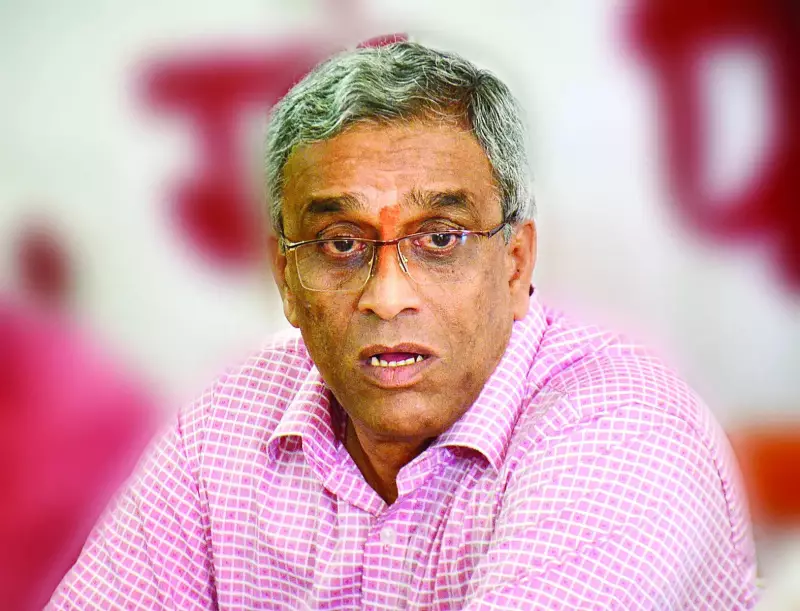
Senior Maharashtrawadi Gomantak Party (MGP) leader and Power Minister Ramkrishna 'Sudin' Dhavalikar has made a bold prediction for Goa's political future. On Tuesday, he declared that the ruling BJP-MGP alliance is an unstoppable force and will secure more than 22 seats in the upcoming 2027 state assembly elections.
An Unbeatable Coalition
Dhavalikar expressed unwavering confidence in the strength of the partnership. He stated that when the two parties work in alliance, their combined grassroots workers, or 'karyakartas,' campaign with immense dedication and without personal expectations. This synergy, according to him, creates a political machine that cannot be defeated. He also took a swipe at the opposition, claiming that the Congress party currently holds no significant standing in Goan politics.
Future Strategy and Past Lessons
The MGP leader outlined a crucial future strategy for the alliance: focused outreach to the Catholic community in Goa. He drew a parallel with their successful engagement of Muslim voters. Dhavalikar recalled that the MGP previously received only a handful of Muslim votes but, through concerted efforts, now garners support in large numbers, citing an example of around 1,500 votes.

However, he also pointed out internal challenges. Dhavalikar noted that the behaviour of some sitting MLAs had negatively impacted the alliance, leading to the loss of certain seats in past contests. He expressed satisfaction with the MGP's own performance, highlighting that the party won all three constituencies allotted to it in the last election.
The Funding Hurdle
A significant part of Dhavalikar's address focused on the practical challenges of contesting elections. He openly admitted that while the MGP has a robust election machinery on the ground, it suffers from a critical shortage of funds. "We need money," he said, revealing that in the recent election, the party could not even provide the standard Rs 5 lakh to each candidate, instead offering between Rs 2 to 3 lakh.
Dhavalikar made a direct appeal to the business community, suggesting that if they were to donate to the MGP, the party would be in a position to contest a greater number of seats in the future. This candid admission underscores the financial realities of regional politics in India.