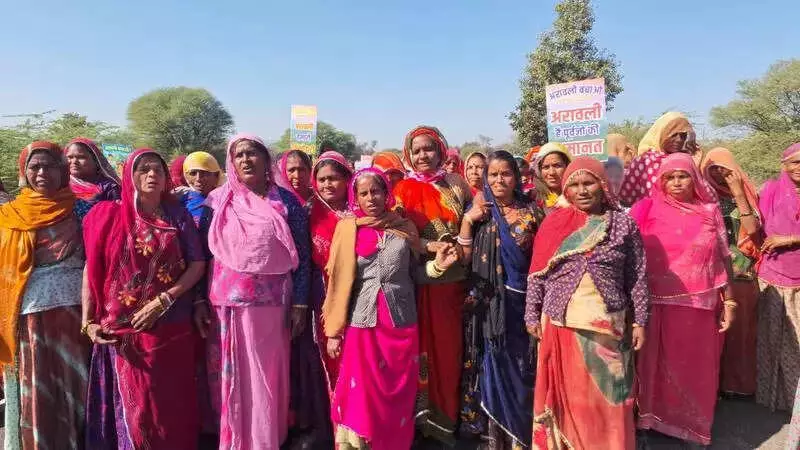
In a powerful display of dissent, former Rajasthan forest and environment minister Ramlal Jat spearheaded a massive foot march through the Aravalli hills on Sunday. The protest, involving thousands of men and women, was a direct response to the Supreme Court's recent decision that hills under 100 metres in height would not be considered part of the Aravalli range.
A Four-Kilometre March of Dissent
Organised under the direction of the Pradesh Congress Committee, the demonstration saw Congress workers, women, and representatives from social organisations gather at Suras village. From there, the crowd embarked on a four-kilometre march to the famous Shaktipeeth Baimata temple. The atmosphere was charged with traditional fervour as participants danced and sang devotional songs, using cultural expression to voice their strong opposition to the court's order.
The protest has gained significant traction in areas like the Kareda region of Bhilwara district, where the Aravalli hills pass through. Locals and environmentalists fear the ruling could open ecologically sensitive areas to unchecked exploitation.

Accusations of Government-Mining Nexus
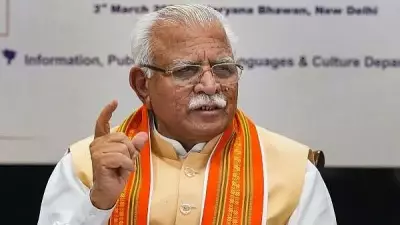
Addressing the gathered crowd, Ramlal Jat launched a sharp critique against both the central and state governments. He accused the Indian government of effectively "selling the Aravalli hills to the mining industry" through this legal interpretation. Jat argued that the Supreme Court's ruling merely reflected the submissions made by the Union BJP government and the state BJP government of Rajasthan.
He passionately urged the apex court to take suo motu cognisance of the issue, highlighting the potential for irreversible environmental damage. Jat questioned the government's very authority to define the Aravallis, stating that the hills should only be defined by local farmers, hill dwellers, experts, and environmentalists who understand their ecological and cultural significance.
The Geographical and Political Stakes
Jat outlined the vast scale of the range at risk, explaining that the Aravalli range extends approximately 700 kilometres from Gujarat to Delhi. Rajasthan contains the largest segment of this ancient mountain chain, spanning roughly 450 kilometres up to Sawai Madhopur, with widths reaching close to 10 km in some places.
The former minister's leadership in this protest underscores the issue's transition from an environmental concern to a major political flashpoint in Rajasthan. The protest marks a significant mobilisation of public sentiment against a judicial decision perceived as favouring industrial interests over conservation. The coming days will likely see increased pressure on both judicial and executive bodies to revisit the implications of the ruling for the future of the Aravallis, one of India's oldest and most critical geological formations.