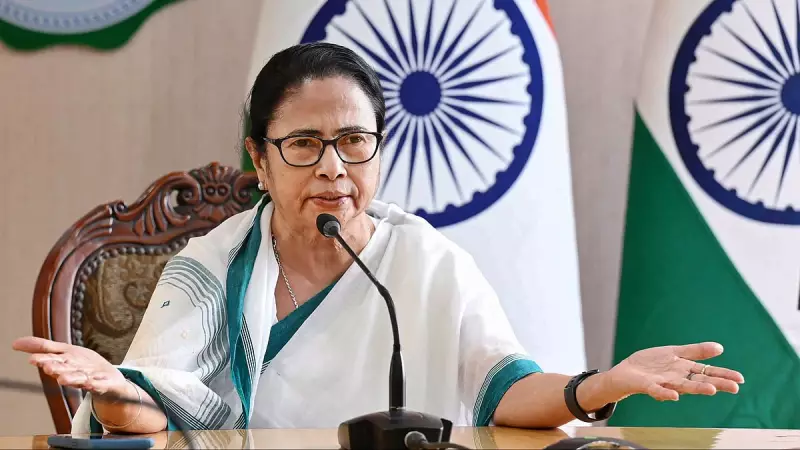
West Bengal Chief Minister Mamata Banerjee launched a sharp critique against the central government on Thursday, December 18, 2025, over the contentious GRAM G bill. In a significant political move, she simultaneously announced that her state's flagship job scheme would be renamed in honour of Mahatma Gandhi.
A Political Rebuke Over National Icons
Addressing the media, Mamata Banerjee took a clear dig at the ruling Bharatiya Janata Party (BJP) at the Centre without directly naming it. She asserted that if certain political parties failed to show due respect to India's national icons, her administration would take the initiative. The announcement was made on December 18, 2025, positioning the state government as a guardian of the nation's legacy.
"We believe in honouring our great leaders who shaped this nation," Banerjee stated, framing the decision as a corrective measure. Her comments are seen as a direct response to the ongoing political discourse surrounding historical figures and their legacy in contemporary Indian politics.
The GRAM G Bill Controversy and Bengal's Counter
The Chief Minister's ire was specifically directed at the GRAM G bill, a legislative piece introduced by the central government. While details of her objections were part of a broader critique of central policies, she connected the bill to a perceived disregard for foundational values.
In what is being viewed as a symbolic counter-narrative, Banerjee declared that West Bengal's own employment generation scheme would now bear the name of Mahatma Gandhi. This renaming is not merely administrative but a potent political statement, aligning the state's welfare efforts with the ideals of the Father of the Nation.
Implications and Political Undertones
The dual announcement serves multiple purposes. Firstly, it reinforces Banerjee's stance as a vocal opponent of the BJP-led central government on matters of policy and ideology. Secondly, it reclaims the narrative around national icons, a space that has been intensely contested in recent years.
By anchoring a popular state scheme to Gandhi's name, the Trinamool Congress (TMC) government aims to underscore its commitment to principles like self-reliance and rural empowerment, which are central to Gandhian philosophy. The move is expected to resonate strongly in the political landscape of Bengal and beyond, especially among voters who value this symbolic connection.
Political analysts suggest this is a strategic step ahead of future electoral battles, allowing Banerjee to position herself and her party as the true custodians of India's pluralistic and inclusive heritage, in contrast to her political rivals.