Mamata Banerjee Launches Scathing Attack on BJP Over Farmer Budget Promises
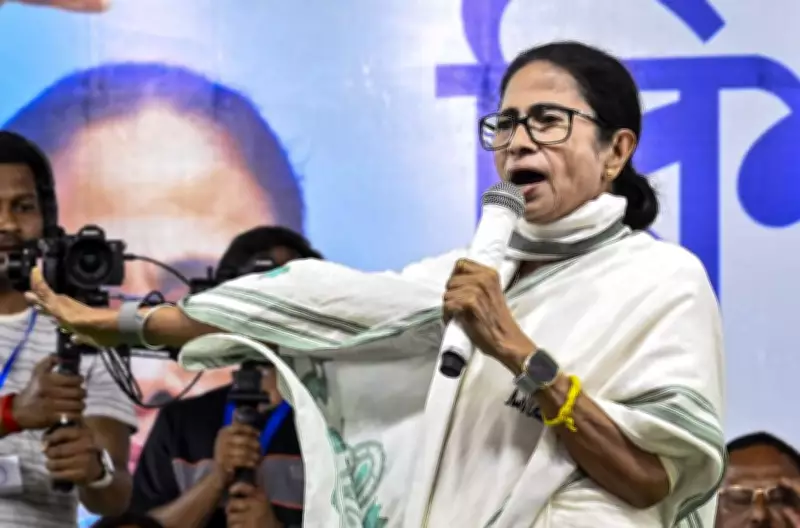
West Bengal Chief Minister Mamata Banerjee has launched a fierce political assault against the Bharatiya Janata Party (BJP), accusing the opposition of attempting to destabilize the state with its recent farmer budget announcements. Speaking at a public event, Banerjee claimed that the BJP's promises are part of a broader strategy to undermine Bengal's governance and influence ahead of the crucial 2026 state assembly elections.
Allegations of Political Motives Behind Budget Proposals
Banerjee asserted that the BJP's budget initiatives targeting farmers are not genuine welfare measures but rather politically motivated moves designed to erode her government's support base. She emphasized that the Trinamool Congress (TMC) administration has consistently prioritized agricultural development and rural welfare, implementing numerous schemes to assist farmers across West Bengal.
The Chief Minister warned that the BJP's approach could lead to increased tensions and instability in the region, urging voters to remain vigilant against what she described as divisive tactics. Her comments come amid ongoing political rivalry between the TMC and BJP, with both parties gearing up for a highly contested electoral battle in 2026.

Context of the 2026 West Bengal Elections
Political analysts note that Banerjee's remarks reflect the intensifying pre-election climate in West Bengal, where the BJP has been making significant inroads in recent years. The farmer budget issue has become a focal point in this political discourse, with each party attempting to position itself as the true champion of agricultural communities.
Observers suggest that Banerjee's strong rhetoric aims to consolidate her party's rural support while countering the BJP's expanding influence in the state. The upcoming elections are expected to be a critical test for both political formations, with control of West Bengal's governance at stake.
Broader Implications for State Politics
This confrontation highlights deeper tensions in West Bengal's political landscape, where issues of regional autonomy and central intervention frequently surface. Banerjee's accusation that the BJP wants to "end Bengal" underscores the perceived threat to the state's distinct political identity under her leadership.
The farmer budget controversy is likely to remain a prominent topic in the lead-up to the 2026 elections, shaping campaign narratives and voter perceptions. As both parties refine their strategies, the political dynamics in West Bengal continue to evolve, with significant implications for India's federal structure and democratic processes.