West Bengal Chief Minister Mamata Banerjee launched a scathing critique of the Centre on Sunday, branding the Union Budget 2026-27 as "anti-women, anti-farmer, anti-education" and asserting that it has "nothing on offer for Bengal." Her remarks come as political sparring intensifies ahead of the state's upcoming assembly elections, setting the stage for a heated electoral battle.
Banerjee's Strong Criticism at Kolkata Airport
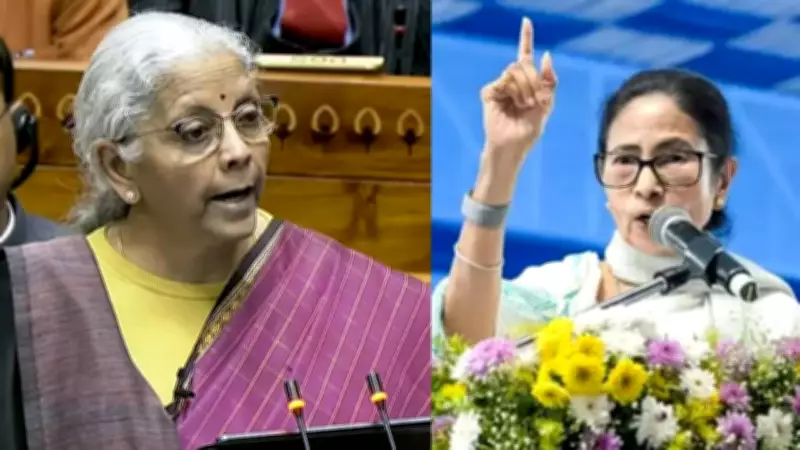
Speaking at Kolkata airport before departing for Delhi, Banerjee minced no words in her disapproval. "Nothing on offer for Bengal in Union Budget 2026-27," she declared, highlighting her disappointment with the financial plan. Later in the day, she further elaborated, describing the budget as "directionless, visionless; nothing for the common man in it." This dual-pronged attack underscores her stance that the budget fails to address the needs of ordinary citizens and specifically neglects West Bengal's interests.
Context of Budget Presentation and Key Announcements
Banerjee's comments came hours after Union Finance Minister Nirmala Sitharaman presented the budget in Parliament, outlining a series of proposals aimed at boosting infrastructure, tourism, and regional development. Among the key announcements was the development of an East Coast Industrial Corridor, with a well-connected node at Durgapur in West Bengal. This initiative is part of broader efforts to enhance industrial growth in the region.

Additionally, the government proposed the creation of five tourism destinations in five 'Purvodaya' states, a term referring to India's eastern region, which includes West Bengal. Sitharaman also announced a new scheme to develop Buddhist circuits across six northeastern states—Arunachal Pradesh, Sikkim, Assam, Manipur, Mizoram, and Tripura—as part of a push to promote tourism and cultural heritage. She stated, "I propose the development of an East Coast Industrial Corridor with a well-connected node at Durgapur, creation of five tourism destinations in five Purvodaya states, and the provision of 4,000 e-buses."
Political Implications and Electoral Dynamics
The timing of Banerjee's criticism is significant, as it aligns with the heightened political activity preceding West Bengal's assembly elections. By labeling the budget as anti-people and biased against Bengal, she aims to rally support and position herself as a defender of the state's interests against the central government. This strategy could influence voter sentiment, especially among groups like women, farmers, and students, who she claims are overlooked in the budget.
Despite the Centre's announcements targeting regional development, Banerjee's dismissal suggests a deep-seated political rift. Her emphasis on the budget's perceived shortcomings reflects broader tensions between state and central leadership, which are likely to escalate as election campaigns gain momentum. Observers note that such critiques are common in pre-election periods, but Banerjee's forceful language underscores the high stakes involved.
In summary, Mamata Banerjee's condemnation of the Union Budget 2026-27 highlights key political and economic divides, with her framing it as detrimental to Bengal and its citizens. As the state gears up for elections, this criticism sets the tone for ongoing debates over governance, development, and regional representation in India's fiscal policies.