Maharashtra Confronts Impending Water Shortage as Summer Intensifies
With summer conditions tightening across Maharashtra, numerous urban centers are confronting a severe and imminent water shortage, raising alarms about taps potentially running dry in the coming weeks. In a proactive response, civic authorities across the state are being compelled to enforce stringent water supply reductions and rationing protocols. The primary objective is to secure water availability at least until the end of August, a strategy driven significantly by heightened concerns over El Niño and its associated predictions of below-normal monsoon rainfall.
Meteorological Forecasts Paint a Grim Picture
According to the latest long-range forecast released by the India Meteorological Department, Maharashtra is projected to experience below-normal rainfall during the upcoming monsoon season. This state-level assessment aligns with a broader national outlook indicating subdued precipitation. The IMD's probability map reveals a dominant "below-normal" signal across extensive regions of Maharashtra. Large swathes of central, western, and Marathwada areas are shaded in yellow, denoting a 45-65% probability for rainfall deficits this monsoon.
Municipal Actions: From Warnings to Water Rationing
These meteorological warnings have swiftly translated into concrete administrative actions on the ground. Several municipal corporations have already initiated water rationing measures. The Satara Municipal Council has officially announced that the city will implement a weekly water cut starting Wednesday. Under this new system, different sectors of the city will experience a complete suspension of supply for one designated day each week.

"Water demand has escalated dramatically due to the intense heatwave conditions. To ensure equitable distribution and fair access for all residents, we have opted for a conservation strategy involving planned, rotational supply cuts," explained Shahaji Wathare, head of the water supply department at Satara Nagar Parishad.
This decisive action is particularly notable given that, on paper, the overall water storage situation appears marginally better than the previous year. Irrigation department data indicates that dams across Maharashtra currently hold 48% of usable water stock, compared to 39% at the same time last year.
Wathare detailed the operational plan, noting the council lifts approximately 16 million liters daily for a population of around 80,000. "The rotational cut means one area faces a shutdown each day, allowing us to redirect the conserved supply to other parts of the city. Any future adjustments or additional cuts will be contingent upon the water levels in critical dams like Kas and Kanher, as well as rivers including Krishna and Urmodi," he added.
Shifting from Confidence to Caution in Water Management
Traditionally, water resource planning in the region operates under the assumption that dam reserves will be sufficient only until the end of June, relying on the timely arrival of the monsoon in the first week of the month. However, this year, a palpable sense of caution has replaced the usual confidence. Officials are explicitly citing the El Niño phenomenon—characterized by the warming of sub-surface Pacific Ocean temperatures—as the primary factor driving this prudent and preemptive approach.
Regional Snapshots: Kolhapur, Solapur, Pune, and Nashik
In Kolhapur, authorities have acknowledged a concerning decline in the Panchganga river, a vital water source. "The irrigation department has formally notified us of the emerging crisis and instructed us to plan water usage with extreme care. We are now in the preparatory stages to implement water cuts. An imminent assessment of dam stocks will guide our strategy to manage the available quota if conditions deteriorate further," stated Harshit Ghatage, chief hydraulic engineer of the Kolhapur Municipal Corporation. The KMC is likely to introduce alternate-day water cuts as an initial conservation measure.

The situation in Solapur presents an even more stark reality, where water cuts are already an entrenched hardship. Residents currently receive water supply only once every three to five days, depending on their locality. Older city areas experience supply once every three days, while suburban neighborhoods must endure waits of up to five days between water availability.
Officials in Solapur maintain that the Ujani dam still possesses adequate storage. However, they concede that inefficient internal distribution networks within the city pose a major challenge. "Delayed monsoon rains lead to a rapid depletion of groundwater tables, causing borewells to dry up prematurely. In such zones, water demand surges unexpectedly. Currently, we are supplying 208 million liters per day against a demand nearing 250 MLD. We have urgently appealed to all residents to practice judicious and minimal water use," said Venkatesh Choube, chief public health engineer of the Solapur Municipal Corporation.
Civic bodies in the Pune and Pimpri Chinchwad regions have also been directed to mandate a 15% reduction in water supply, anticipating a weak monsoon. Local officials, however, have indicated that such cuts would only be enforced in a dire emergency, as the collective water stock in dams supplying the metropolitan area is currently superior to last year's levels.
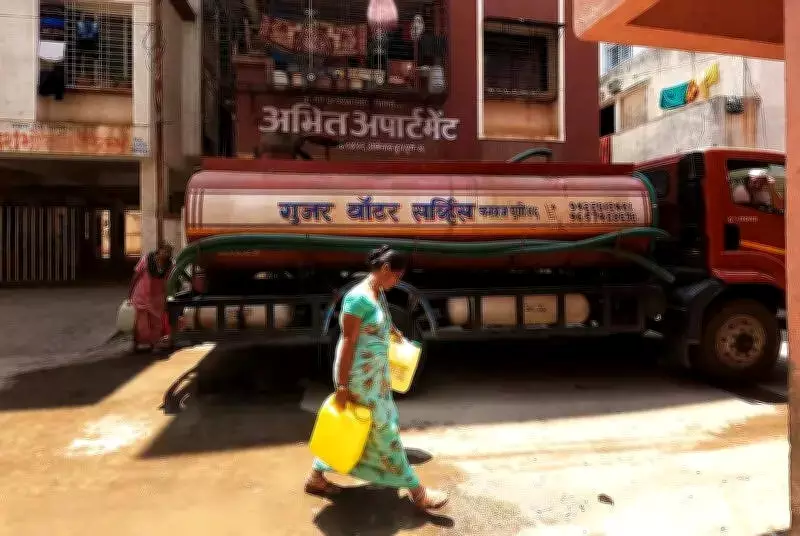
Meanwhile, Nashik continues to grapple with acute water scarcity due to persistent supply disruptions. These issues persist even a week after a scheduled two-day shutdown for system repairs and maintenance. Multiple areas reported incomplete service restoration, with additional complications arising from pipeline bursts. This has forced heavy reliance on private water tankers, with residents alleging that Nashik Municipal Corporation tankers have not been provided despite repeated requests.
The concerted efforts across Maharashtra's municipalities underscore a statewide mobilization to mitigate a potential water crisis. With the monsoon forecast remaining unfavorable and summer demand peaking, the success of these rationing and conservation measures will be critical in preventing a severe shortage in the weeks ahead.