Maharashtra Civic Polls Deliver Major Blow to Pawar and Thackeray Political Dynasties
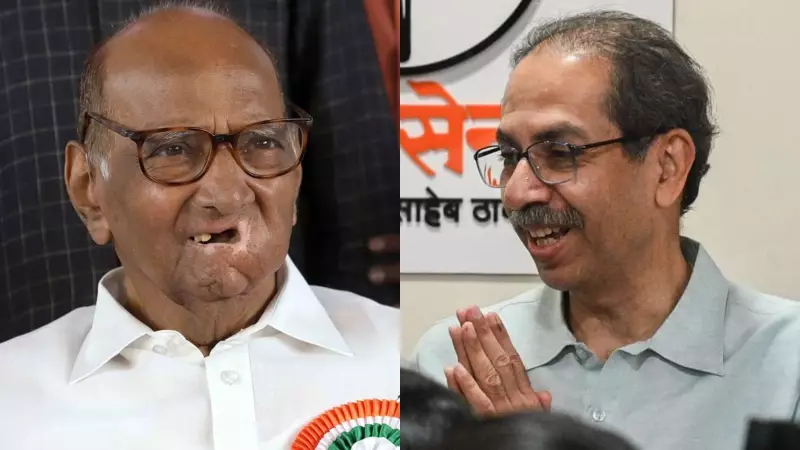
Recent municipal corporation election results across Maharashtra have delivered a powerful shock to two of the state's most prominent political families. The Thackeray and Pawar dynasties now find themselves on the defensive, forced to reconsider their political strategies after a poor electoral performance.
Thackeray Family Loses Civic Strongholds
Political analysts describe the results as a severe jolt to the Thackeray family, whose political power has traditionally been rooted in urban civic politics. The Shiv Sena UBT, founded and nurtured by the Thackeray family, appears unlikely to control any major municipal corporations for the first time in at least three decades.
This represents a dramatic reversal for a party that once dominated key urban centers. In previous corporation elections, the Thackerays controlled several important municipalities:

- Mumbai
- Thane
- Kalyan-Dombivli
- Chhatrapati Sambhajinagar (formerly Aurangabad)
- Ahilya Nagar (formerly Ahmednagar)
Current trends show the Uddhav Thackeray-led Sena UBT reduced to just one corporation from the five where they previously held mayoral positions. The party's decline is particularly striking in its traditional bastions.
Mumbai and Thane: Former Fortresses Fall
In Mumbai, the undivided Shiv Sena emerged as the single largest party in the Brihanmumbai Municipal Corporation during the 2017 elections with 84 corporators. Thane represented another long-standing Sena fortress, shaped by the political legacies of Bal Thackeray and Anand Dighe, where the undivided Sena won 67 of 131 seats in 2017 and formed the civic body independently.
This time, however, the Mahayuti alliance appears firmly in control. The situation mirrors similar trends in Kalyan-Dombivli Municipal Corporation, where the undivided Sena previously held 52 corporator positions and dominated local politics. In both Chhatrapati Sambhajinagar and Ahilyabai Holkar Nagar, the BJP and its allies have taken clear leads.
Analysts Point to Broader Implications
Political observers note that control over municipal corporations, especially Mumbai and Thane with their surrounding satellite towns, previously allowed the party to maintain relevance even when out of power at the state or national level. The current situation marks a sharp reversal of that dynamic.
"The Sena (UBT) is now out of power at the Centre, out of the state government, and largely out of power in municipal corporations as well," explained one political analyst. "Thackeray's marginalisation across all three levels—national, state, and civic—will significantly weaken the party's organisational foundation."
While the Sena (UBT) continues to command emotional support among certain voter segments, particularly in Mumbai, analysts believe the loss of civic control will further reduce the party's ability to convert that support into tangible political power.
Pawar Family Faces Political Uncertainty
The election results have created similar challenges for the Pawar political dynasty. Both factions of the Nationalist Congress Party—the Ajit Pawar-led NCP and the Sharad Pawar-led NCP-SP—failed to secure victories in any urban civic bodies.
The Opposition NCP-SP faces an uncertain future after failing to open its account in 24 civic bodies. Meanwhile, Ajit Pawar's NCP suffered a complete rout in Pune and Pimpri-Chinchwad Municipal Corporation elections where it directly challenged the BJP.
Ajit Pawar's Strategy Backfires
Ajit Pawar's decision to challenge the BJP during these elections appears to have backfired significantly. Following the crushing defeats, he will likely be forced to cooperate more quietly with the BJP within the Mahayuti government.
This political setback comes after Ajit Pawar attempted an unusual balancing act. While remaining a partner with the BJP in the state government, he simultaneously joined hands with his estranged uncle Sharad Pawar's NCP-SP for the municipal elections after Chief Minister Devendra Fadnavis announced the BJP would contest independently in Pune and Pimpri-Chinchwad.

Voters in both Pune and Pimpri-Chinchwad municipal corporations seem to have outrightly rejected this dual approach. The only silver lining for the NCP came in Ahilyanagar, where the party secured victory in alliance with the BJP, though Ajit Pawar is unlikely to secure the mayoral post as the BJP emerged as the single largest party there.
Political Fallout and Future Prospects
With both political families reduced to the bottom of Maharashtra's political hierarchy, talks of a merger between the two NCP factions are likely to gain momentum. The alliance for local body polls was seen as a first step in that direction, and the upcoming Zilla Parishad elections may see the alliance strengthening further as both parties find themselves with limited options.
Since his rebellion within the NCP, Ajit Pawar had generally maintained a harmonious relationship with the BJP—unlike Eknath Shinde, who occasionally took stands against the party. However, during the campaign, Ajit Pawar criticized the BJP and alleged corruption in municipal administration, which reportedly did not sit well with BJP leaders.
BJP state president Ravindra Chavan responded by stating that the party "regretted taking Ajit Pawar along." Following the electoral defeats, Ajit Pawar will likely need to coordinate more submissively with the BJP, which may focus on weakening his political standing further.
The municipal election results have clearly reshaped Maharashtra's political landscape, leaving two of its most powerful political families with much to reconsider as they face diminished influence across the state's urban centers.