New Rural Jobs Law Raises Questions About MGNREGA's Future
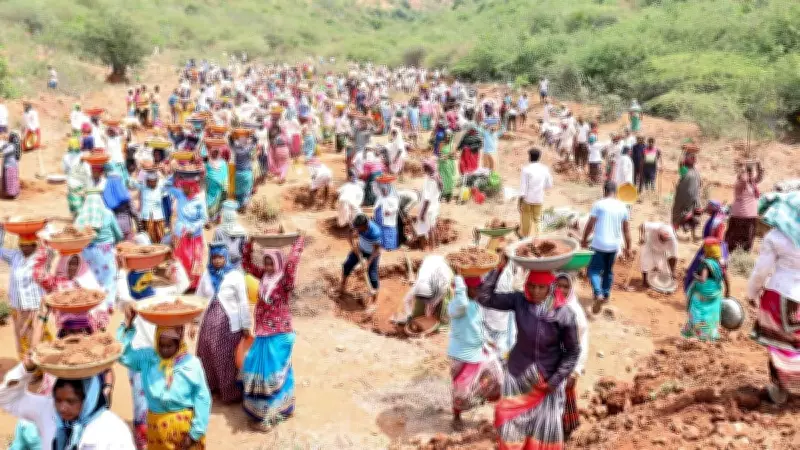
A proposed new rural employment law could fundamentally alter the financial structure of India's flagship job guarantee scheme, MGNREGA. Under the current MGNREGA framework, the Union government bears the entire wage cost for workers, while states contribute 25% of material costs. This arrangement means that nearly 90% of total MGNREGA expenditure is met by the central government, providing a robust safety net for rural households.
The new law, which has been tabled in Parliament, proposes a different cost-sharing model. According to sources familiar with the draft, the legislation would require states to bear a larger share of wage costs, potentially up to 50% in some categories. This shift has sparked debate among economists, policymakers, and rural development experts about whether the new law can effectively replace the existing safety net or if it will weaken protections for the most vulnerable.
Details of the Proposed Changes
The proposed law aims to streamline rural employment programs by merging MGNREGA with other rural development initiatives. Under the new framework, the central government would still fund a significant portion, but states would be required to contribute more than the current 25% of material costs. For wages, the Centre's share could drop from 100% to as low as 50% for certain categories of work, depending on state income levels.

According to a senior official in the Ministry of Rural Development, who spoke on condition of anonymity, "The new law is designed to increase state ownership and accountability. However, we recognize that some states may face financial constraints, so we are considering a transition period." The official added that the government is also exploring a contingency fund to support poorer states.
Impact on Workers and States
Critics argue that shifting more financial burden to states could lead to delays in wage payments, reduced job availability, and a weakening of the program's universal guarantee. MGNREGA currently provides up to 100 days of wage employment per household, and any reduction in funding could limit access for families who depend on it as a lifeline. Dipa Sinha, an economist and policy analyst, noted: "The strength of MGNREGA lies in its central funding, which ensures uniformity and reliability. If states have to pay more, we might see a patchwork of implementation where richer states do better and poorer ones lag."
Data from the Ministry of Rural Development shows that in fiscal year 2025-26, MGNREGA provided employment to over 7 crore households, with total expenditure exceeding ₹1.2 lakh crore. Nearly 90% of this was borne by the Centre. Under the new law, if states are required to cover 30-40% of wage costs, the central outlay could reduce by ₹30,000-40,000 crore annually, potentially affecting job creation.
Conclusion: Safety Net at Risk?
While the government maintains that the new law will enhance efficiency and local accountability, many experts caution that it may erode the safety net that MGNREGA provides. The transition period and contingency fund may mitigate some risks, but the fundamental shift in cost-sharing could leave millions of rural workers vulnerable. As the debate continues, the fate of India's largest rural employment program hangs in the balance.