

Maharashtra Government Launches Inquiry Into Mumbai-Pune Expressway Gridlock
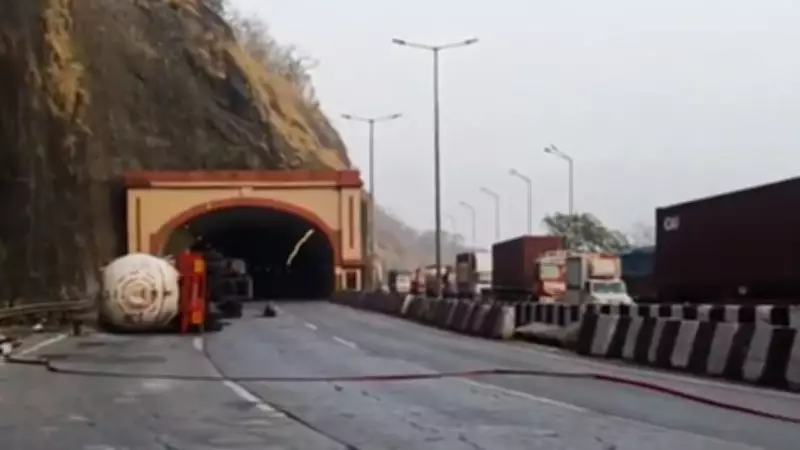
Maharashtra Chief Minister Devendra Fadnavis has ordered a formal inquiry into the severe 32-hour traffic disruption that paralyzed the Mumbai-Pune Expressway. The chaos was triggered by an overturned propylene tanker near the Adoshi Tunnel in the Khandala ghat section, which completely blocked the Mumbai-bound carriageway.
Government Directs MSRDC to Develop Emergency Response Plan
Deputy Chief Minister Eknath Shinde has instructed the Maharashtra State Road Development Corporation (MSRDC) and police authorities to prepare a comprehensive "special emergency traffic plan" specifically for the expressway to prevent similar incidents in the future. In an official statement, Shinde emphasized the need to expedite work on the ongoing Missing Link project, noting that its completion would significantly reduce travel time and provide a crucial alternative route during emergencies.
Widespread Disruption and Stranded Commuters
The incident created massive gridlock, with thousands of travelers stranded for hours without basic amenities. While the immediate 15-kilometer stretch near the accident site was completely logjammed, traffic disruptions extended approximately 50 kilometers along the expressway. The corridor was finally reopened around 1 AM on Thursday, but vehicular movement remained sluggish throughout the day as heavy vehicles that had been parked along the expressway resumed their journeys.

Political Criticism Over Toll Collection During Crisis
Opposition leaders launched sharp criticism against the government for continuing to collect tolls from commuters who were trapped on the expressway for extended periods. State Congress president Harshwardhan Sapkal and Shiv Sena UBT leader Aaditya Thackeray questioned the administration's preparedness, highlighting the absence of alternative arrangements and proper emergency response protocols.
"A basic intervention could have helped by reaching out to the people and offering food, water and toilets at certain distances from where they were stuck," Thackeray wrote on social media platform X.
Sapkal added, "At a time when such a crisis was reported, government had no alternative arrangements and emergency plan... this is the true picture of so-called development."
Maharashtra Navnirman Sena chief Raj Thackeray went further, demanding that "the government should refund the toll that was collected from passengers during this period."
Legal and Administrative Perspectives
Activist Vijay Kumbhar argued that collecting tolls without providing corresponding services constituted a violation of regulations. "As per the National Highway Fee Rules, vehicles should be allowed to pass toll-free if waiting time exceeds 3 minutes or if queues stretch beyond 100 metres," he explained.
However, a senior MSRDC official clarified that toll collection was suspended within hours of the incident, and no instructions regarding refunds had been issued by government authorities or departmental higher-ups.
Traffic Restoration and Infrastructure Concerns
Highway Superintendent of Police Tanaji Chikhale reported that while traffic on the Pune-bound corridor normalized quickly, the Mumbai-bound lane experienced slow movement as trucks and heavy vehicles parked along roadside areas and food malls—some as distant as Satara and Kolhapur—began proceeding toward their destinations.
"Many drivers were asleep when the road opened around 1:30 AM on Thursday. They started moving later in the morning," Chikhale noted. A state highway police officer confirmed that traffic returned to normal around 1:30 PM on Thursday.
Pravin Paithankar, president of the Maharashtra Heavy Transport and Inter-State Container Operators Association, defended transport operators, pointing out that specialized tankers designed for hazardous gas transport are engineered to prevent leakage even during overturns. He emphasized that infrastructure improvements, rather than operator blame, should be the primary focus.

Developing Standard Operating Procedures
Pune's district administration announced it is developing a Standard Operating Procedure (SOP) to manage similar situations in the future. District Collector Jitendra Dudi described Tuesday's incident as "unique" and stated that multiple aspects would be considered while formulating the SOP.
The comprehensive plan will include:
- Preparation of alternative traffic routes
- Strategic rerouting to prevent vehicle bunching
- Careful planning of exit and entry points
- Provision of basic services including food packets and toilet facilities for stranded commuters
Dudi further revealed that coordinated efforts would be jointly planned by the Pune and Raigad district administrations to effectively manage such emergencies moving forward.





