
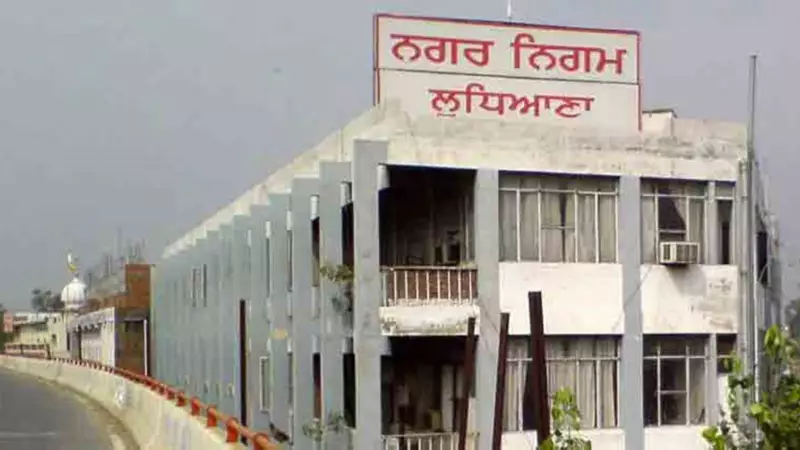
The Ludhiana Municipal Corporation has set in motion a plan that could radically transform the industrial hub of Punjab. In a significant move, its General House has passed an agenda proposing the inclusion of approximately 110 villages into the city's municipal limits. This ambitious proposal aims to more than double Ludhiana's geographical area, expanding it from the existing 160 square kilometres to nearly 400 square kilometres in one sweeping action.
Political Uproar and Administrative Process
The agenda was passed on Saturday amid strong opposition and uproar in the House. Councillors from the Congress, BJP, and Shiromani Akali Dal voiced their concerns, highlighting the political sensitivity of the decision. The matter gained further traction when Ludhiana MP Amarinder Singh Raja Warring met Municipal Commissioner Aditya Dachalwal on Monday to discuss the implications.
Officials have clarified that the passed resolution is merely the first step in a lengthy procedure. The proposal will now be sent to the local government department in Chandigarh. There, it will undergo scrutiny by the director of local bodies, followed by the local bodies minister, the Chief Minister, and other statutory authorities before any final notification is issued.
A potential hurdle is the upcoming Census, scheduled to commence on January 1, 2026, and expected to last nearly two years. During this period, the boundaries of urban and rural areas are typically frozen, which could delay the entire process. Despite this, the passing of the agenda marks a renewed administrative intent to expand Ludhiana's limits after decades of stalled attempts.
The Rationale Behind the Massive Expansion
The primary argument from the civic body centres on the changing character of Ludhiana's periphery. Large swathes of land outside the current city limits have already undergone rapid urbanisation but remain classified as rural in official revenue records. This has created an administrative anomaly.
Several high-end residential colonies and commercial hubs have mushroomed in these areas. Notable examples include Omaxe Township on Pakhowal Road, Basant Avenue, New Rajguru Nagar, and developments in villages like Ayali Kalan and Bhanohar. Despite their urban profile, complete with multi-storeyed housing and high-street markets, these areas still fall under the jurisdiction of gram panchayats. Here, panchayat elections are held, and sarpanches are elected even in localities where agricultural land is virtually non-existent.
Similarly, intense industrial and urban activity is evident along corridors like Ferozepur Road, Pakhowal Road, the Southern Bypass, and in villages such as Uchi Mangli, Nichi Mangli, Bahadurke, and Kanganwal. The municipal corporation's agenda states that villages were shortlisted based on parameters like revenue potential, employment generation, industrial presence, availability of non-agricultural land, and population, with the ultimate goal of ensuring planned development.
Opposition Concerns and Infrastructure Challenges
While acknowledging the logic of bringing urbanised colonies under civic authority, the Opposition has raised serious alarms about the scale and timing of the expansion. The leader of the opposition in the municipal corporation, Shyam Sunder Malhotra, questioned the body's capacity to absorb 110 villages at once, especially when it struggles to maintain infrastructure within the current 160 sq km limit.
Critics point to chronic civic issues plaguing Ludhiana that remain unresolved:
- Inefficient solid waste management and garbage accumulation at multiple sites.
- Broken and poorly maintained roads across the city.
- The absence of a comprehensive stormwater drainage system, leading to waterlogging.
- Persistent pollution from the Buddha Nallah.
These persistent problems fuel the argument that expansion without first addressing existing deficiencies could critically overstretch the civic body's resources and administrative capabilities.
Civic Chief's Defence and Historical Context
Defending the proposal, Municipal Commissioner Aditya Dachalwal emphasised the financial upside. He stated that expanding the municipal limits could significantly boost the corporation's revenues. "If municipal limits are increased, it can generate income for the Ludhiana Municipal Corporation. In 10 years, the income can increase by ₹9,000 crore," he said, while noting that this projection depends on the actual notification and implementation timeline.
This is not the first time Ludhiana has contemplated expansion. A look at its civic history reveals a pattern of proposals and partial implementations:
- 1978: Ludhiana was upgraded from a municipal committee to a municipal corporation.
- 1979: The first expansion after becoming a corporation extended limits from the old city outward.
- 1995: The last officially implemented expansion included around 25 villages, taking the total area to about 159.37 sq km.
- 2011, 2016, 2021: Subsequent proposals were prepared, approved, or attempted but were either shelved due to political opposition or never notified.
Interestingly, while territorial expansion has faced resistance, councillors have consistently supported increasing the number of municipal wards to reflect population growth. The wards were increased from 50 to 70 in 1997, to 75 in 2007, and to 95 in 2017. The current proposal, however, represents the most ambitious geographical expansion plan in over three decades, setting the stage for a major debate on Ludhiana's urban future.