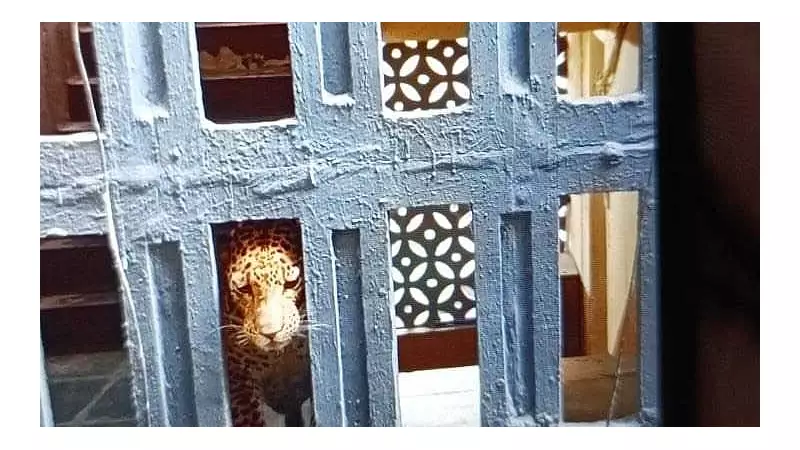
A tense situation unfolded in Maharashtra's Thane district on Tuesday after a fully-grown leopard entered a residential housing society, forcing a large-scale rescue operation by forest department officials. The incident, which has heightened concerns about human-wildlife conflict in the region, saw the big cat taking refuge in the premises, leading to the evacuation of residents for their safety.
Panic Grips Residential Society
The leopard was first spotted inside the Rustomjee Urbania housing society located in the Kavesar area of Thane. The unexpected intrusion of the wild animal into a densely populated residential zone immediately triggered panic among the inhabitants. Following established safety protocols, society residents were swiftly evacuated from the danger zone to secure locations as a precautionary measure.
Forest department teams were alerted and rushed to the scene equipped with tranquilizer guns and necessary gear to handle the sensitive operation. The officials cordoned off the area to prevent any untoward incident and to give the rescue team a clear and controlled environment to work in. The primary goal was to safely sedate the leopard without causing harm to the animal or any people.

Challenges in the Rescue Operation
The rescue operation, which was ongoing for several hours, faced significant challenges. Leopards are agile, stressed, and unpredictable in unfamiliar environments, making such urban rescues complex. The forest department's trained personnel had to proceed with extreme caution, attempting to locate and tranquilize the animal within the society's layout, which includes parking areas, green spaces, and building structures where the cat could hide.
Local authorities, including police, assisted the forest team in managing the crowd and ensuring the security perimeter remained intact. The incident caused considerable disruption in the normal life of the society, with residents anxiously waiting for updates on the operation from a safe distance.
Growing Human-Wildlife Conflict
This incident is not an isolated one in the Thane region and highlights the escalating issue of human-wildlife conflict as urban expansion encroaches on natural forest habitats. Thane district, with its green corridors and proximity to forested areas like the Sanjay Gandhi National Park and Tungareshwar Wildlife Sanctuary, frequently reports such encounters. Animals, particularly leopards, sometimes stray into human settlements in search of food or due to habitat fragmentation.
Wildlife experts often stress the need for better management of the interface between forests and residential areas. This includes creating awareness among citizens, improving garbage management to avoid attracting stray animals that are prey for leopards, and having rapid response teams trained for wildlife rescue. The successful and safe conclusion of this operation will depend on the expertise and patience of the forest department staff on the ground.
The incident serves as a stark reminder of the delicate balance between urban development and wildlife conservation. The forest department's efforts to safely capture and relocate the leopard back to its natural habitat are being closely watched by concerned citizens and animal rights activists alike.