The Rise of Lalu Prasad: Bihar's Political Game Changer
When Lalu Prasad Yadav assumed power as Bihar's Chief Minister more than three decades ago, he inherited a state plagued by chronic political instability. From March 1967 to March 1990, Bihar had witnessed an astonishing 20 regimes under 16 chief ministers and five spells of President's Rule. This era of constant leadership changes created a vacuum that Lalu would dramatically fill.
The 1990 Watershed Election
The 1990 Assembly elections marked a decisive turning point in Bihar's political history. The once-dominant Congress party was reduced to just 71 seats, while the Janata Dal secured 122 seats and the BJP won 39. This election represented a fundamental shift in power dynamics, driven by a new generation of leaders emerging from the student movements of the 1970s.
Under VP Singh's leadership, the Janata Dal mobilized leaders from backward communities including Lalu Prasad Yadav, Nitish Kumar, Mulayam Singh Yadav, and Sharad Yadav. These leaders successfully galvanized politically marginalized sections against the Congress establishment, creating a new political force that would dominate Bihar for years to come.

From Humble Beginnings to Chief Minister
Born in June 1948 in Phulwaria village of Gopalganj district, Lalu Prasad came from modest beginnings. His political journey began during his college years in Patna, where socialist veteran Shivanand Tiwari introduced him to the Samajwadi Yuvjan Sabha (SYS). After completing his graduation and LLB degree, Lalu worked briefly as a clerk at a veterinary college in Patna.
His political ascent accelerated when he became general secretary and later president of the Patna University Students' Union in 1973-74. Interestingly, his student union team included future BJP leaders Sushil Kumar Modi and Ravi Shankar Prasad, demonstrating the diverse political relationships that would characterize his career.
As convenor of the Chhatra Sangharsh Samiti during the JP Movement, Lalu was imprisoned during the Emergency. His political career reached its first major milestone when he entered Parliament in 1977 as a Janata Party candidate at just 29 years old.
The Chief Ministerial Era and Growing Controversies
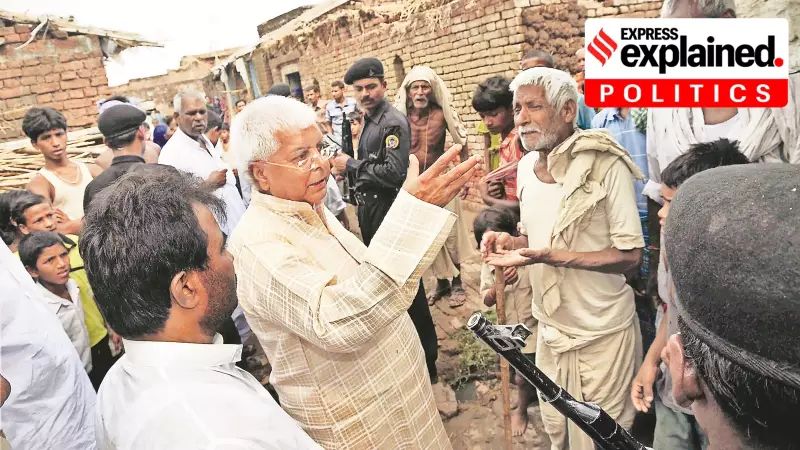
On March 10, 1990, Lalu Prasad took oath as Bihar's first post-Independence-born Chief Minister at age 42. His unique style - characterized by rustic humor, distinctive dressing, and championing of backward and minority communities - created a new political grammar that resonated across Bihar and at the national level.
Despite the departure of his "younger brother" Nitish Kumar and mentor George Fernandes before the 1995 Assembly polls, Lalu retained power with his Janata Dal winning 167 of the 324 seats. However, this period also saw rising allegations of misrule, escalating crime rates, and accusations of promoting Yadavs at the expense of other backward communities.
The political landscape shifted dramatically in 1997 when the fodder scam came to light. Facing mounting corruption allegations, Lalu broke away from the Janata Dal to form the Rashtriya Janata Dal (RJD) in July 1997. As investigations intensified, he made the controversial move of stepping down as Chief Minister on July 25, 1997, installing his wife Rabri Devi as his successor, marking the beginning of what critics called "family rule" in Bihar.
National Presence and Railway Ministry
Lalu's political acumen ensured his continued relevance even after losing power in Bihar in 2005. Elected to the Lok Sabha multiple times between 1998 and 2009, he served as Railway Minister in the UPA-I government under Dr. Manmohan Singh from 2004-2009. During his tenure, Indian Railways saw significant financial growth, earning him praise, though allegations of corruption and nepotism, including the "land-for-jobs" scam, continued to follow him.
Enduring Legacy and Current Status
Barred from contesting elections after his October 2013 conviction, Lalu Yadav's influence persists through his family. His wife Rabri Devi serves as MLC, sons Tej Pratap Yadav and Tejashwi Yadav are MLAs, and daughter Misa Bharti is a Lok Sabha MP, with Tejashwi emerging as his political heir.

Now in his seventies and in frail health, Lalu remains on bail in several cases. Yet his impact on Bihar's politics - and on India's broader discourse on caste and representation - continues to shape political narratives. His story represents both the promise of social justice and the perils of controversial governance, leaving behind a legacy that remains fiercely debated in contemporary Bihar politics.